×

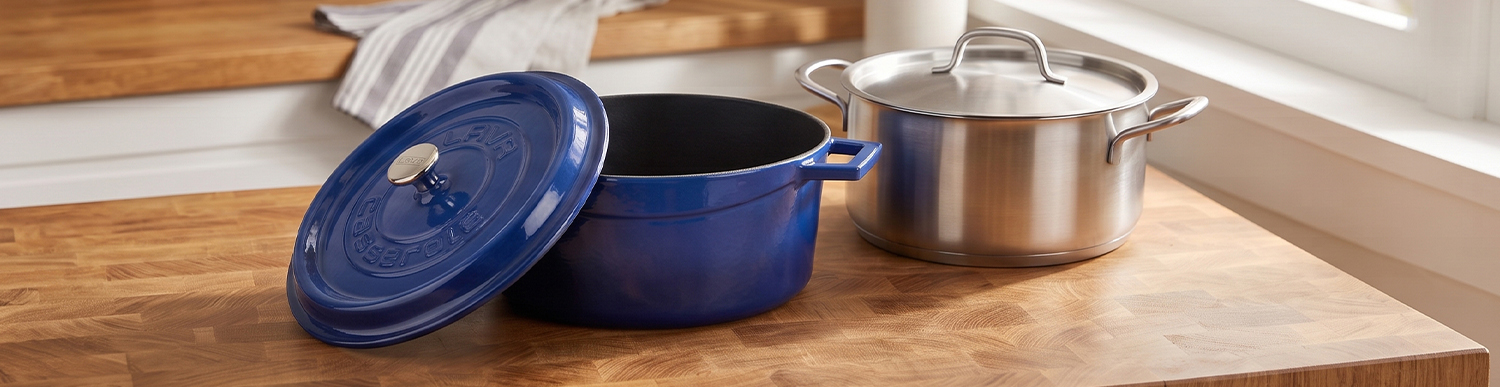
The answer to whether you should choose a cast iron casserole or a stainless steel casserole depends on your cooking habits and needs. Stainless steel casseroles stand out for their lighter construction, faster heating and practicality for everyday use, while enamelled cast iron casseroles are distinguished by their ability to retain heat for longer, provide even cooking and offer advantages particularly for searing, slow cooking, casseroles and oven dishes.
When comparing the two types of casserole, it is important to consider more than just the material. Factors such as heat distribution and retention, cooking time, weight, oven use, maintenance and intended use should all be considered together.
When choosing cookware for the kitchen, cast iron and stainless steel casseroles are among the two most commonly compared options. But is a cast iron casserole or a stainless steel casserole better? There is no single answer, because each type of casserole is suited to different cooking habits and needs.
Stainless steel casseroles offer practicality for everyday cooking thanks to their lighter construction and faster heating, while enamelled cast iron casseroles stand out when cooking at high temperatures or preparing recipes that require longer cooking times.
For this reason, when comparing cast iron and stainless steel casseroles, factors such as heat management, cooking method, weight, oven use, maintenance and frequency of use should be considered together.
| Comparison Criterion | Enamelled Cast Iron Casserole | Stainless Steel Casserole |
|---|---|---|
| Body construction | Thick cast iron | Stainless steel |
| Heating speed | Slower | Generally faster |
| Heat distribution | Even | Varies depending on the base construction |
| Heat retention | Very high | Moderate |
| Slow cooking | Very suitable | Suitable |
| Searing meat | Strong performance due to heat retention | Effective with proper heat management |
| Oven use | Suitable depending on the product specifications | Depends on the handle and lid construction |
| Weight | Heavier | Lighter |
| Everyday use | Requires heat management | Generally more practical |
| Serving | Suitable for cooking and serving in the same cookware | Usually transferred to a serving dish |
| Seasoning | Not required on an enamelled surface | Not required |
| Maintenance | The enamel surface should be protected | Cleaning may be required for water marks and burnt-on residue |
| Lifespan | Long with proper use | Long depending on product quality |
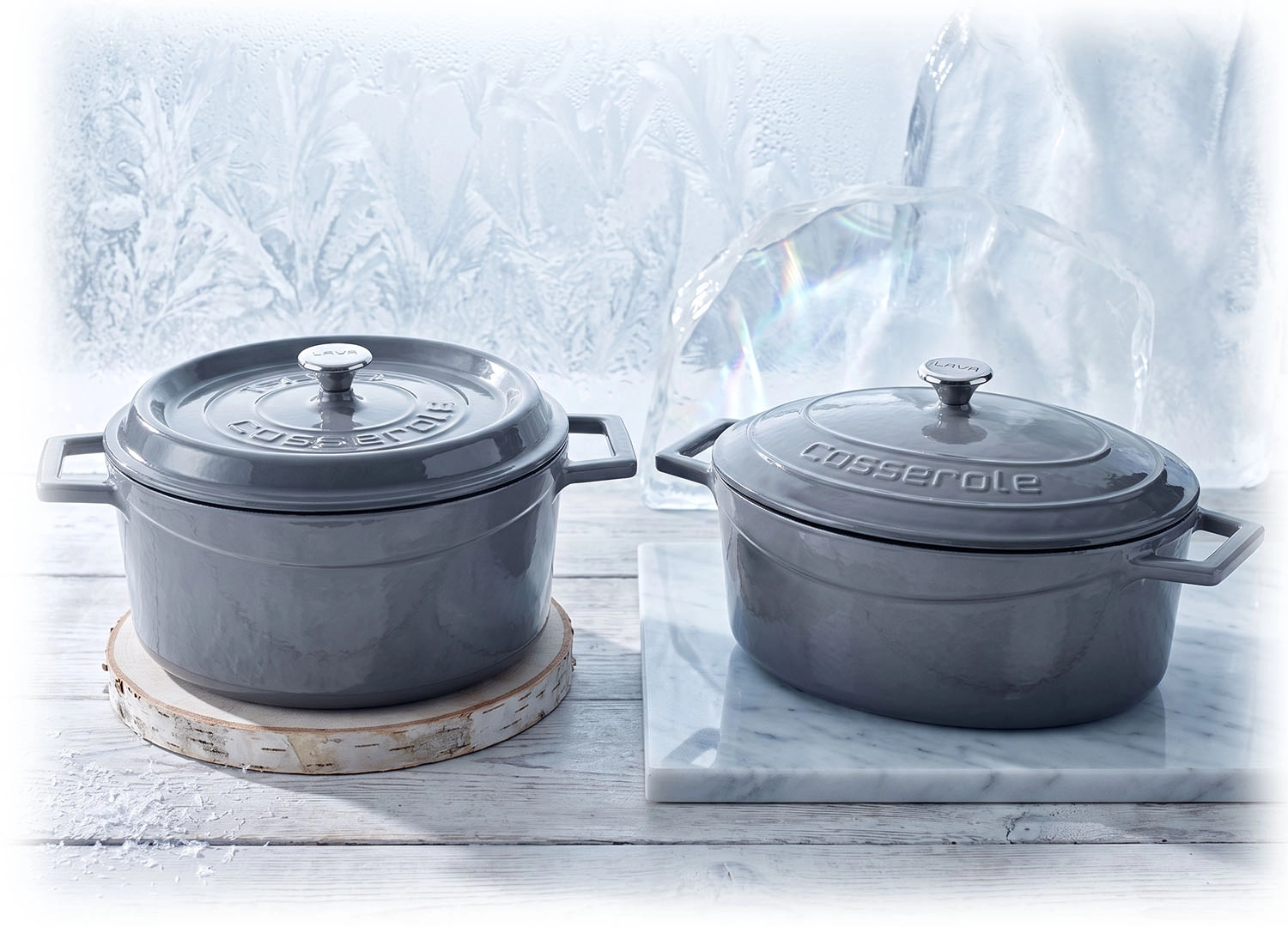
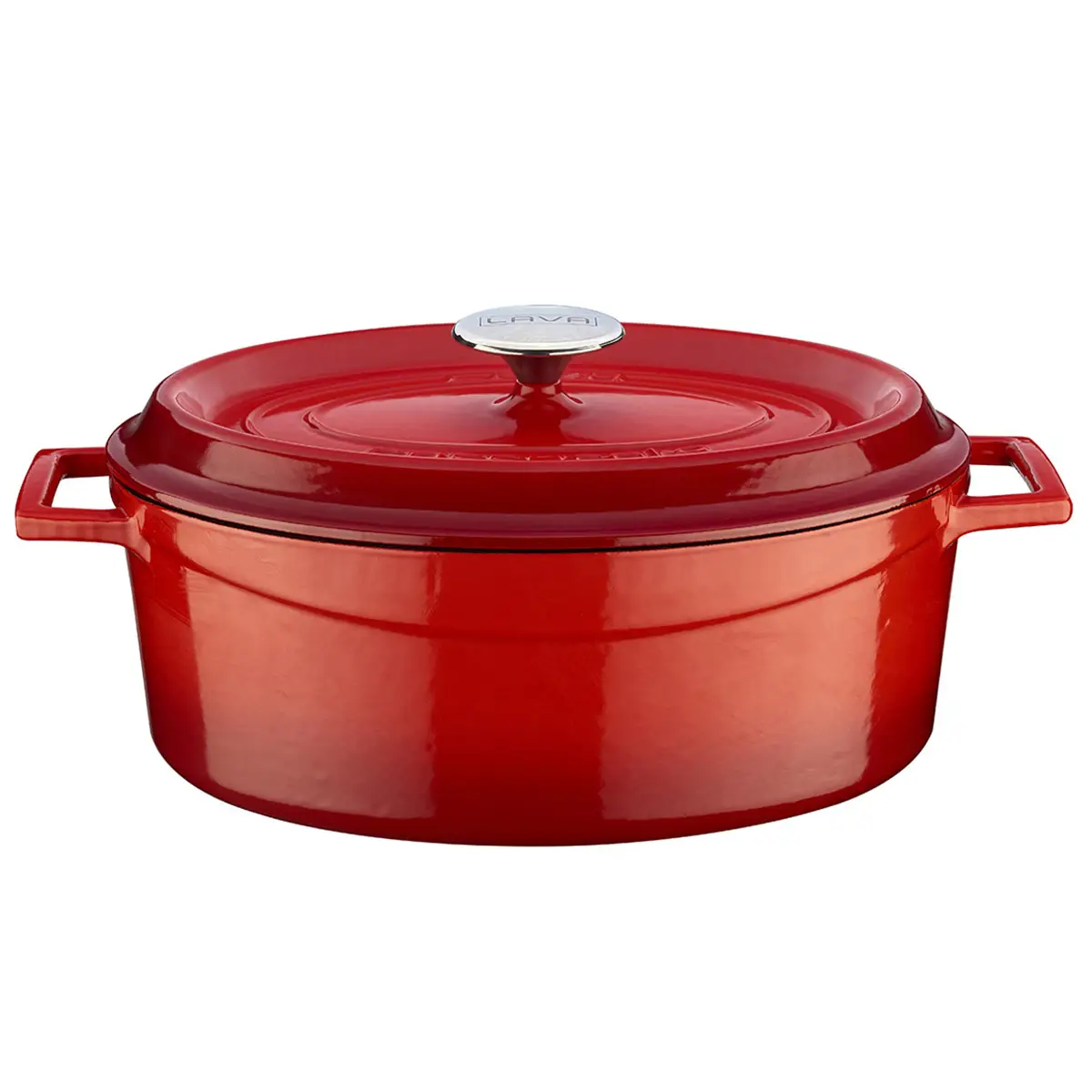
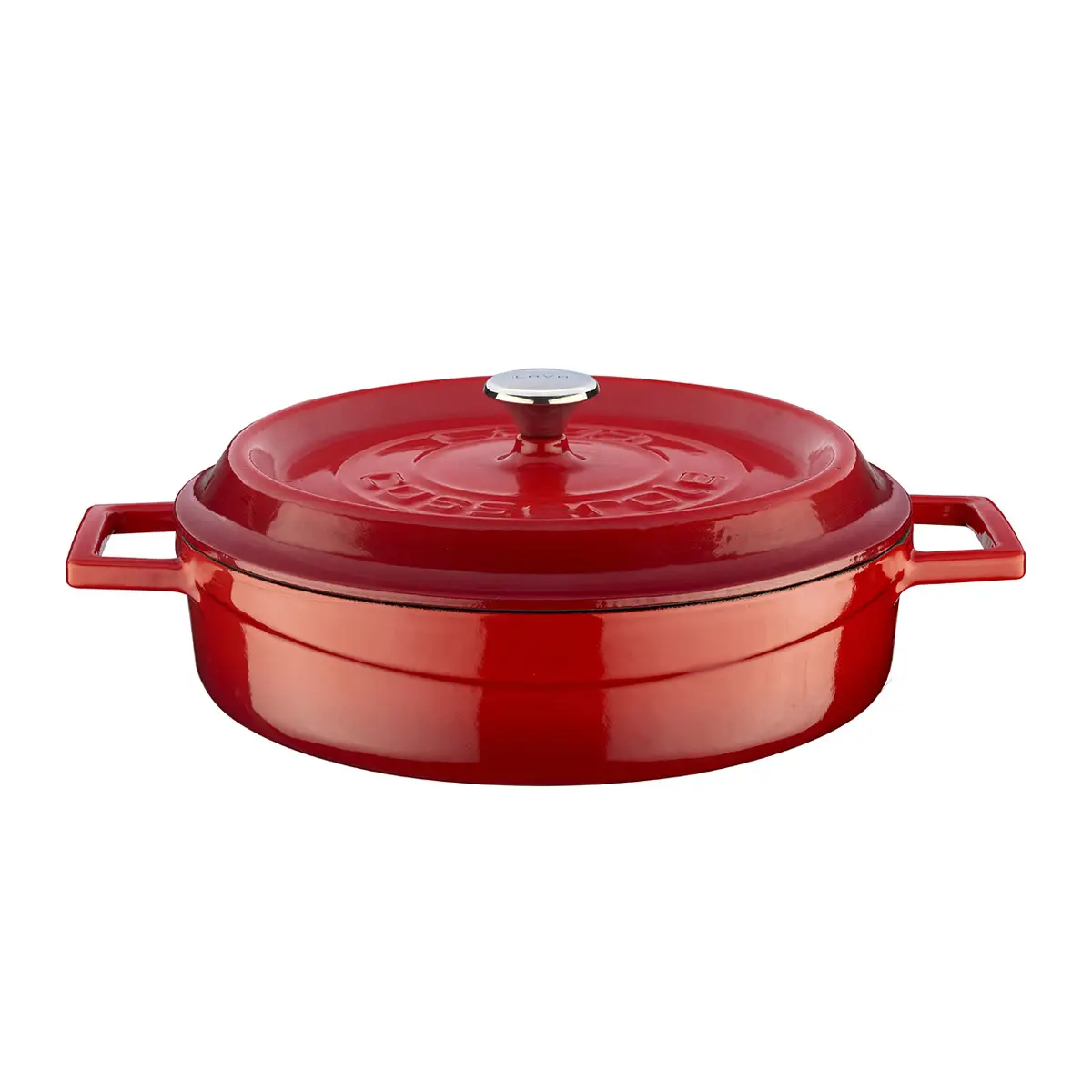
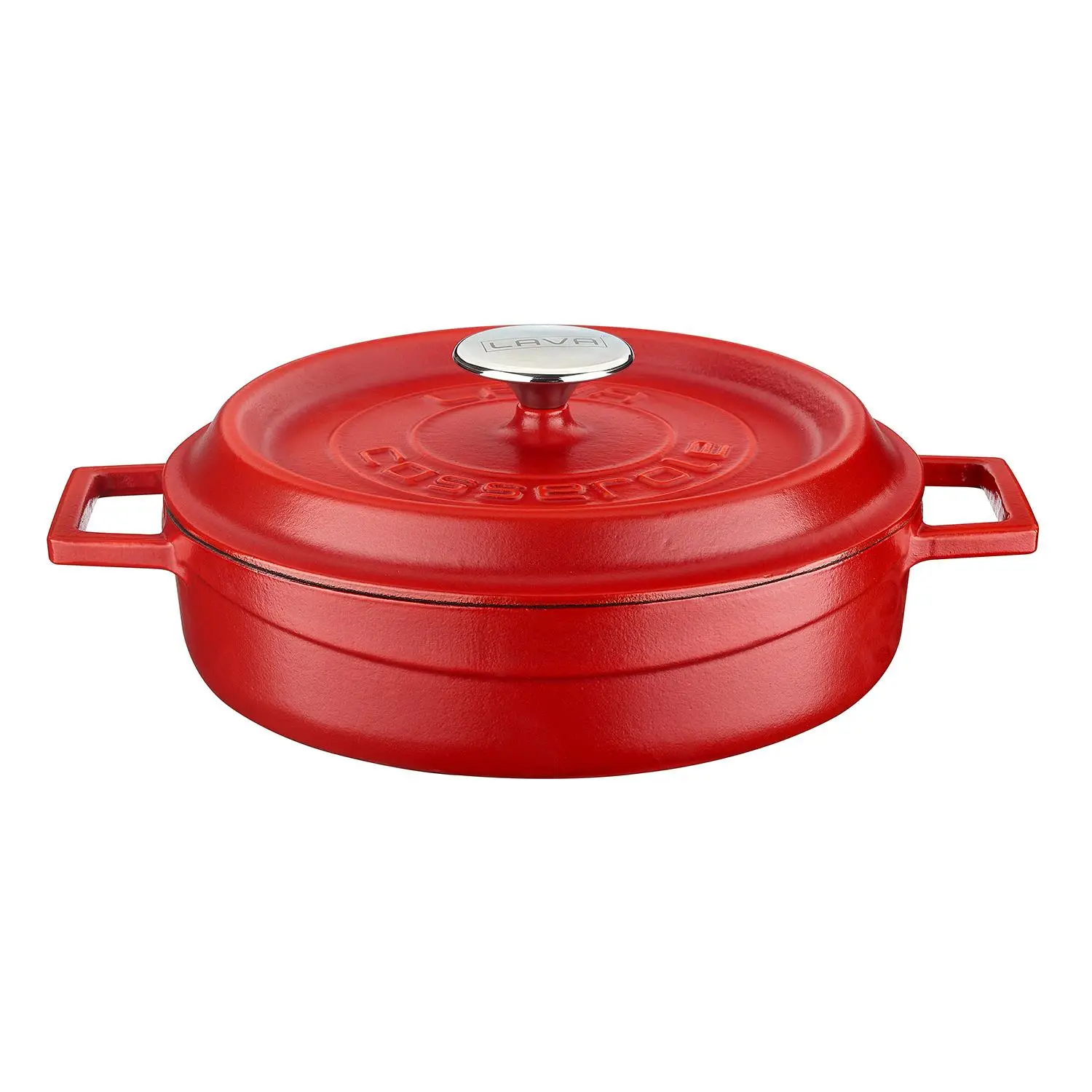
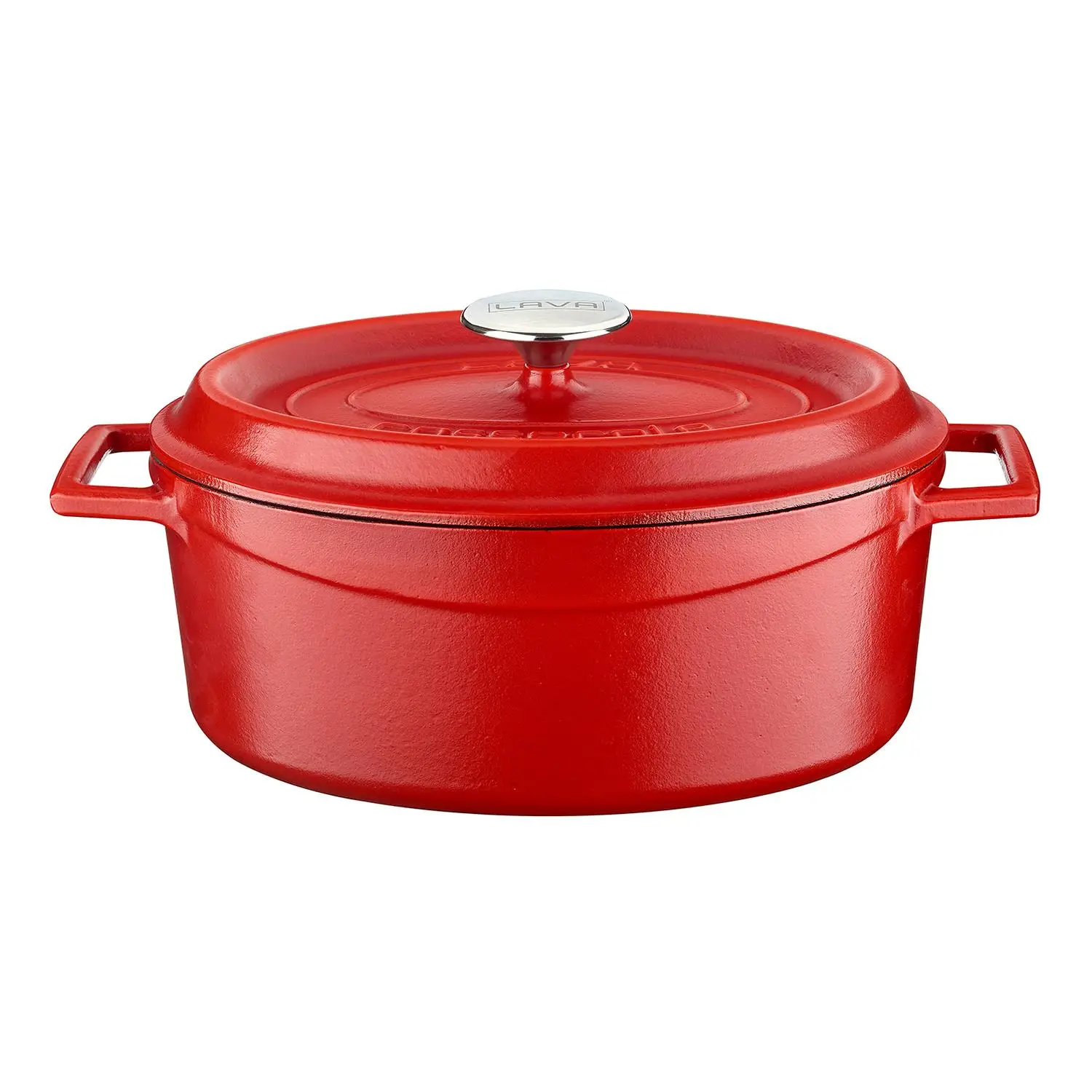
Enamelled cast iron casseroles are made by coating the inner and outer surfaces of a cast iron body with enamel. Thanks to the high heat retention properties of cast iron, they can help food cook at a controlled temperature over longer periods.
The enamel surface reduces the maintenance requirements associated with cast iron and makes the casserole suitable for a wide range of dishes. LAVA enamelled cast iron casseroles also do not require additional seasoning.
Cast iron casseroles can be particularly suitable for meat, vegetables, pulses, casseroles, stews and recipes that require longer cooking times.
Stainless steel casseroles are widely used in kitchens thanks to their stainless steel construction. Their lighter weight and faster heating can make them particularly convenient for everyday cooking.
Heat distribution in stainless steel casseroles can vary depending on the base construction and the technology used. With proper temperature control, you can prepare a wide range of dishes, from vegetable dishes and soups to pasta and rice.
When comparing cast iron and stainless steel casseroles, the most noticeable differences are found in heat management, the cooking process, weight, method of use and maintenance requirements.
Enamelled cast iron casseroles retain heat for longer. This can be particularly advantageous for dishes cooked slowly at low or medium temperatures over an extended period.
Stainless steel casseroles generally heat up more quickly. When the temperature is controlled correctly, they offer practical everyday cooking.
For casseroles, stews, dried pulses and meat dishes that require longer cooking times, retaining heat for an extended period is important. This is where cast iron casseroles can offer an advantage.
Stainless steel casseroles can also be used for slow cooking, but their heat retention properties differ from those of cast iron casseroles.
When searing meat, it is important for the pan or casserole to reach a high temperature and retain that heat. The high heat retention capacity of cast iron can be advantageous for this type of cooking.
Meat can also be seared in stainless steel casseroles with appropriate preheating and temperature control.
Enamelled cast iron casseroles can be used in the oven when permitted by the product specifications. This can make them a practical option for recipes that start on the hob and continue in the oven.
With stainless steel casseroles, oven suitability depends on the construction of the handles, lid and other components of the product.
Cast iron casseroles are heavier than stainless steel casseroles because of their thick cast iron bodies. This is an important feature to consider when carrying and using the cookware on a daily basis.
Stainless steel casseroles, on the other hand, can be more convenient for frequently prepared everyday meals because they are lighter.
With enamelled cast iron casseroles, it is important to protect the enamel surface. Sudden temperature changes, hard impacts and unsuitable cleaning methods should be avoided.
With stainless steel casseroles, water marks, burnt-on food residue or changes in colour may appear on the surface. These can be removed using an appropriate cleaning method.
When deciding whether to choose a cast iron or stainless steel casserole, the type of food you prepare and the cooking method should also be taken into consideration.
| Food or Use | Enamelled Cast Iron Casserole | Stainless Steel Casserole |
|---|---|---|
| Casseroles and stews | Very suitable | Suitable |
| Long cooking times | Very suitable | Suitable |
| Searing meat | Very suitable | Suitable |
| Vegetable dishes | Suitable | Very suitable |
| Soup | Suitable | Very suitable |
| Pulses | Very suitable | Suitable |
| Hob-to-oven recipes | Suitable depending on the product specifications | Varies depending on the product specifications |
| Quick everyday meals | Suitable | Very suitable |
| Cooking and serving in the same cookware | Very suitable | Suitable |
The important point is to compare cookware not only according to its material, but also according to what you cook and how often you prepare different types of dishes.
When assessing cookware from a health perspective, proper use and maintenance are just as important as the material itself.
With enamelled cast iron casseroles, the food-contact surface is enamel. LAVA enamelled cast iron products do not require additional seasoning.
Stainless steel casseroles can also be used to prepare a wide range of dishes safely when used and maintained correctly.
For this reason, rather than considering whether cast iron or stainless steel is healthier based solely on the material, the cooking surface, conditions of use and care instructions should all be considered together.
Cast iron casseroles can be a suitable option for those who:
Cook dishes for longer periods,
Frequently prepare casseroles and stews,
Prepare recipes involving searing or high temperatures,
Prepare recipes that move from the hob to the oven,
Want to take the food they have cooked directly to the table in the same cookware,
Are looking for a casserole that retains heat for longer.
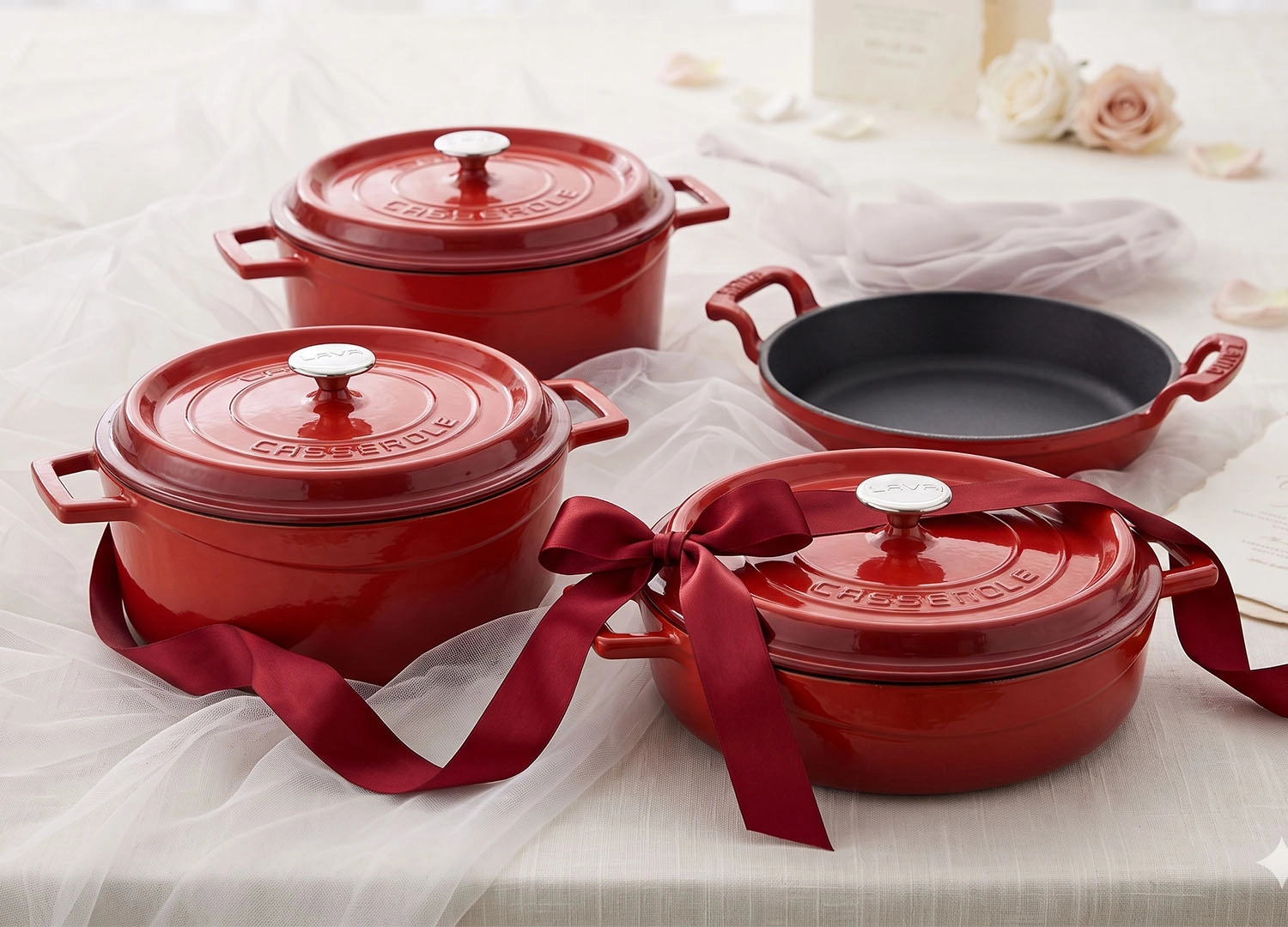
LAVA’s enamelled cast iron casserole models offer options for different cooking needs with a range of sizes and shapes.
Stainless steel casseroles can be particularly suitable for those who:
Prefer lightweight cookware,
Prepare everyday meals quickly,
Frequently move their cookware around the kitchen,
Prefer a casserole that heats up more quickly,
Are looking for a practical option for everyday use.
Yes. Cast iron and stainless steel casseroles do not have to be alternatives to one another in the kitchen.
For example, a stainless steel casserole can be used for everyday meals that require quick preparation, while an enamelled cast iron casserole can be chosen for longer cooking, casseroles, stews or oven dishes.
Having both types of casserole in the kitchen can therefore provide greater flexibility when choosing cookware for different cooking needs.
Cast iron casserole or stainless steel casserole? The answer depends on your cooking habits.
Stainless steel casseroles stand out for their light weight, faster heating and convenience for everyday use, while enamelled cast iron casseroles are distinguished by their ability to retain heat for longer, suitability for extended cooking and advantages when preparing recipes that require high temperatures.
Therefore, when choosing between them, it is useful to focus not only on the question“Which casserole is better?”, but also on “Which casserole is better suited to my cooking habits?”
If you would like to explore alternatives for different dishes and cooking methods, you can browse LAVA enamelled cast iron casserole models.
There is no single correct answer. Stainless steel casseroles offer practicality for everyday and quick meal preparation, while enamelled cast iron casseroles stand out for heat retention and recipes that require longer cooking times.
Yes. Cast iron casseroles are generally heavier than stainless steel casseroles because of their thick cast iron bodies.
Stainless steel casseroles generally heat up more quickly. Although cast iron casseroles heat more slowly, they offer the advantage of retaining heat for longer.
Enamelled cast iron casseroles can be used in the oven provided that the conditions specified in the product’s instructions allow it.
This depends on the construction of the casserole’s handles, lid and other components. The manufacturer’s product instructions should be checked.
LAVA enamelled cast iron casseroles do not require additional seasoning.
Yes. The two types of casserole can serve different cooking needs and can be used alongside each other.
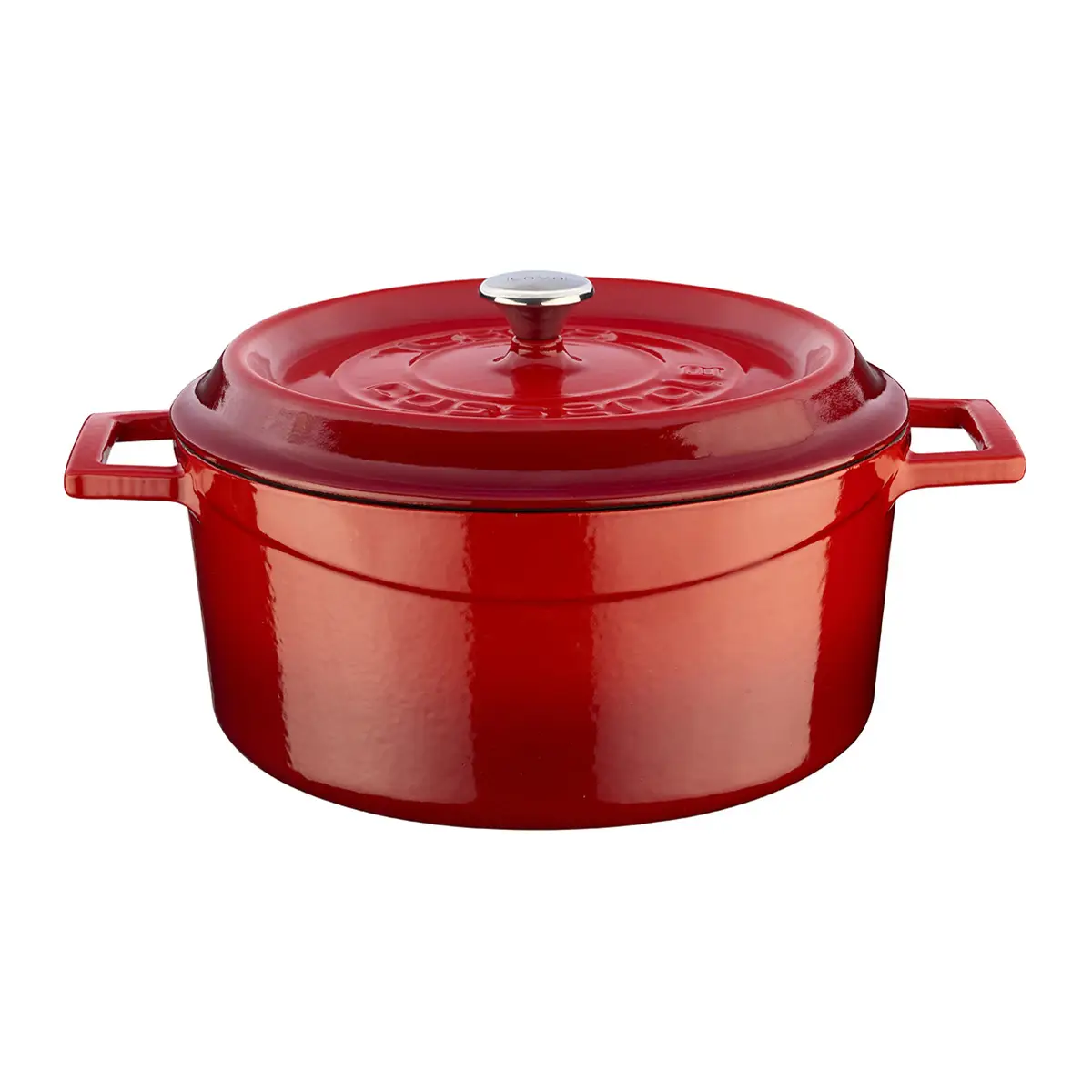
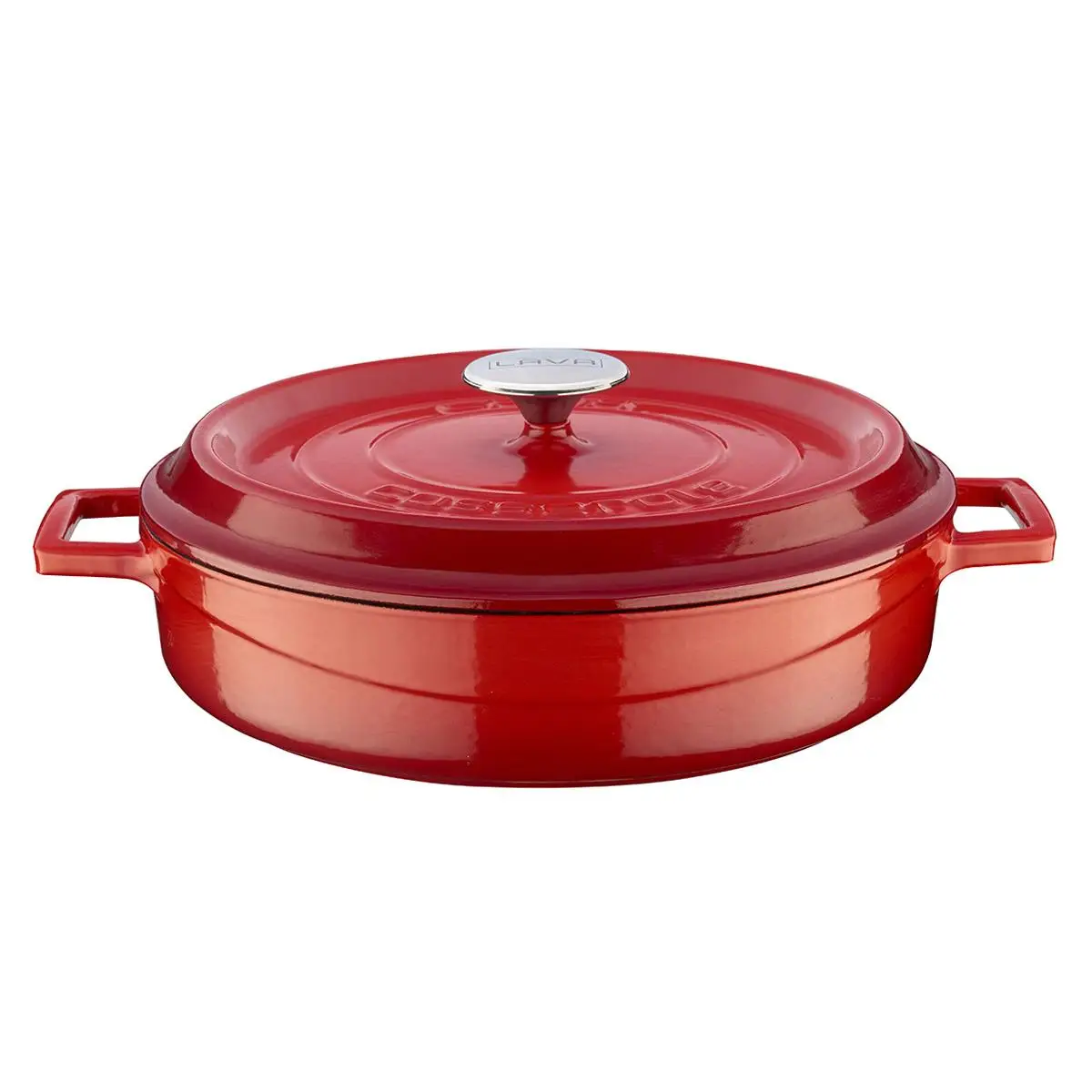
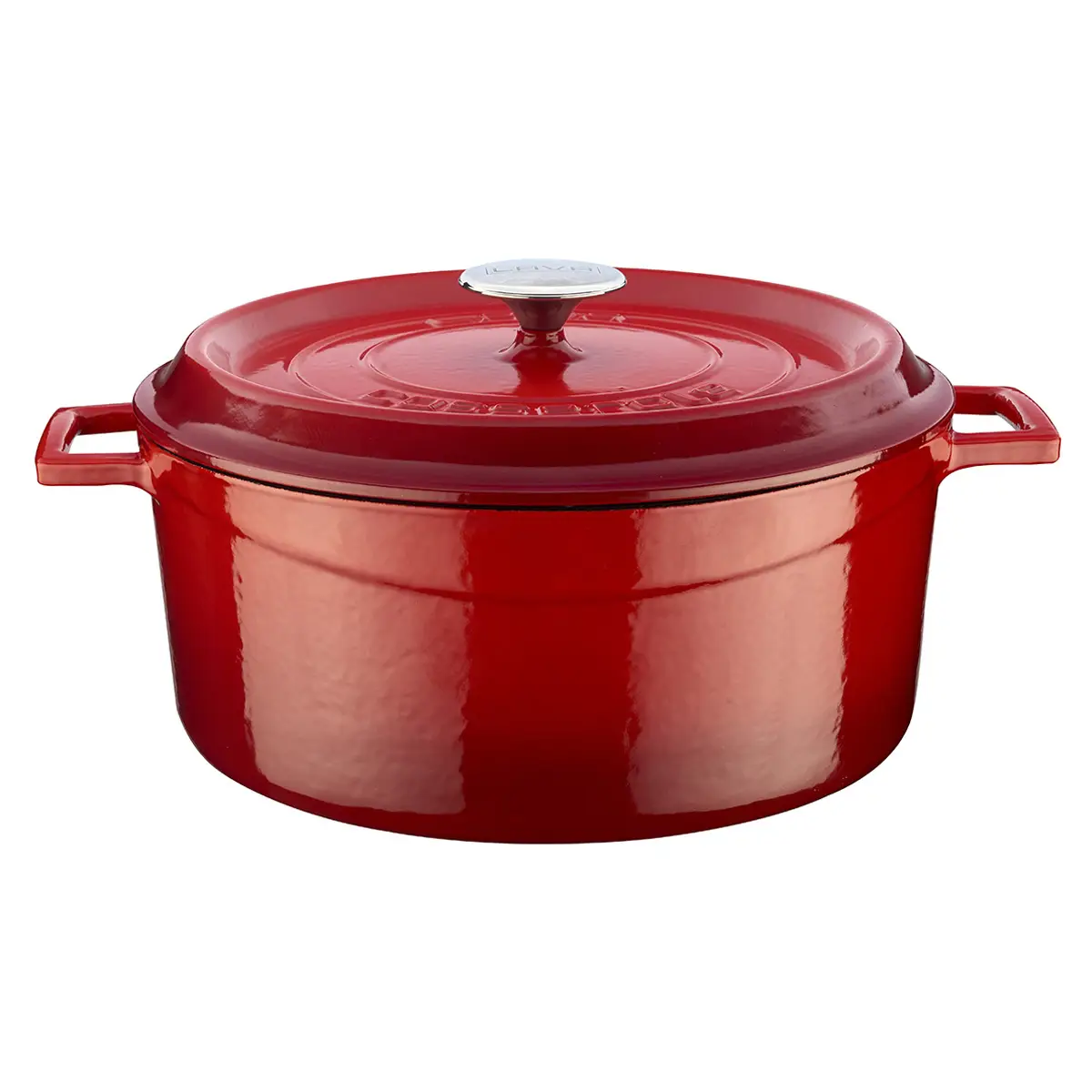
25.08.2026Lava Cast Iron Round Multipurpose Casserole. Trendy, Dia. Ø 28cm.
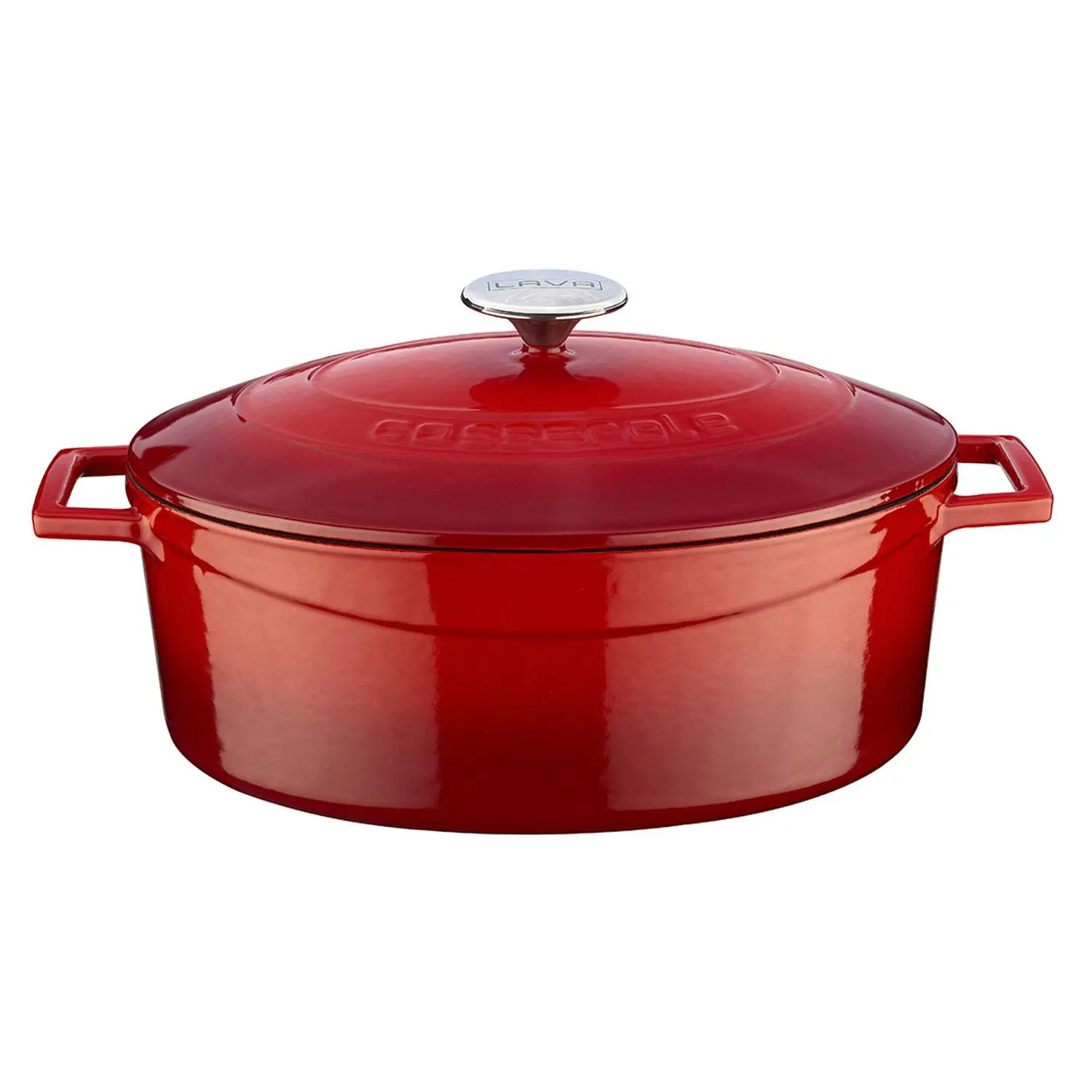
Lava Cast Iron Round Multipurpose Casserole. Trendy, Dia. Ø 24cm.
Lava Cast Iron Round Spring Series Casserole. Trendy, 1-Handle, Dia. Ø 24cm.
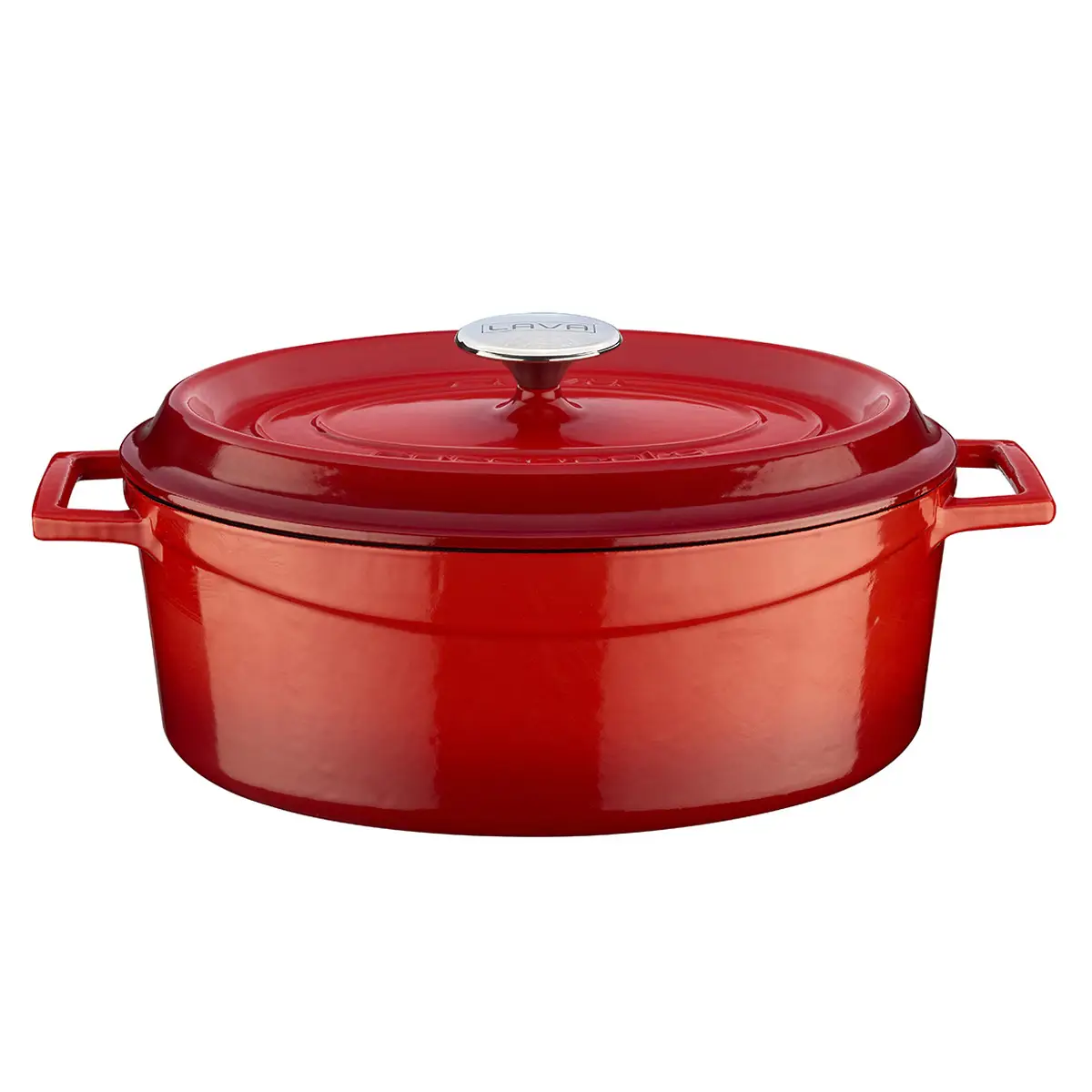
Lava Cast Iron Oval Spring Series Casserole. Trendy, 1-Handle, 21X27cm.







Lava Döküm Online Fabrika Satış Mağazası. © 2026 All Rights Reserved.


0
)