×

Octopus casserole is a practical seafood dish in which octopus is cooked until tender and then flavoured with butter and aromatic ingredients. In this recipe, the octopus is cooked in its own juices in a cast iron casserole dish until tender, then finished with butter for added flavour.
Estimated Reading Time: 4 minutes
1 kg cleaned octopus
2 tbsp butter
2 tbsp olive oil
2 garlic cloves
1 onion
1 tomato
1 green pepper
1 tsp chilli flakes
1 tsp black pepper
Salt
A few sprigs of thyme, optional
Lemon and fresh parsley, to serve
Wash the cleaned octopus thoroughly and drain well. Pat off any excess moisture with kitchen paper and cut the octopus into large pieces.
Heat a cast iron casserole dish over medium heat. Add the octopus without adding any oil and turn the pieces for a few minutes to allow them to release their juices. Once the octopus has released its juices, cover the dish and cook over medium-low heat until tender.
Depending on the size and texture of the octopus, this stage can take approximately 35–50 minutes. Check that there is enough liquid remaining in the dish during cooking. If necessary, add a small amount of hot water.
Once the octopus starts to become tender, add the olive oil. Add the chopped onion, garlic, tomato and green pepper, and cook everything together for a few minutes.
Then add the butter, chilli flakes and black pepper. Toss the ingredients with the octopus for a few more minutes, allowing the flavours of the butter to combine with the dish.
Check the seasoning and add thyme if desired. Remove from the heat once the octopus is completely tender.
For tender octopus, use controlled medium-low heat rather than cooking it over high heat for a long time.
Allowing the octopus to release its own juices during the first stage helps preserve its natural flavour.
The size of the octopus directly affects the cooking time. If a fork slides into the flesh easily, it is sufficiently tender.
Adding the butter towards the end of cooking helps create a more pronounced buttery flavour.
The heat retention of a cast iron casserole dish can help maintain a more even cooking temperature.
Keep the salt under control, as octopus can naturally have a salty flavour.
The total cooking time for octopus casserole can vary depending on the size of the octopus and the texture of the meat. For approximately 1 kg of cleaned octopus, around 35–50 minutes of controlled cooking may be required.
Rather than relying solely on the cooking time, it is important to check the texture of the octopus. If a fork or knife slides into the flesh easily, the octopus is tender and ready to serve.
Serve the cooked octopus hot. You can sprinkle fresh parsley over the top and serve it with lemon wedges.
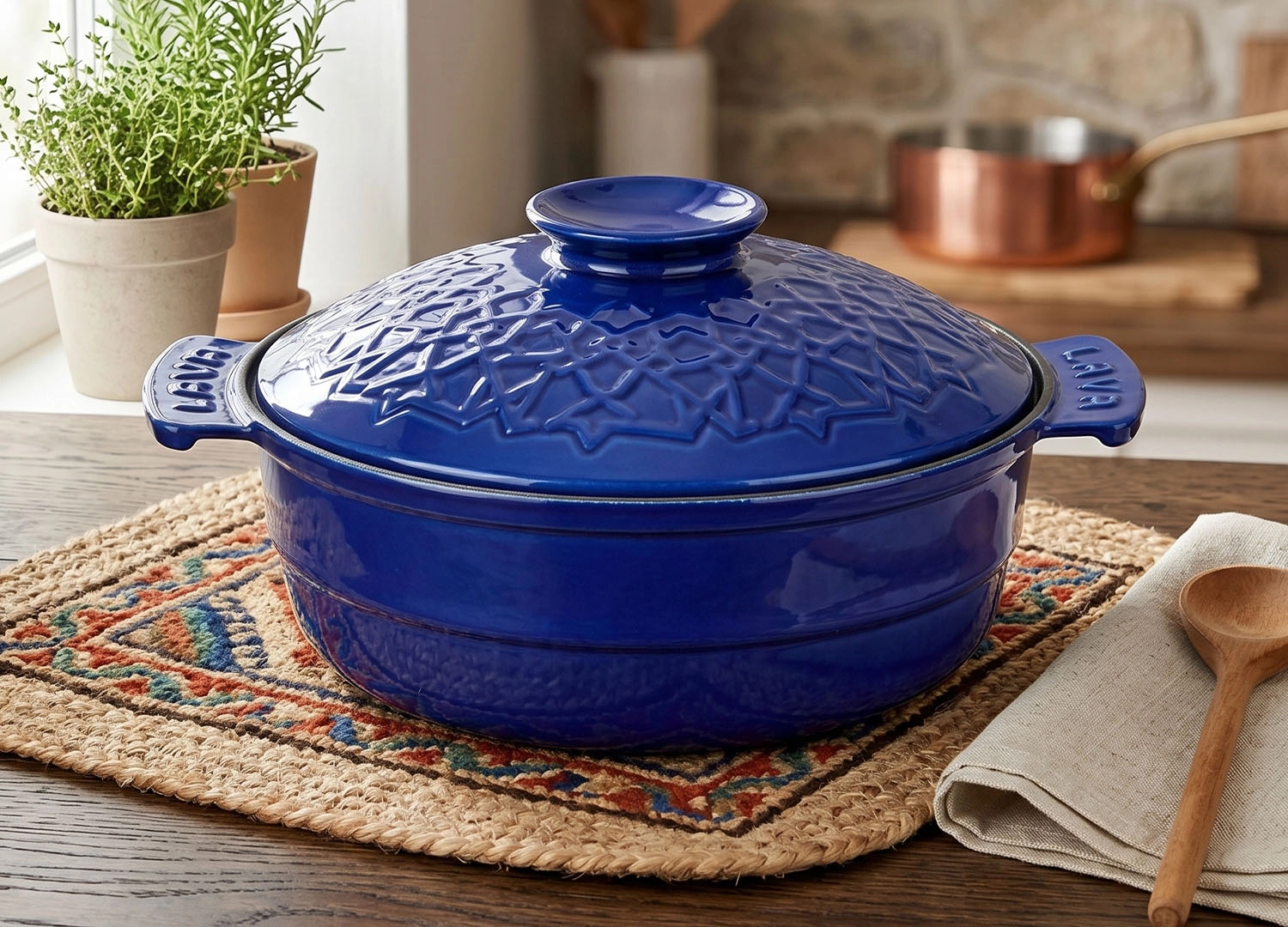
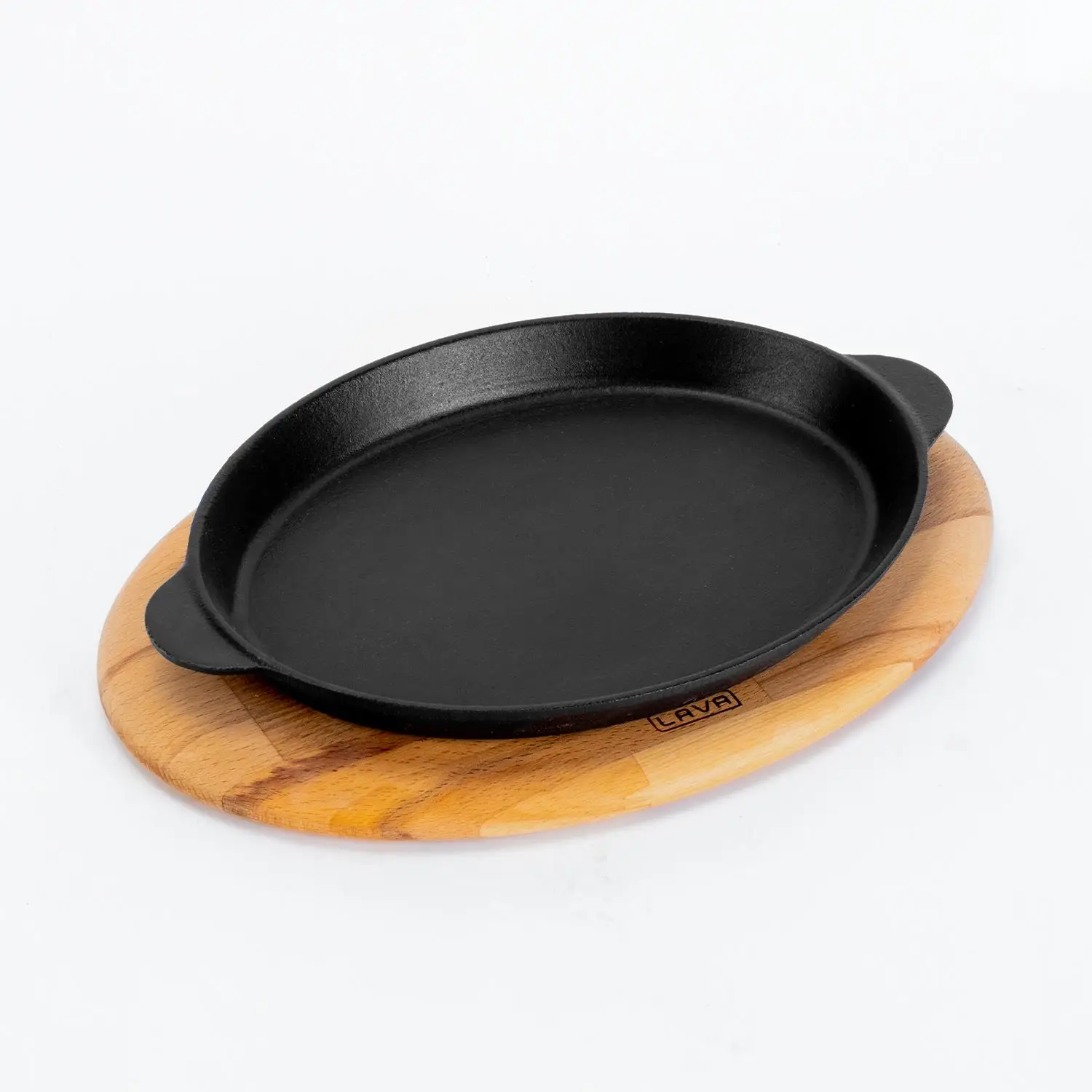
Buttered octopus prepared in a cast iron casserole dish can be served directly at the table, as the cast iron helps retain heat for longer.
The octopus is first cooked in its own juices in a cast iron casserole dish until tender. Onion, garlic, tomato and green pepper are then added. Finally, the dish is finished with butter and spices before serving.
Approximately 1 kg of cleaned octopus may take around 35–50 minutes to become tender, depending on its size and texture. The most reliable way to check is to see whether the octopus can be easily pierced with a fork.
Yes. Octopus can be cooked in a cast iron casserole dish over controlled heat. Its heat retention makes it suitable for longer cooking at low to medium temperatures.
Once the octopus is tender, add butter, garlic and spices and cook for a few more minutes. Adding the butter towards the end of cooking helps create a distinct buttery flavour.
Octopus should be cooked over controlled heat for a sufficient amount of time. Rather than determining the cooking time based solely on minutes, checking the texture with a fork will give a more reliable result. The octopus is ready when it can be pierced easily.
01.10.2026






Lava Döküm Online Fabrika Satış Mağazası. © 2026 All Rights Reserved.


0
)