×

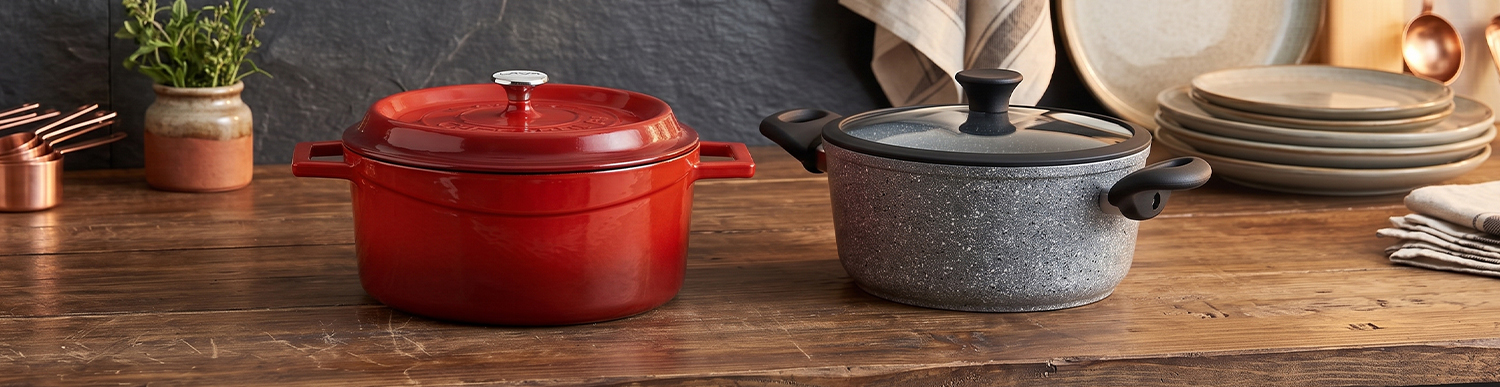
Cast iron casserole or granite casserole: which is better and healthier? An enamelled cast iron casserole stands out for its ability to retain heat for longer, as well as its performance in slow cooking, searing meat and oven cooking. Granite-coated casseroles, on the other hand, can offer practicality for everyday use thanks to their lighter construction and faster heating. From a health perspective, the body material, coating properties and suitability for food contact should be considered together when making a choice.
Estimated Reading Time
7–8 minutes
One of the most common questions when buying a new casserole is: “Should I choose a cast iron casserole or a granite casserole?”
The answer to whether a cast iron casserole or a granite casserole is better depends on how you intend to use it. If you are looking for cookware that retains heat for longer and is suitable for slow cooking, searing and oven use, an enamelled cast iron casserole may be a suitable option. If you prefer a lighter, faster-heating and practical option for everyday cooking, a granite-coated casserole may be more suitable. From a health perspective, however, the two should not be assessed based solely on their names. The body material, coating properties, food-contact suitability and usage instructions should all be considered together.
However, the right decision should not be based solely on the weight or appearance of the cookware. The body material, coating properties, heat performance, hob and oven compatibility and expected lifespan should all be evaluated together.
Cast iron and granite casseroles differ in terms of their construction and cooking performance. A cast iron casserole distributes heat evenly and retains it for longer thanks to its thick cast iron body. This can be particularly advantageous for meat dishes, casseroles, bread, stews and recipes cooked slowly over a low heat.
A significant proportion of products marketed as “granite casseroles” are not made entirely from natural granite. The term generally refers to a granite-effect coating applied to an aluminium or other metal body. For this reason, when assessing a granite casserole, you should look beyond the product name and check information about the body and coating.
When considering whether a cast iron casserole or granite casserole is better and healthier, factors such as body material, heat retention, coating, expected lifespan, oven compatibility and maintenance requirements should be compared rather than focusing only on weight or non-stick performance.
| Comparison Criterion | Enamelled Cast Iron Casserole | Granite-Coated Casserole |
|---|---|---|
| Body material | Cast iron | Generally aluminium or metal alloy |
| Heating speed | More gradual | Generally faster |
| Heat retention | Very high | Varies depending on the body construction |
| Slow cooking | Very suitable | Suitable |
| Searing meat | Strong performance due to high heat retention | Varies depending on the model |
| Oven use | Suitable depending on product specifications | Depends on the handle and lid construction |
| Weight | Heavier | Generally lighter |
| Coating | Enamel | Granite-effect non-stick coating |
| Seasoning required | Not required | Not required |
| Expected lifespan | Long with proper use | Depends on the coating and conditions of use |
| Maintenance | The enamel surface should be protected | The non-stick surface should be protected against scratches |
| Health considerations | The enamel surface and usage instructions should be considered | Coating composition and food-contact suitability should be checked |
| Everyday use | Requires heat management | Can be practical due to its lighter weight |
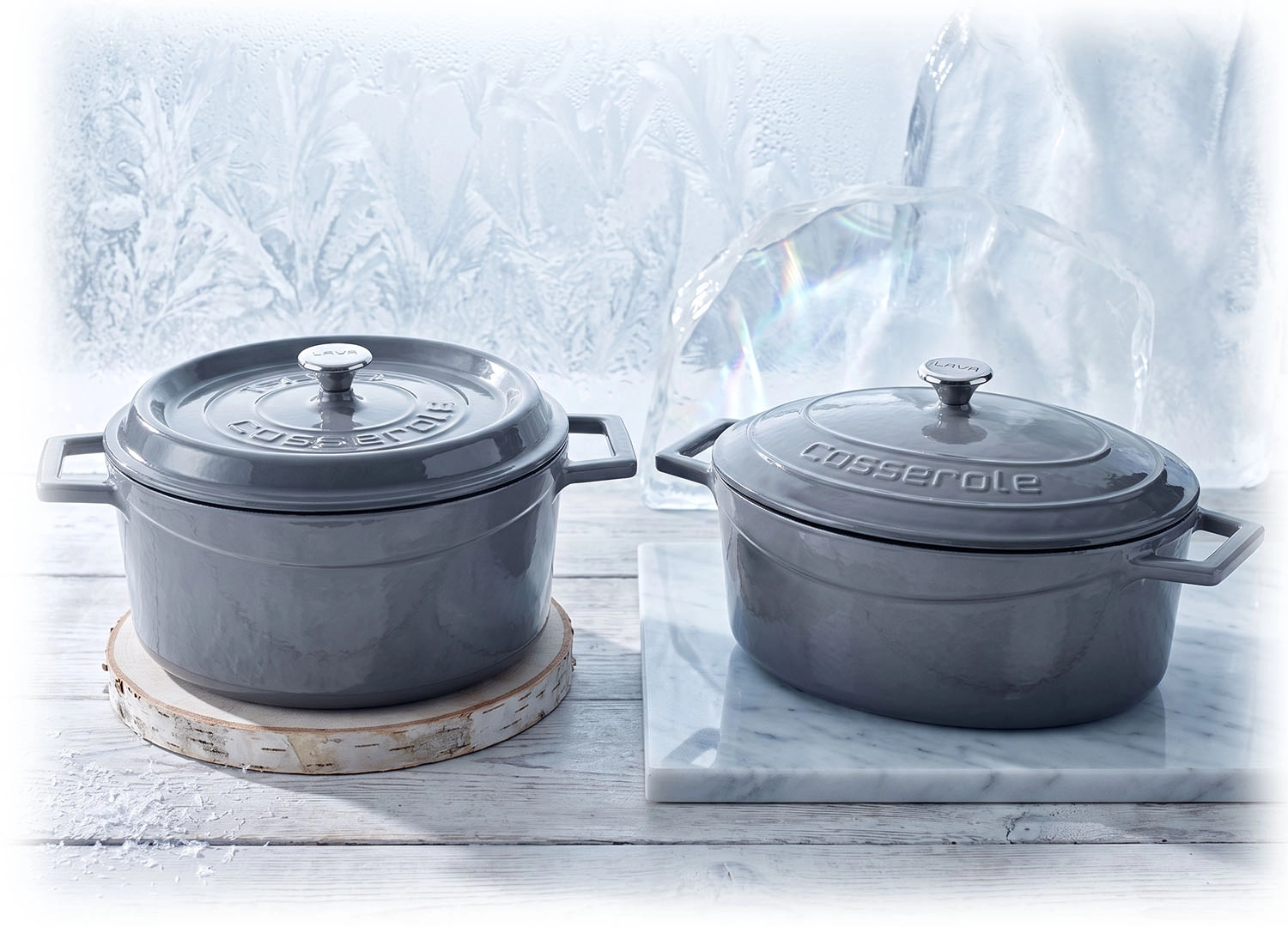
A cast iron casserole is a cookware product with a thick and durable body formed by pouring molten iron into a mould. One of the most distinctive properties of cast iron is its ability to distribute heat evenly throughout the cookware rather than only across the base, while also retaining heat for an extended period after the hob is turned off.
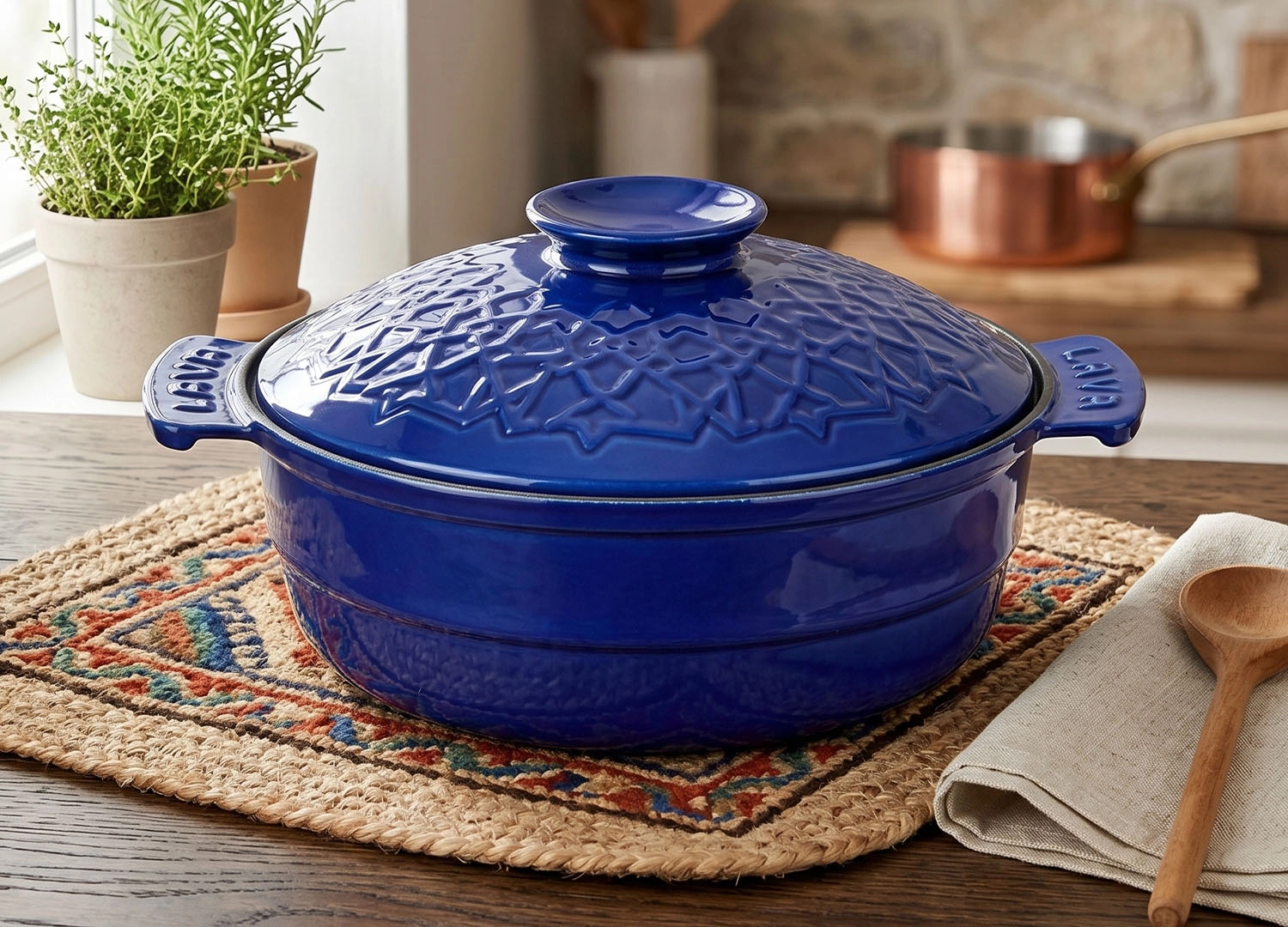
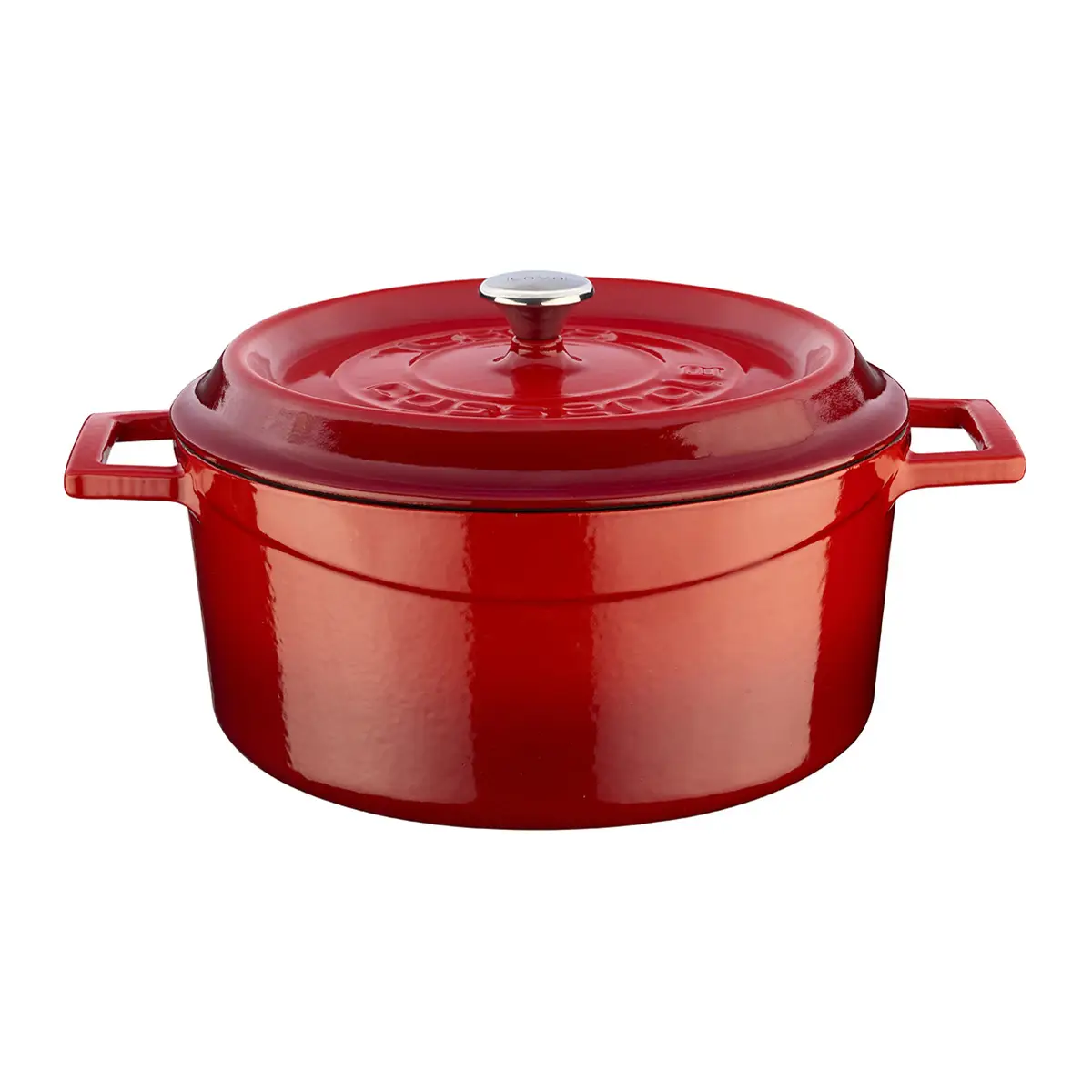
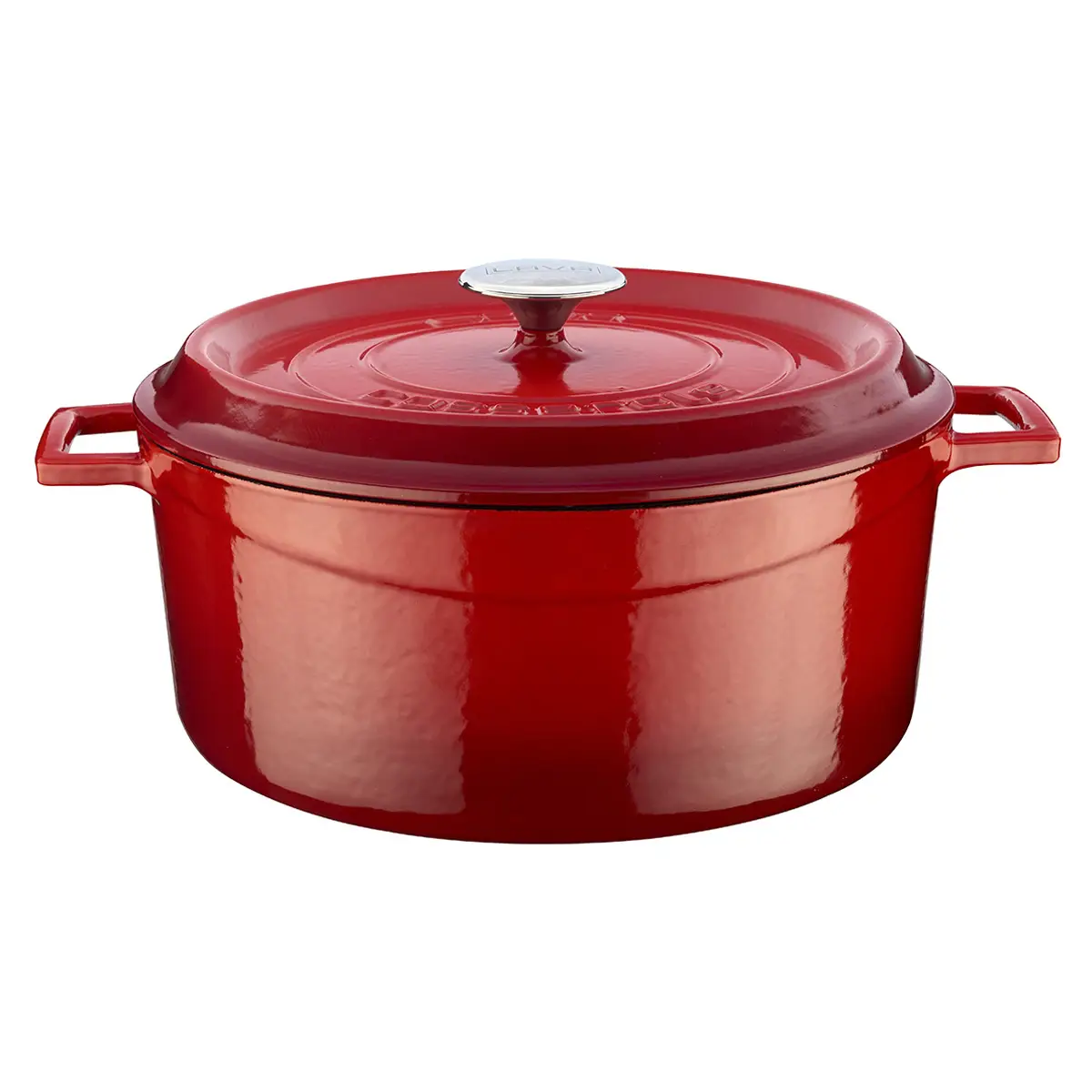
LAVA casseroles feature an enamel coating applied to a cast iron body. Unlike uncoated cast iron products, the enamel surface does not require regular seasoning or continuous oiling. During use, the main consideration is to protect the enamel surface from sudden temperature changes and hard impacts.
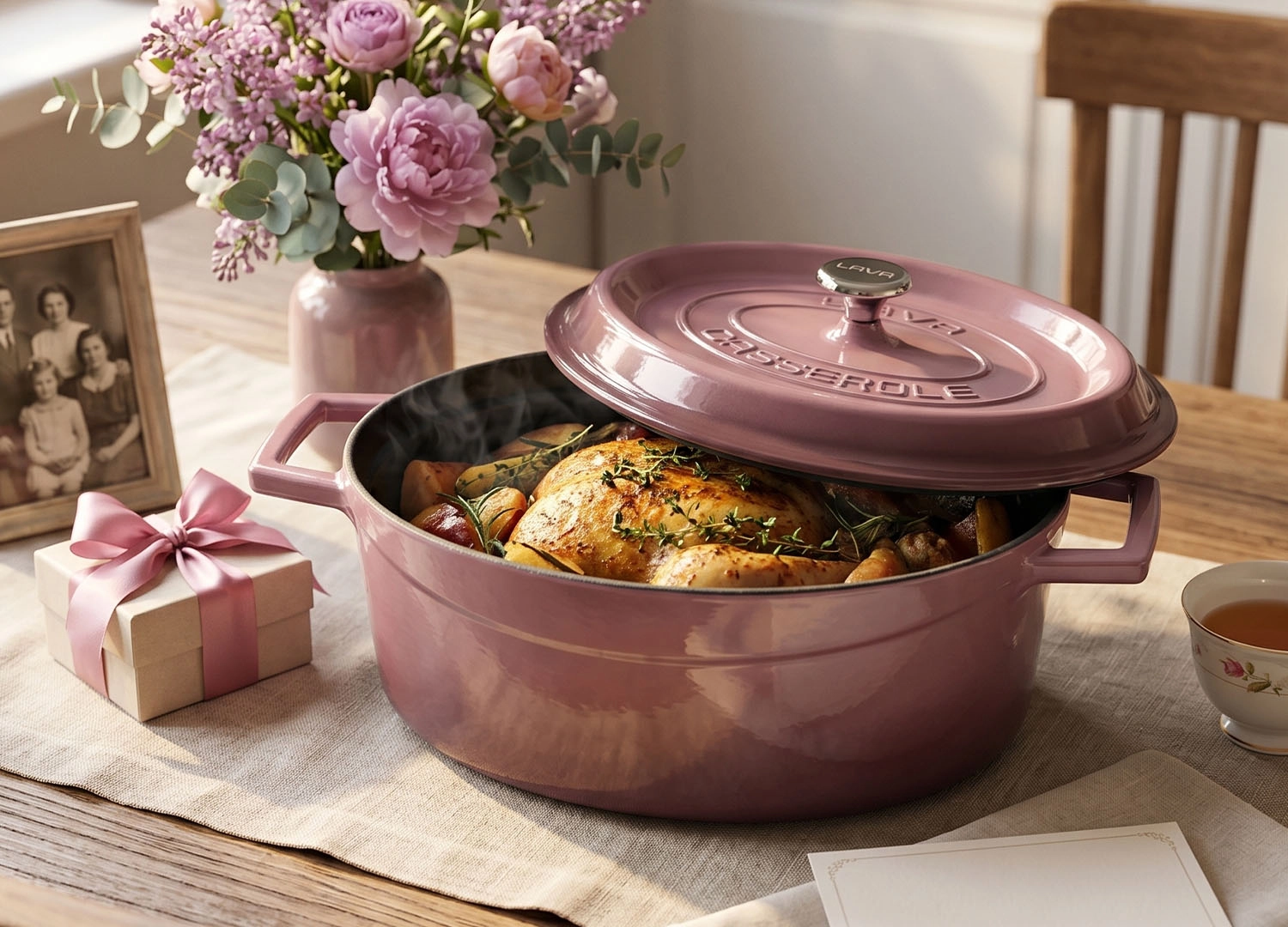
Enamelled cast iron casserole models can also allow a dish started on the hob to continue cooking in the oven, provided this is permitted by the product specifications. This makes it possible to sear, slow-cook and serve food while using the same cookware.
The term granite casserole does not refer to a single manufacturing standard. Many granite casseroles on the market are made by applying a non-stick coating with a granite effect to an aluminium or other metal body. The product’s performance depends less on its stone-like appearance and more on factors such as body thickness, coating quality and manufacturing standards.
For this reason, when you see the term“granite casserole”, you should check the following information:
What material is the casserole body made from?
What is the composition of the coating and how many layers does it have?
At what temperatures can the product be used?
Is it suitable for oven and induction hob use?
Can it be used with metal utensils?
What are the manufacturer’s cleaning and care instructions?
Granite-coated casseroles are generally practical for everyday cooking because they are lightweight, heat up quickly and feature non-stick surfaces. However, performance and durability can vary significantly from one product to another.
The key factor determining the performance of a cast iron casserole is its thick cast iron body. Enamel covers the inner and outer surfaces of this body, making the cookware easier to use and clean.
With granite casseroles, the product name generally refers to the surface coating rather than the body material. A lighter metal is often used underneath the coating. As a result, two granite casseroles with a similar appearance may have different weights, durability and cooking performance.
Granite-coated casseroles can heat up more quickly depending on their body construction. This can save time when preparing everyday meals that require shorter cooking times.
A cast iron casserole heats more gradually but retains the heat it reaches for longer. The even distribution of heat across the base and sides can help provide more consistent results, particularly when cooking dishes for longer periods. Once the casserole has heated up, a low or medium heat setting may be sufficient for many recipes.
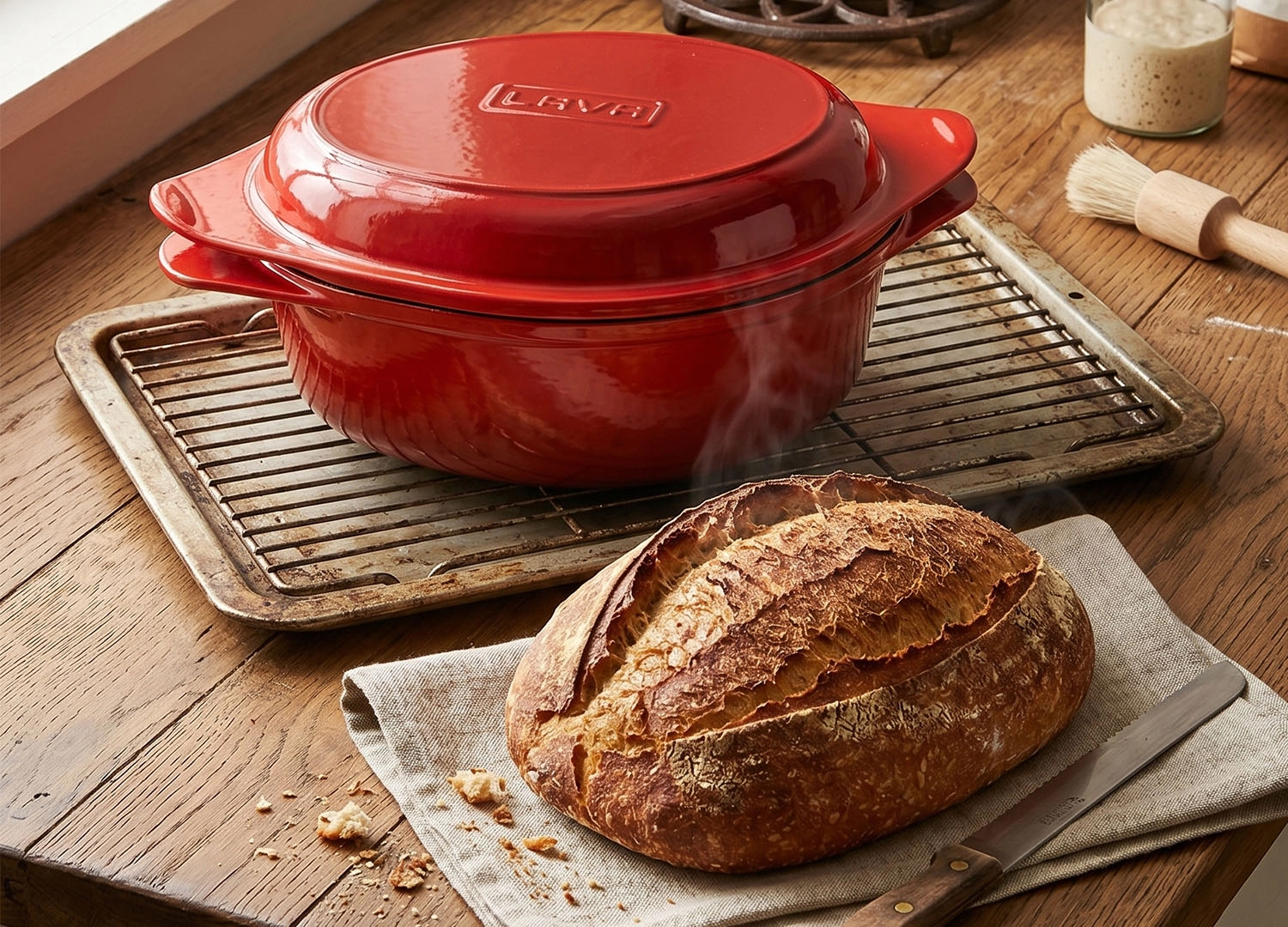
Cast iron casseroles stand out for searing meat, slow cooking, stews, casseroles, dried pulses, bread and oven dishes. Low heat loss can help ingredients cook in a controlled way and allow the flavours of the dish to develop over time.
Granite casseroles, on the other hand, can be a practical option for eggs, vegetables, pasta sauces and everyday dishes that can be prepared quickly. Non-stick performance depends on the quality of the coating and the condition of the surface.
Cast iron bodies offer a high level of structural durability. When used correctly, an enamelled cast iron casserole can remain a key part of the kitchen for many years. However, the enamel surface should be protected from hard impacts and sudden temperature changes.
The lifespan of granite casseroles depends on the quality of the coating and how the cookware is used. If the coating becomes scratched, worn or begins to separate from the surface, the manufacturer’s recommendations should be followed. Products with significant surface damage should not continue to be used.
When considering granite or cast iron, everyday usage habits are an important factor. Cast iron casseroles are heavier than granite-coated alternatives because of their thick iron bodies. A large cast iron casserole can require physical strength or two-handed handling when it is full.
Granite-coated casseroles are generally lighter. This can be an advantage for those who frequently lift their cookware, prefer something easy to carry or are looking for a more practical option for everyday use.
An enamelled cast iron casserole differs from uncoated cast iron cookware. It does not require additional seasoning or oiling after every use. Once the casserole has cooled, it can be cleaned with warm water, a suitable detergent and a soft sponge. Hand washing is recommended to help protect the enamel surface.
With granite-coated casseroles, abrasive scourers, harsh sponges and metal utensils that could scratch the coating should also be avoided. For both types of cookware, the manufacturer’s care instructions should be followed.
For more detailed information, see our guide on how to clean a cast iron casserole.
Depending on the model specifications, enamelled cast iron casseroles can be used on gas, electric, ceramic and induction hobs. LAVA enamelled cast iron products are designed for use with cooking systems other than microwaves. When using the cookware in the oven, check the specified temperature limits for the lid knob and other components.
Induction and oven compatibility is not standard across granite casseroles. Even if the base of a casserole is suitable for induction cooking, its handle or lid knob may not be able to withstand high oven temperatures. Always check the technical specifications before purchasing.
The answer to “Is cast iron or granite healthier?” cannot be determined solely by the material name. With enamelled cast iron casseroles, the food-contact surface is enamel. With granite-coated casseroles, the composition of the coating, food-contact suitability and recommended usage temperature should be assessed for each product. For this reason, technical specifications and manufacturer instructions should be considered when making a health-related comparison.
It would not be appropriate to give a definitive answer to “Which casserole is healthier?” based solely on the name of the material. Safe and appropriate use depends on the product’s manufacturing standards, suitability for food contact, coating properties, surface integrity and compliance with the usage instructions.
The cooking surface of an enamelled cast iron casserole is covered with a glass-like enamel layer. This provides a different cooking experience from uncoated cast iron and does not require seasoning. When the coating is intact and the cookware is used according to the instructions, it can provide a long-lasting cooking solution.
There can be significant differences between granite-coated casseroles. For this reason, the term “granite” alone should not be considered a guarantee of health or quality. Food-contact suitability information, manufacturer statements, coating composition and recommended usage temperature should all be checked.
In short, the safe and appropriate use of cookware depends not only on its type, but also on product quality and correct use.
| Dish or Cooking Technique | More Suitable Option | Why? |
|---|---|---|
| Searing meat | Cast iron casserole | High and stable surface temperature |
| Stews and slow-cooked dishes | Cast iron casserole | Retains heat for longer |
| Casseroles and dried pulses | Cast iron casserole | Even, controlled cooking |
| Baking bread | Cast iron casserole | Structure that retains heat and steam |
| Hob-to-oven recipes | Cast iron casserole | Versatile use with suitable models |
| Quick vegetable dishes | Granite casserole | Faster heating and lighter weight |
| Eggs and delicate foods | Granite casserole | Convenience of a non-stick surface |
| Short everyday cooking | Granite casserole | Practical use and cleaning |
| Serving food hot | Cast iron casserole | Keeps food warm for longer |
You should not expect a single casserole to provide exactly the same results for every recipe. Identifying the dishes you prepare most often and choosing accordingly can provide a more suitable result than making a decision based solely on the product’s appearance.
Distributes heat evenly.
Retains heat for longer.
Provides strong performance for slow-cooking recipes.
Suitable for searing meat and oven cooking.
Helps keep food warmer for longer when serving.
Enamelled models do not require seasoning.
Can provide long-term use when handled correctly.
Suitable for taking food from the hob to the table.
Heavier than granite-coated casseroles.
Should be heated gradually for the best results.
Cold water should not be added suddenly to a hot casserole.
The enamel surface should be protected from hard impacts.
Oven gloves should be used with heated handles.
Generally lighter.
Can heat up quickly.
A non-stick surface can make everyday cooking easier.
Practical for recipes with shorter cooking times.
Generally easy to clean.
The term “granite” does not always explain the body material.
Quality and performance can vary between products.
The coating should be protected against scratches and wear.
High heat can affect coating performance.
Oven and induction compatibility may not be available on every model.
Metal kitchen utensils can damage the surface.
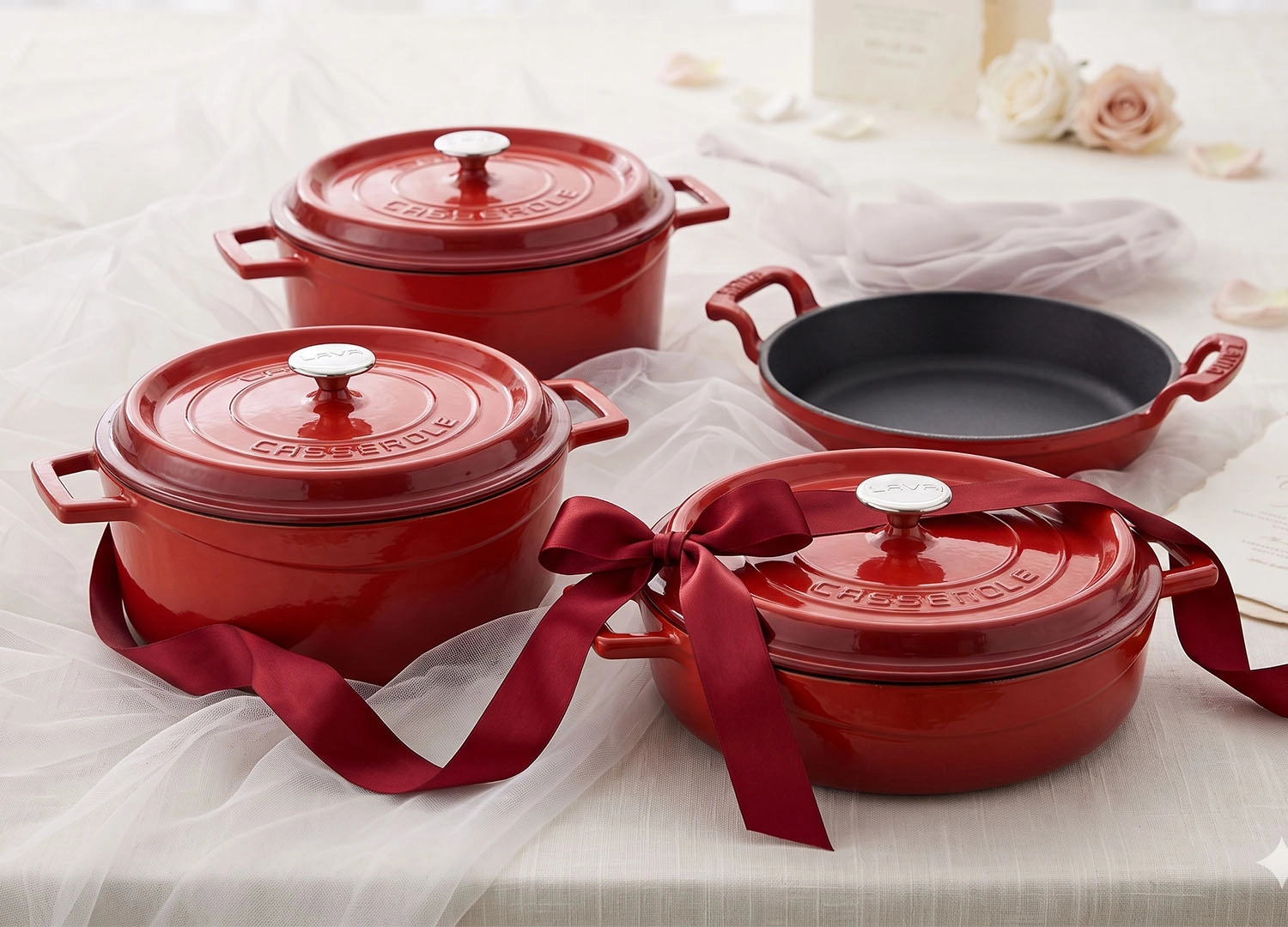
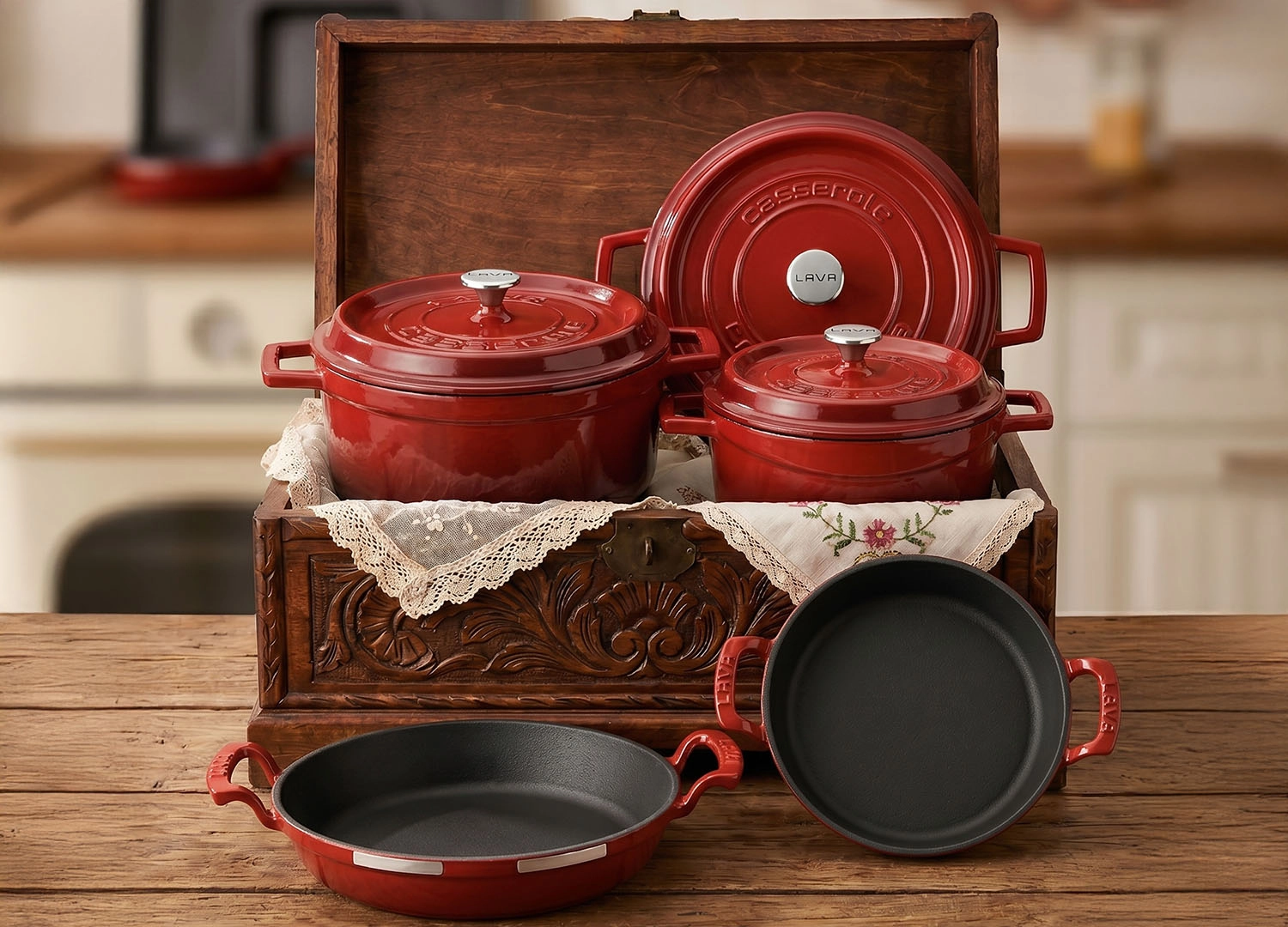
When preparing a wedding trousseau, the focus should not only be on the number of casseroles but also on creating a balanced selection that meets different cooking needs.
If long-term use, oven recipes and traditional casserole dishes are priorities, an enamelled cast iron casserole can be a versatile addition. If light weight and quick everyday cooking are more important, granite-coated products can be considered as complementary options.
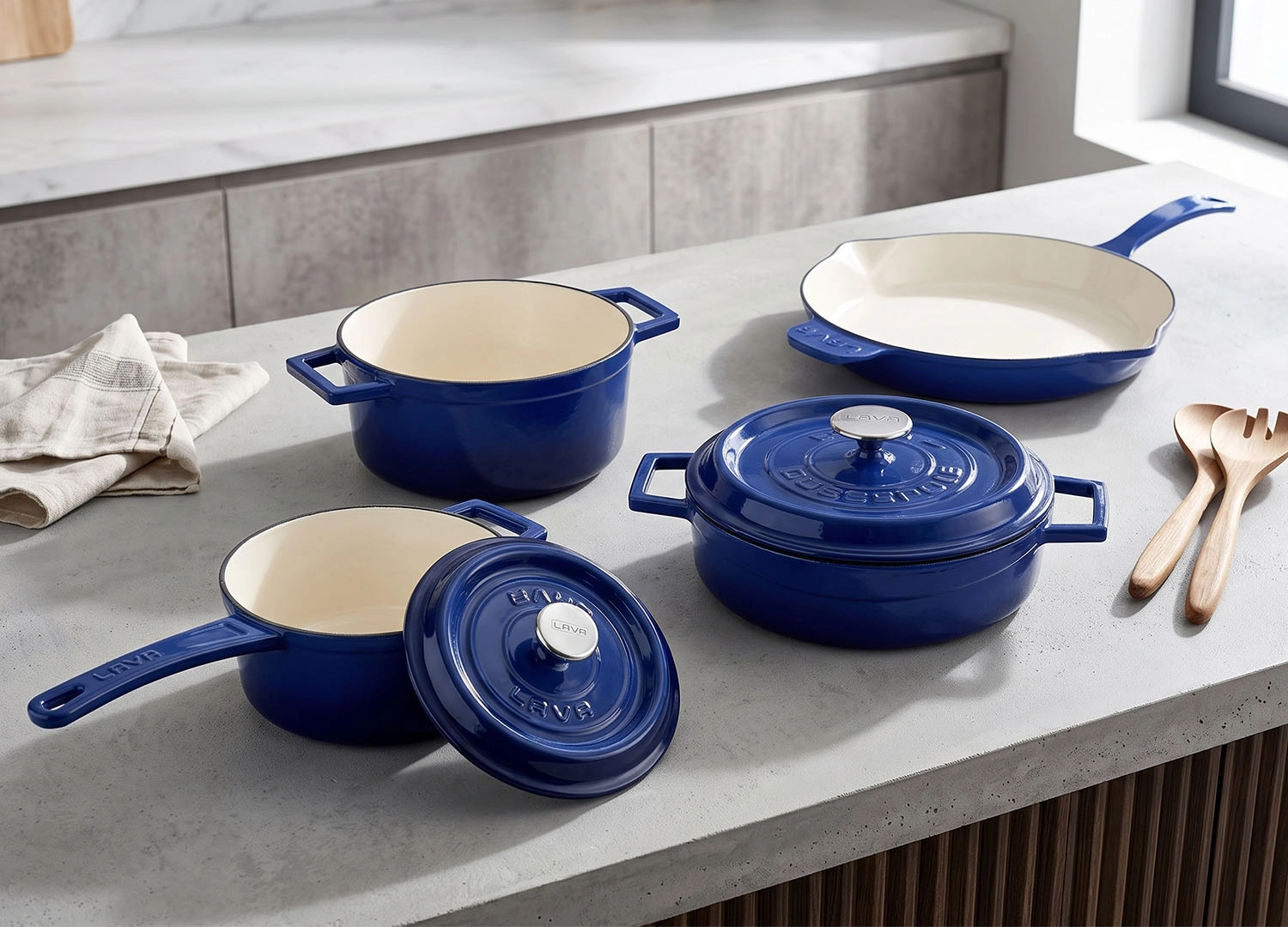
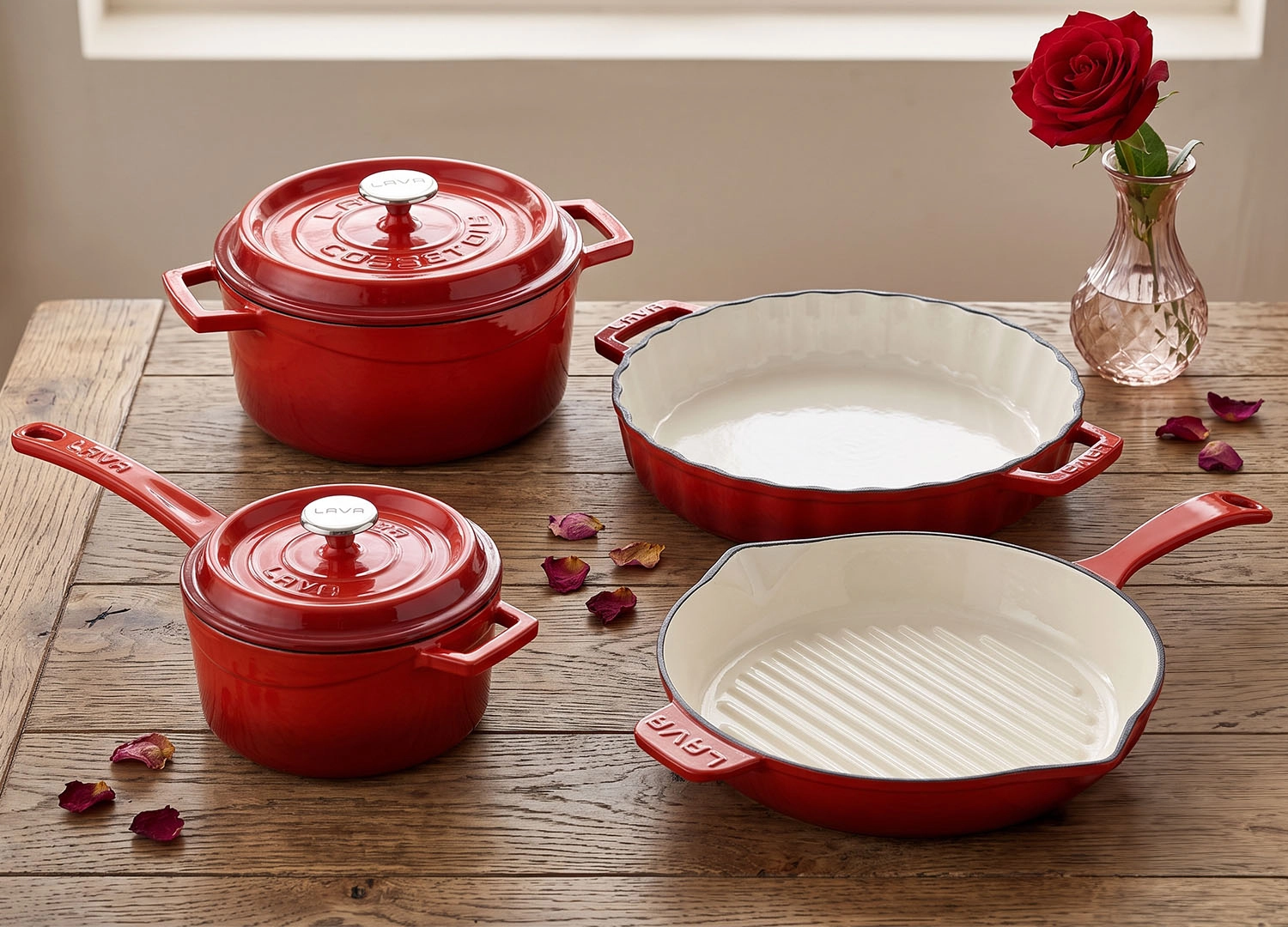
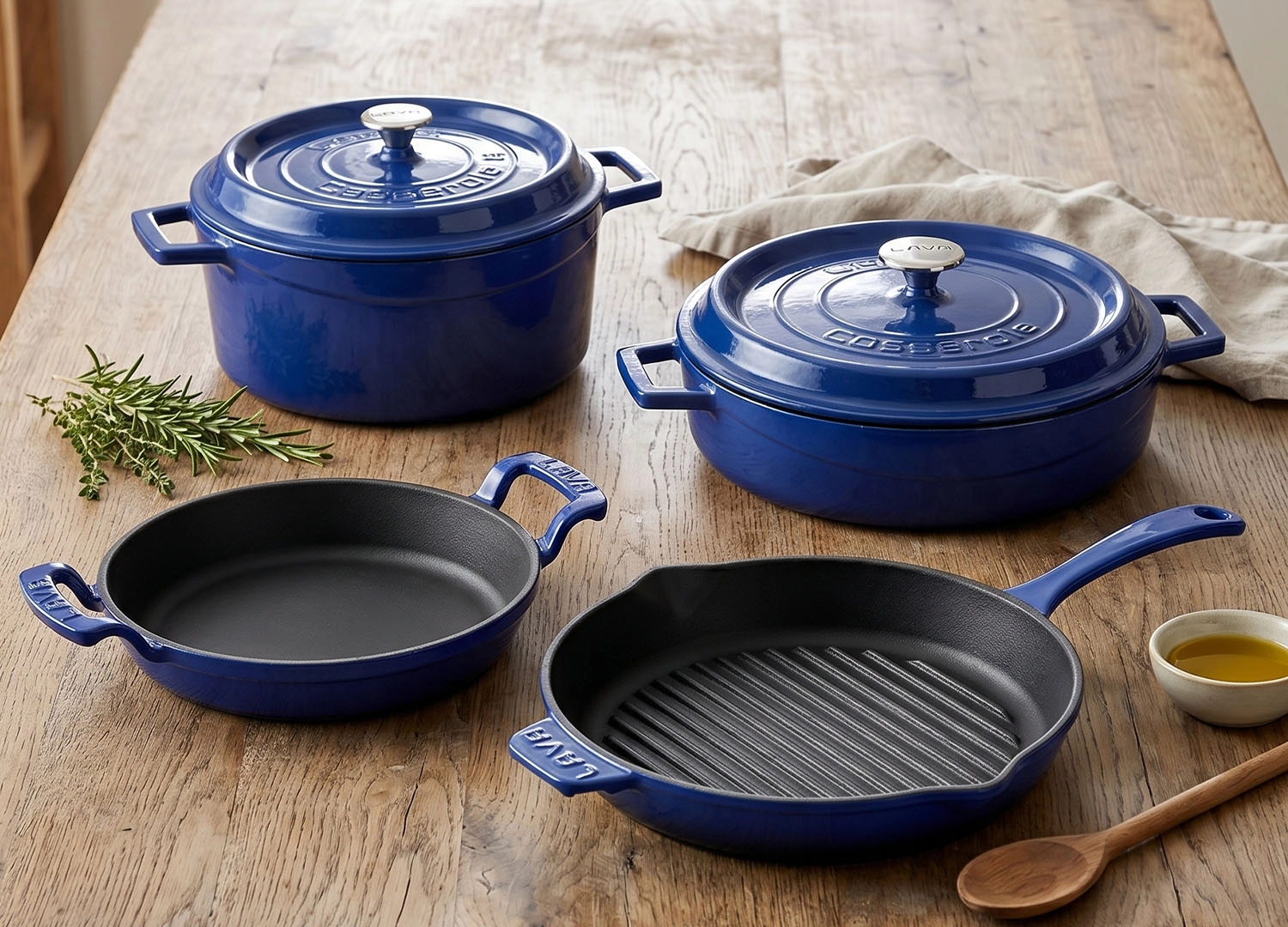
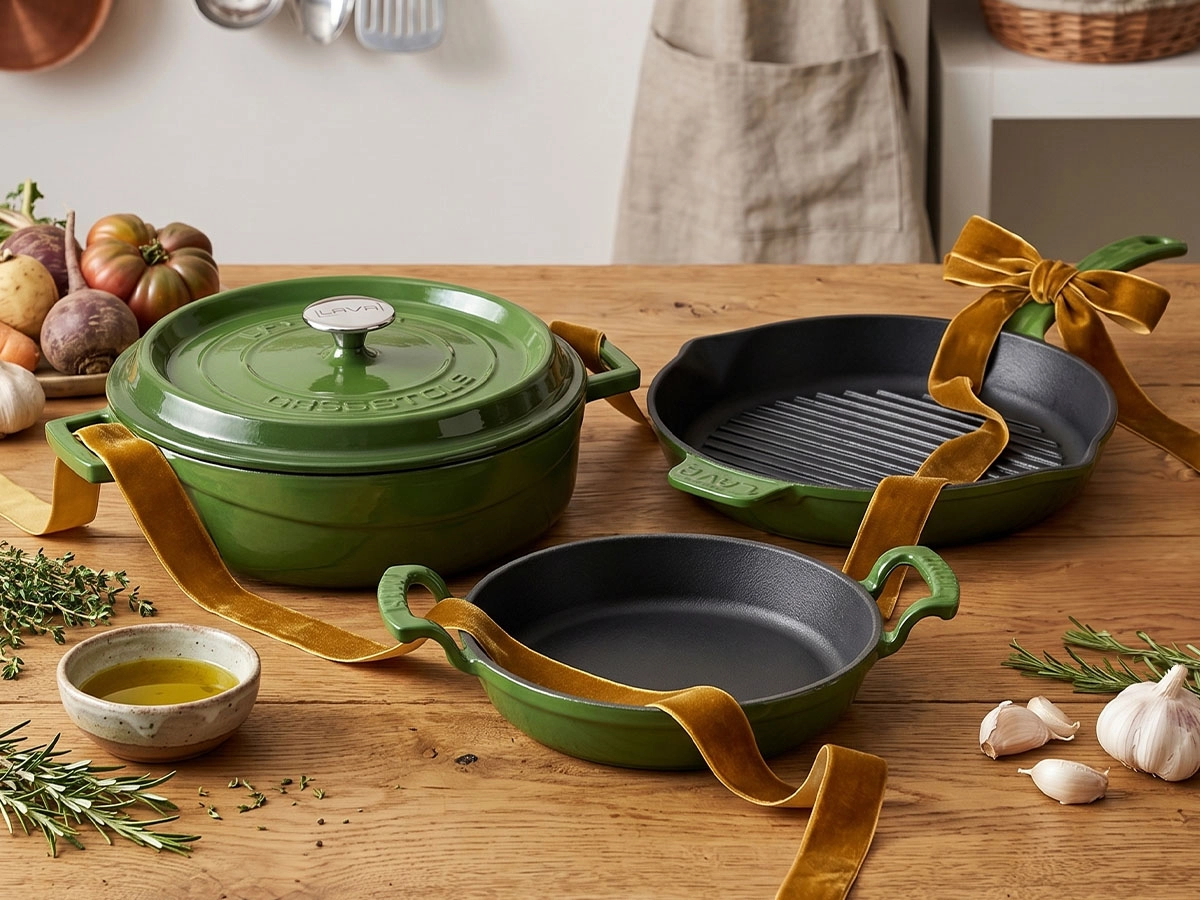
The most functional approach is to choose products that complement different needs rather than buying multiple casseroles with similar characteristics. For example, a medium-sized cast iron casserole, a cast iron pan and a lighter everyday casserole can cover different cooking techniques in the kitchen. For options that can be used together, explore cast iron casserole and pan sets.
When deciding between a cast iron casserole and a granite casserole, ask yourself the following questions:
Which dishes do I prepare most often?
Do I prepare slow-cooked or oven-based recipes?
Is the weight of the casserole important to me?
Do I use an induction hob?
Is long-term use or everyday lightness more important to me?
Is the coating composition and food-contact suitability clearly stated?
Are spare parts, warranty and manufacturer support available?
Are the product’s usage and care instructions clearly provided?
You should not make a decision based solely on general terms such as “non-stick”, “scratch-resistant” or “natural”. Body material, product weight, coating type, maximum oven temperature and hob compatibility should be checked through the technical specifications.
There is no single correct choice for everyone when comparing cast iron and granite casseroles. Users looking for a lighter, faster-heating and practical option for short everyday recipes may prefer granite-coated casseroles.
For those looking for cookware that distributes heat evenly, retains heat for longer, performs well for searing and slow cooking, and can provide long-term use when handled correctly, an enamelled cast iron casserole can be a suitable option.
If meat dishes, casseroles, stews, dried pulses, bread and oven recipes are an important part of your cooking routine, a cast iron casserole offers more than a simple cooking vessel; it provides versatile cookware that can support a range of cooking techniques.
Explore LAVA’s enamelled cast iron casserole models, available in different sizes, shapes and colours, to find a model suited to your cooking habits.
Cast iron bodies are structurally very durable. When the enamel surface is used and cared for correctly, an enamelled cast iron casserole can be used for many years. The lifespan of granite casseroles depends on the quality of the body and coating, cooking temperature and how well the surface is protected from scratches.
Because cast iron distributes heat evenly and retains it for longer, it can create a controlled cooking environment, particularly for meat, stews, casseroles and dishes cooked slowly over a low heat. This can support longer cooking techniques that allow the flavours of the ingredients to develop.
A significant proportion of granite casseroles on the market are not made entirely from granite stone. The term “granite” generally refers to a granite-effect coating applied to a metal body. For accurate information, check the product’s body and coating specifications.
No. LAVA enamelled cast iron casseroles do not require the seasoning process used for uncoated cast iron products. The main consideration is to protect the enamel surface from hard impacts, abrasive materials and sudden temperature changes.
The product’s care instructions should always be checked. However, hand washing is recommended to help preserve the appearance and performance of the enamel surface over time. Once the casserole has cooled, it can be cleaned with warm water, a suitable detergent and a soft sponge.
Cast iron is compatible with induction cooking. LAVA enamelled cast iron casseroles can be used on induction hobs. To help prevent scratches, the casserole should be lifted rather than dragged across the hob.
Yes. A cast iron casserole can be used not only for special recipes that require long cooking times, but also for everyday dishes such as soup, rice, vegetable dishes and pasta sauces. Gradual heating and generally using low or medium heat is sufficient.
Not every granite casserole is suitable for oven use. Even if the body can withstand high temperatures, the handle, lid or lid knob may not be suitable for oven cooking. The manufacturer’s specified maximum oven temperature should be checked.
If you are looking for strong heat performance and long-term use in the kitchen, explore LAVA’s enamelled cast iron casserole collection. Discover models in different sizes, shapes and colours and choose the option that best suits your cooking habits and needs.
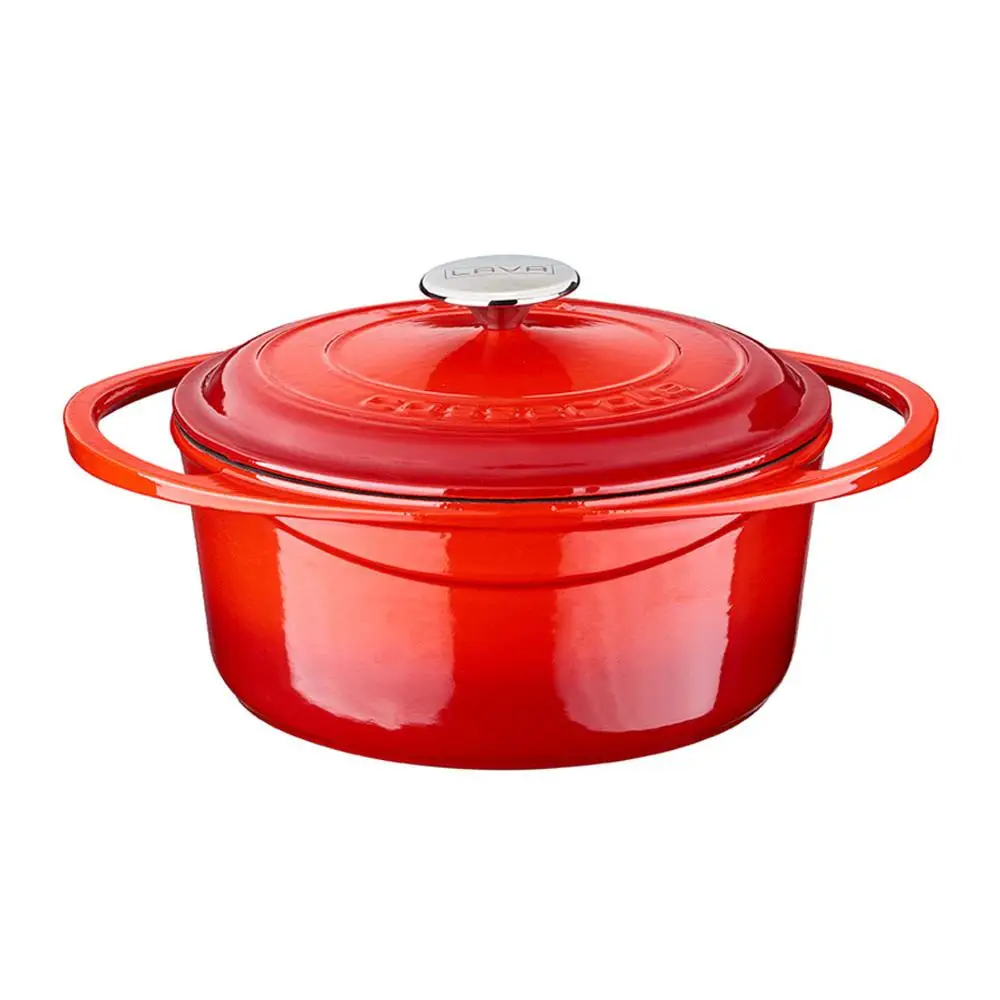
25.08.2026Lava Cast Iron Round Premium. Trendy, 1-Handle, Dia. Ø 28cm.
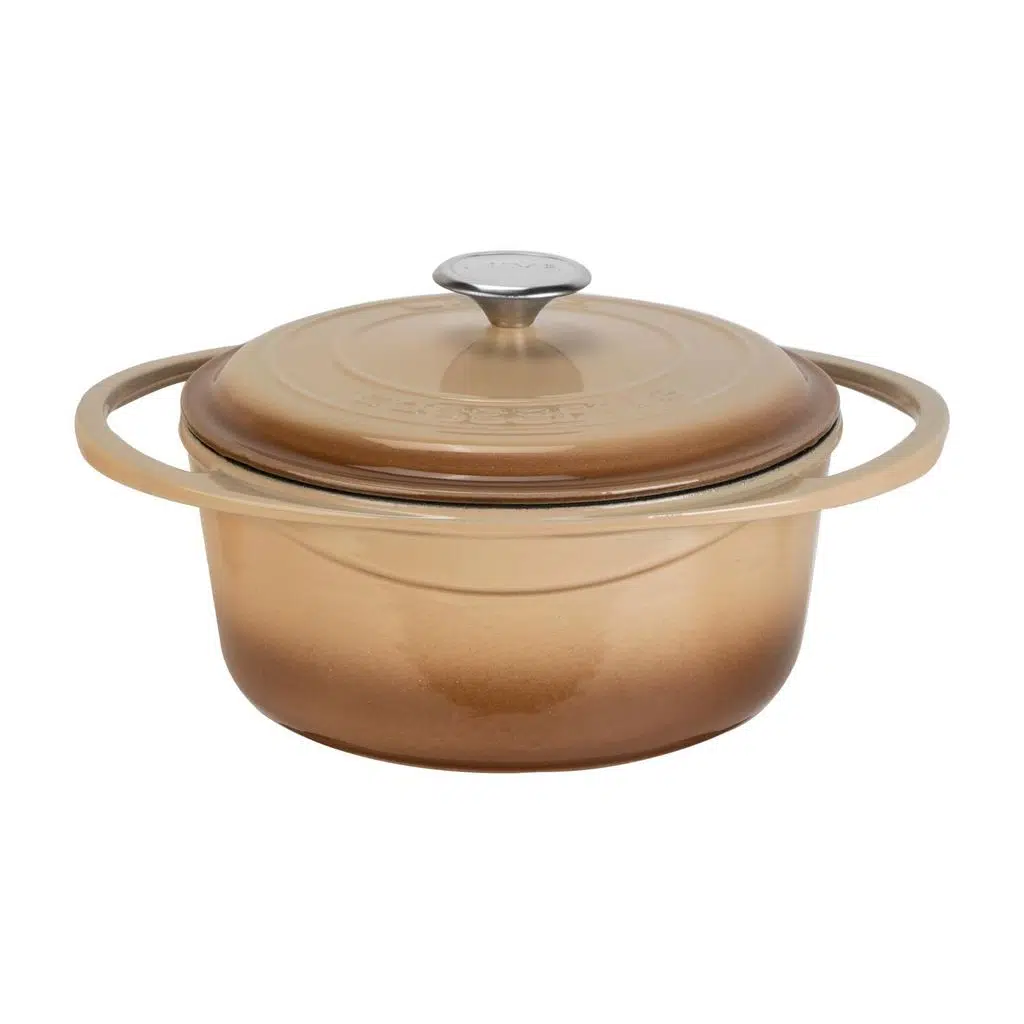
Lava Cast Iron Round Multipurpose Casserole. Folk, Dia. Ø 28cm.







Lava Döküm Online Fabrika Satış Mağazası. © 2026 All Rights Reserved.


0
)