×

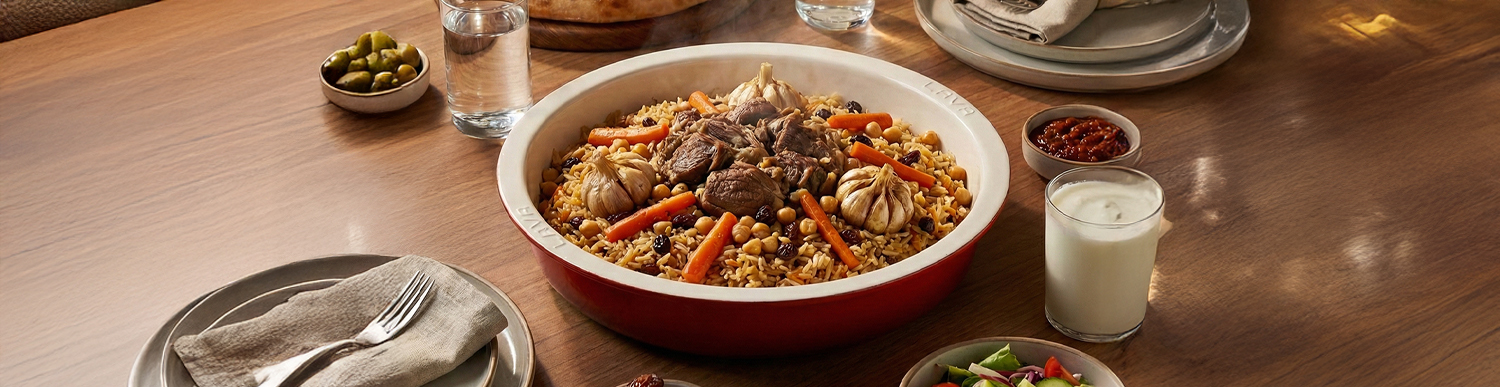
Uzbek Pilaf is one of the most renowned and beloved dishes of Central Asian cuisine. Particularly celebrated on traditional Uzbek tables, this dish has gradually been adapted into Turkish cuisine as well. When planning the 25th day of Ramadan iftar menu, Uzbek Pilaf takes its place on the table with both its hearty nature and its special presentation.
Turkish cuisine, with its rich historical background, carries traces of Central Asian, Arab, and Anatolian cuisines. Therefore, Uzbek Pilaf is not just a type of rice dish in Turkish cuisine; it serves as a cultural bridge. For those looking for a Ramadan recipe, Uzbek Pilaf has become a standout choice both for hosting guests and for family iftars.
Uzbek Pilaf is more than just a dish made of rice, meat, and vegetables. Every ingredient holds significance in Uzbek culture. The lamb or beef used in the pilaf symbolizes abundance and prosperity. Vegetables such as carrots and onions provide both colour and flavour balance on the table. Compared to Turkish cuisine, Uzbek Pilaf has a more aromatic and spiced profile. Especially among Ramadan recipes, when planning the 25th day iftar menu, this pilaf adds visual appeal and a rich taste to the table.
Preparing Uzbek Pilaf requires the right techniques and ingredient selection. The following recipe is ideal for 6-8 servings and provides a practical guide for those looking for a Ramadan recipe.
500 grams of rice (preferably Baldo or Osmancik)
400 grams of lamb or beef (cut into cubes)
2 large carrots
2 large onions
4 tablespoons of vegetable oil or butter
1 teaspoon of salt
1 teaspoon of black pepper
1 teaspoon of cumin
1/2 teaspoon of saffron or red paprika (optional)
700 ml of water
First, wash the rice and soak it in lukewarm water for 20-30 minutes. Cut the carrots into julienne strips and slice the onions. Dice the meat into cubes and, if desired, marinate with a pinch of salt.
Heat the oil or butter in a large pot. Add the meat and sauté over medium heat until it changes colour. At this stage, allowing the meat to release and reabsorb its own juices enhances the pilaf’s flavour.
Add the onions and continue sautéing. Then add the carrots and cook until the vegetables soften. Enhance the aroma by adding black pepper and cumin.
Add the drained rice to the pot and stir. Ensuring the rice is well-coated with oil is key to achieving fluffy, separate grains.
Pour 700 ml of water into the pot and adjust the salt. Cover and bring to a boil over high heat, then reduce the heat and simmer for about 20-25 minutes. After cooking, cover the pilaf with a clean cloth and let it steam for 10 minutes.
Uzbek Pilaf is usually served on a large platter, with meat and vegetables arranged on top. Serving it with yogurt or ayran balances the flavours. This makes it an ideal choice for the 25th day of Ramadan iftar menu.
When serving rich and hearty dishes like Uzbek Pilaf, it’s important to balance the menu. On a guest table, not only flavour but also visual appeal and nutritional balance should be considered.
Starters: Begin the meal with soups or light salads to aid digestion before the main course. During Ramadan iftar, lentil soup or Ezogelin soup are excellent choices.
Main Course: Dishes like Uzbek Pilaf, rich in meat and rice, should be served as the main course. The flavour and presentation of the pilaf complement the other dishes on the menu.
Side Dishes: Pickles, yogurt, or light vegetable garnishes create balance. Guests can enjoy fresh and light alternatives alongside the pilaf.
Desserts and Beverages: For the 25th day of the Ramadan iftar menu, opt for light desserts. Güllaç, rice pudding, or fruit salad complete the meal on a sweet note.
When hosting guests, presentation is as important as flavour. Uzbek Pilaf is visually impressive when served in a large dish or copper pot. Arranging the meat and vegetables evenly enhances the table’s aesthetics.
In summary, Uzbek Pilaf has earned a special place in Turkish cuisine and stands out as a Ramadan recipe for the 25th day iftar menu. With the right ingredients and techniques, this pilaf impresses guests with both its taste and presentation.
27.02.2026






Lava Döküm Online Fabrika Satış Mağazası. © 2026 All Rights Reserved.


0
)