×

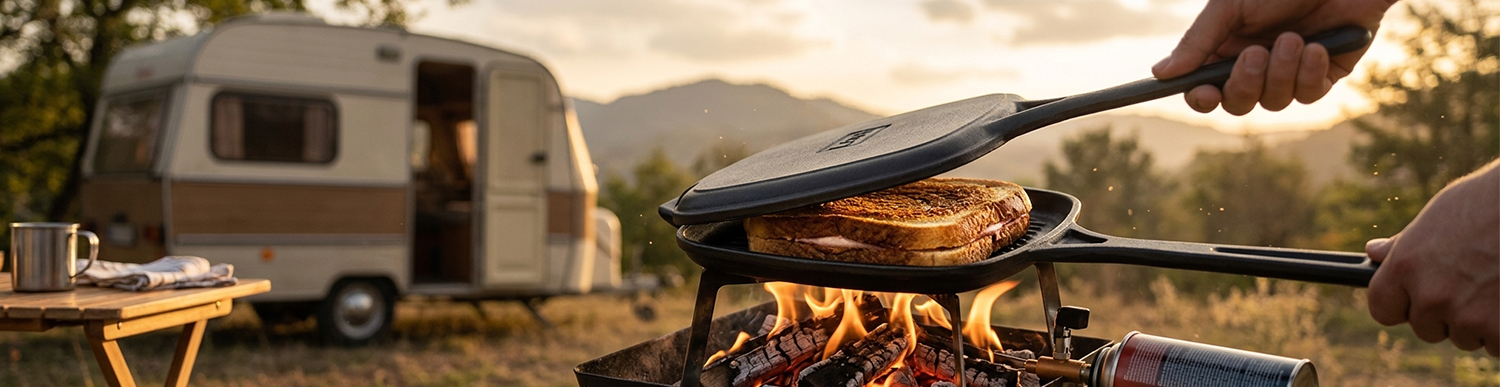
An outdoor cast iron pan can be used in camping and caravan kitchens to prepare toast, hot sandwiches and various grilled recipes without needing an electrical connection. When using a stovetop cast iron toast press, it is important to consider the load capacity of the hob, the stability of the pan, gradual heating, wind, ventilation and the safe handling of hot cookware. Compatibility with a camping stove, caravan hob or open fire should always be checked against the product's instructions.
Estimated reading time: 8 minutes
When travelling by campervan or caravan, good cooking performance is not the only consideration when choosing kitchen equipment. The equipment should also be easy to store in a limited space, suitable for preparing different recipes and compatible with the available heat source.
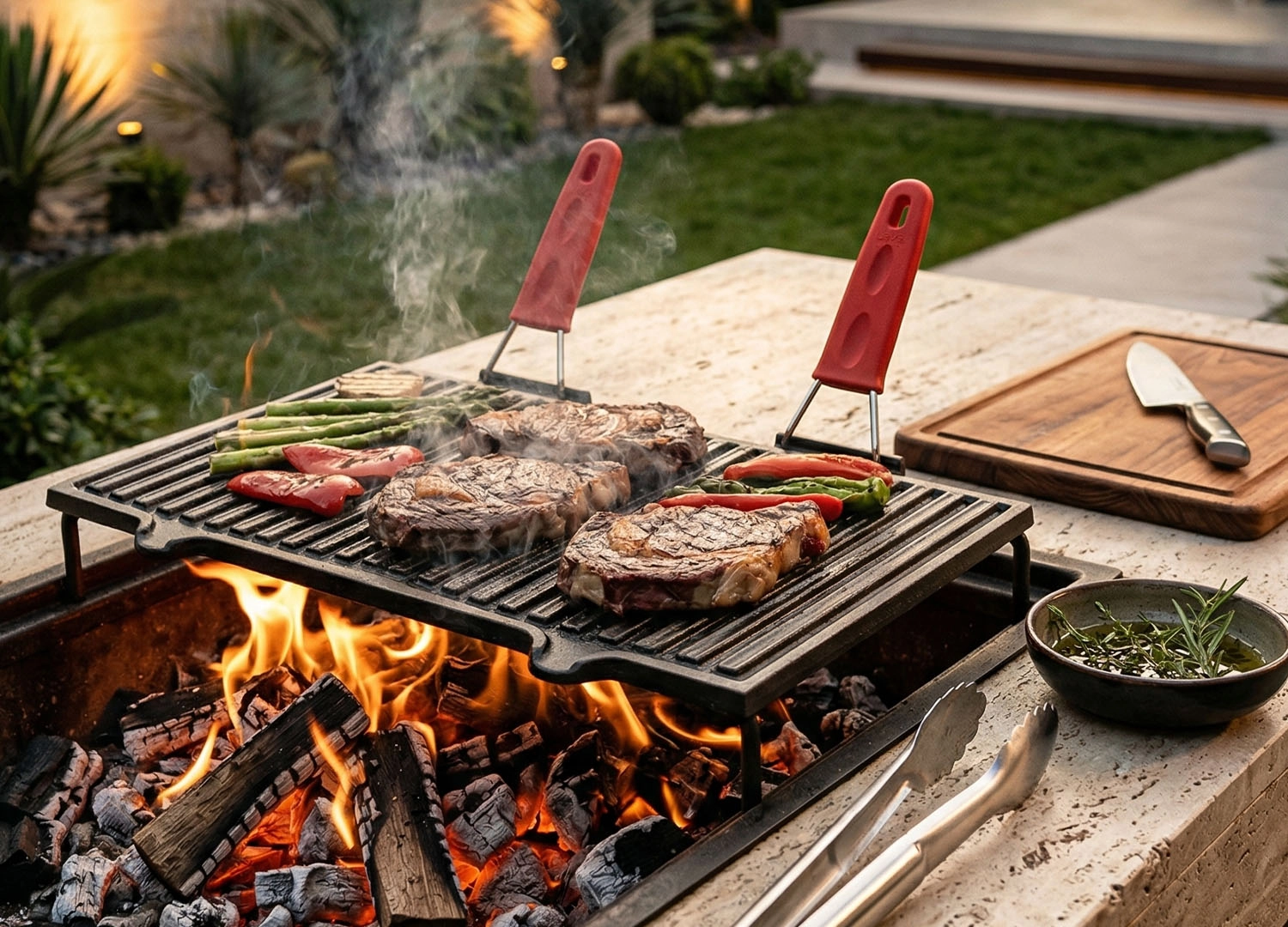
An outdoor cast iron pan offers a practical solution for outdoor cooking thanks to its heat-retaining properties and versatile use. Double-sided models or models with removable plates can be used not only for preparing toast but also for bread, vegetables and different grilled recipes.
A stovetop cast iron toast press, meanwhile, allows you to prepare hot sandwiches and toast without an electrical appliance, provided it is used on a suitable camping or caravan hob. However, when using cookware outdoors, its weight, handle design, stability on the hob and compatibility with the heat source should always be considered.
An outdoor cast iron pan is cast iron cookware designed for use during camping, caravan trips, in gardens and in suitable outdoor cooking areas. The term “outdoor” does not describe a separate material type; it refers to the product's intended outdoor cooking scenario.
The suitability of a cast iron pan for outdoor use does not depend solely on it being made from cast iron. The product must be compatible with the hob being used, have a stable base, be safe to handle and transport, and be used in accordance with the manufacturer's instructions.
Cast iron retains the heat it absorbs and distributes it across the cooking surface. This characteristic can be particularly useful outdoors, where ambient temperature and wind can affect cooking performance.
An outdoor cast iron pan can meet the following cooking needs:
Preparing food without an electrical connection
Cooking different recipes with the same piece of cookware
Taking toast, sandwiches and grilled recipes outdoors
Managing heat more effectively
Using durable cookware for car camping and caravan trips
Each of these benefits should be assessed according to the product's design, dimensions and intended uses specified by the manufacturer.
Enamel coating is a glass-like layer that protects the cast iron surface. Enamelled cast iron products do not require the seasoning process used with bare cast iron products.
This can make everyday care easier in camping and caravan conditions. However, the enamelled surface should be protected from impacts and should not come into direct contact with metal equipment during transport.
A stovetop cast iron toast press can be considered for outdoor use provided that the model is compatible with the heat sources specified in its instructions. Instead of using an electric heating element, it receives heat directly from the hob.
This makes it possible to prepare toast at campsites without an electrical connection or in caravan kitchens where electricity use is limited.
However, the fact that a product is made from cast iron does not mean it can automatically be used on every camping stove or open-fire setup. The toast press instructions should be checked together with the stove's load capacity and safety requirements.
A stovetop model is placed on a suitable camping or caravan hob and heated gradually. The food is placed between the two cooking surfaces and, depending on the design of the model, the pan can be turned carefully to cook both sides.
Because the heat comes directly from the hob, there is no automatic temperature control or timer like those found on electric toast makers. The user needs to control the flame, cooking time and surface temperature.
Not always. A stovetop toast press generally has a double-sided design that allows food to be cooked between two surfaces. A cast iron grill pan, on the other hand, usually provides a single cooking surface.
Toast pan models with removable plates can also be used as separate grill surfaces when permitted by the product instructions. This allows one piece of cookware to combine toast preparation and grilling functions.
Before use, the camping stove should be placed on a dry, stable and non-flammable surface away from walkways. Current fire and stove-use regulations at the campsite should also be checked.
First, check the maximum load capacity of the camping stove. Cast iron cookware is heavier than lightweight metal pans. The stove support must be able to safely carry the combined weight of the cookware and the food inside it.
The base of the pan should sit securely on the stove, and the weight of a long handle should not pull the product to one side. A pan that rocks, tilts or does not sit securely on the stove support should not be used.
An outdoor cast iron pan should not immediately be exposed to the highest heat setting. It should be heated gradually using low or medium heat.
Once cast iron reaches the required temperature, it continues to retain heat. Therefore, there is generally no need to keep the flame at a high setting once the pan is hot. Excessively high heat can cause the outside of the bread to brown quickly while the filling remains insufficiently heated.
When using a double-sided model, check that the handle or locking system is properly secured before turning it over. The product should be turned slowly and carefully using both hands.
When turning the toast press:
Keep children and pets away from the cooking area.
Remember that the handles may become hot.
Use heat-resistant gloves or a suitable holder.
Make sure the balance of the stove and pan is not disturbed.
Wind can change the direction and intensity of the flame. This can cause one part of the pan to become hotter than another.
If a wind guard is used, it must comply with the camping stove manufacturer's instructions. The guard must not block the stove's air intake or cause heat to be directed towards the fuel cartridge.
Tent fabric, dry grass, napkins, plastic packaging or wooden camping furniture should not be used as windbreaks. If a safe cooking area cannot be maintained in strong winds, cooking should be postponed.
Caravan kitchens have limited space around the hob, worktop and walkways. For this reason, the total length of the product, including its handles, should be considered in addition to its cooking surface.
Cooking should not begin until the caravan is completely stationary and secured on a level surface.
The width of the caravan hob and its load capacity should be checked in the appliance's instructions. A heavy cast iron product should not be placed on a narrow or inadequately supported hob.
The handles should not touch cupboard doors, curtains, walls or walkways. There should also be sufficient space to turn the product safely.
Fuel-burning appliances can produce carbon monoxide. Because carbon monoxide is colourless and odourless, it can accumulate indoors without being detected.
Portable camping stoves should not be used inside caravans, vehicles or tents. In a caravan, only a fixed cooking system that has been installed appropriately for the vehicle should be used in accordance with the manufacturer's instructions.
During cooking:
Do not block the caravan's ventilation openings.
Make sure a working carbon monoxide alarm is installed.
Never leave the hob unattended.
Do not use the hob as a source of heating.
If you experience headache, dizziness, weakness, nausea or confusion, turn off the appliance, move everyone into fresh air and seek emergency assistance.
Controlled heat is the key to a good camping toastie. Bread may not brown sufficiently if the pan is too cold, while an excessively hot surface can burn the bread quickly.
The following sequence can be followed when preparing toast:
Heat the pan gradually on a stable hob.
Place the bread and fillings inside without overfilling the cooking area.
Close the upper plate carefully.
Cook the first side over medium or low-to-medium heat.
Check the handle system and turn the pan over.
Continue cooking the second side, checking the toast at regular intervals.
Once cooking is complete, place the pan on a safe surface.
The exact cooking time varies depending on the thickness of the bread, the ingredients used, the power of the hob, wind conditions and ambient temperature.
Thick sandwiches should be cooked at a more controlled temperature rather than over high heat. This gives the filling more time to warm through while helping to prevent the outside from burning too quickly.
The pan should not be forced shut, and the capacity specified by the manufacturer should not be exceeded. Limiting the amount of runny cheese or sauce can also help prevent the ingredients from spilling outside the cooking area.
An outdoor cast iron pan is not limited to preparing toast. Depending on the product design and the manufacturer's recommendations, it can be used to prepare a variety of camping meals.
Cheese toasties, vegetable sandwiches and hot snacks made with different types of bread are practical options for camping breakfasts.
Slices of bread, Turkish flatbread and sandwich bread can be toasted over controlled heat.
Vegetables such as courgette, peppers and mushrooms, cut into similarly sized pieces, can be cooked on a grill surface.
If the plates of a stovetop cast iron toast press can be removed and the manufacturer permits this type of use, the surfaces can be used separately as individual pans. This allows different cooking needs to be met with a limited amount of camping equipment.
Detailed recipes should be covered separately in a guide such as “Easy Breakfast Recipes You Can Make with a Toast Pan”.
The product should be allowed to cool completely before cleaning. Cold water should not be poured suddenly onto hot cast iron cookware.
Food residue should be removed using a soft sponge suitable for enamelled surfaces. Hard metal brushes, sharp utensils and abrasive cleaning methods should not be used.
When access to water is limited at a campsite, large food residues can be removed with a soft utensil once the pan has cooled. However, this does not replace proper cleaning. The product should be cleaned according to its instructions at the first suitable opportunity.
For detailed care instructions, link to the guide “How to Use, Clean and Store a Stovetop Cast Iron Toast Press”.
Before transport, the product should be completely cool, clean and dry. A hot or wet pan should never be placed directly inside a carrying bag.
An enamelled surface should not come into direct contact with metal camping equipment. A clean, soft protective layer can be placed between removable plates.
The product should be secured inside the vehicle so that it cannot move around or collide with other equipment.
Because cast iron products are heavy, they should preferably be stored in low, fixed cupboards. They should not be kept on upper shelves or in compartments that could open while the vehicle is moving.
The caravan's overall load capacity and weight distribution should also be taken into consideration.
Before setting off, check the following:
Is the outdoor cast iron pan compatible with the hob you plan to use?
Can the camping or caravan hob support the weight of the product?
Does the base of the pan sit securely on the hob?
Are there any fire or stove-use restrictions at the campsite?
Do you have heat-resistant gloves available?
Is there a safe area where the hot product can cool?
Do you have a soft sponge and clean water for cleaning?
Is the enamelled surface protected during transport?
Are the caravan's ventilation openings clear?
Is the carbon monoxide alarm working?
It can be used if the product and camping stove instructions permit it. The camping stove must be able to support the weight of the cast iron pan, and the pan must sit securely on the stove.
No. Stovetop models receive their heat directly from a suitable hob. Unlike electric toast makers, they do not use a heating element or require an electrical connection.
It should only be used over an open fire if the instructions for the specific model state that it is suitable for this type of use. Being made from cast iron alone is not sufficient.
It can be used if the caravan's fixed hob is compatible with the product's dimensions and weight. Adequate ventilation should be maintained, a working carbon monoxide alarm should be present, and portable camping stoves should not be used inside an enclosed caravan.
Cast iron cookware is heavier than lightweight metal pans. This weight can be easier to manage when travelling by car or caravan. For hiking-based camping, however, the product's weight should be considered as part of the total equipment load.
Depending on the product design, you can prepare toast, hot sandwiches, toasted bread, Turkish flatbread, vegetables and various grilled recipes.
When choosing an outdoor cast iron pan, consider not only cooking performance but also compatibility with the intended hob, weight, handle design, transportation and care requirements.
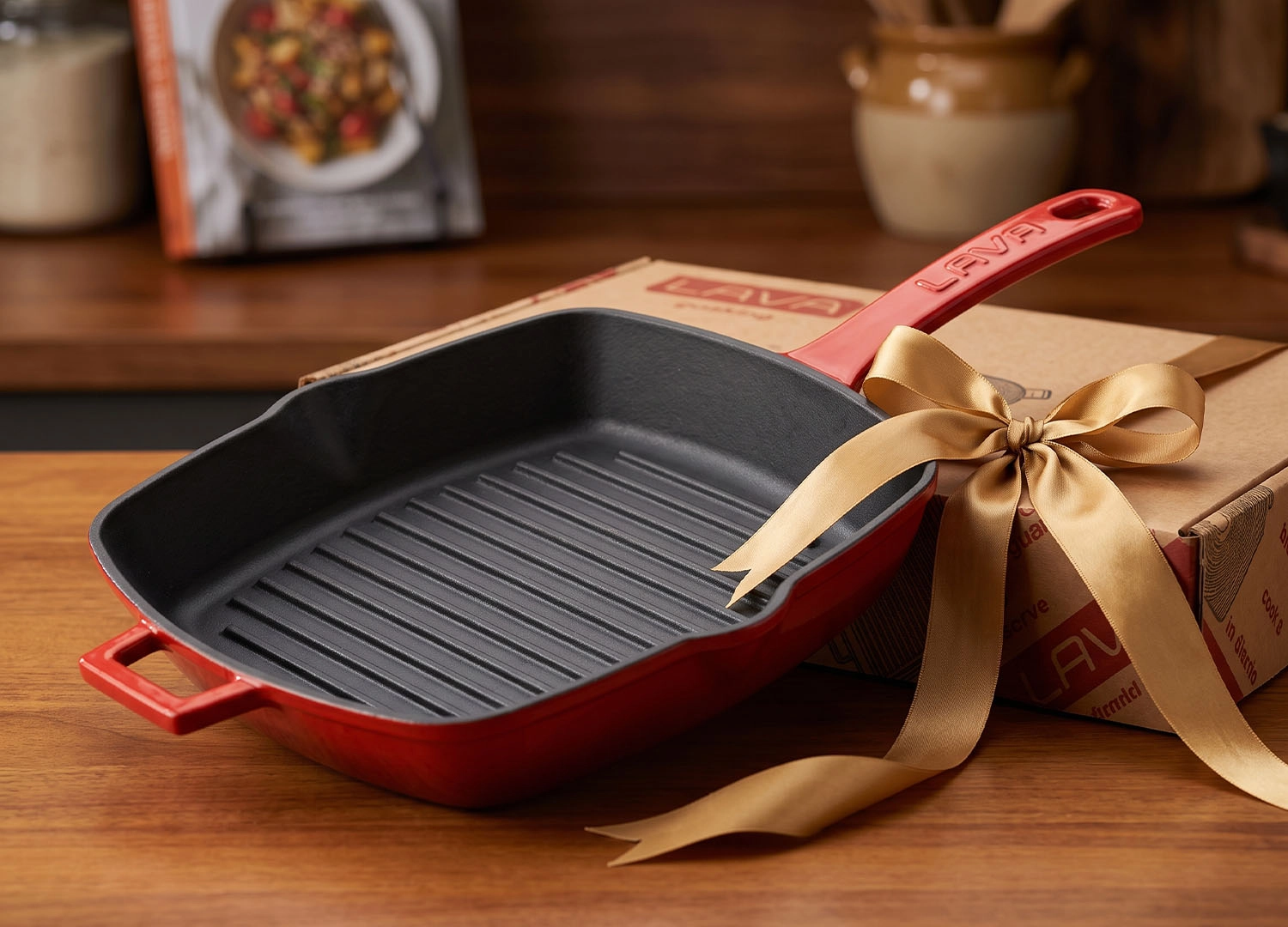
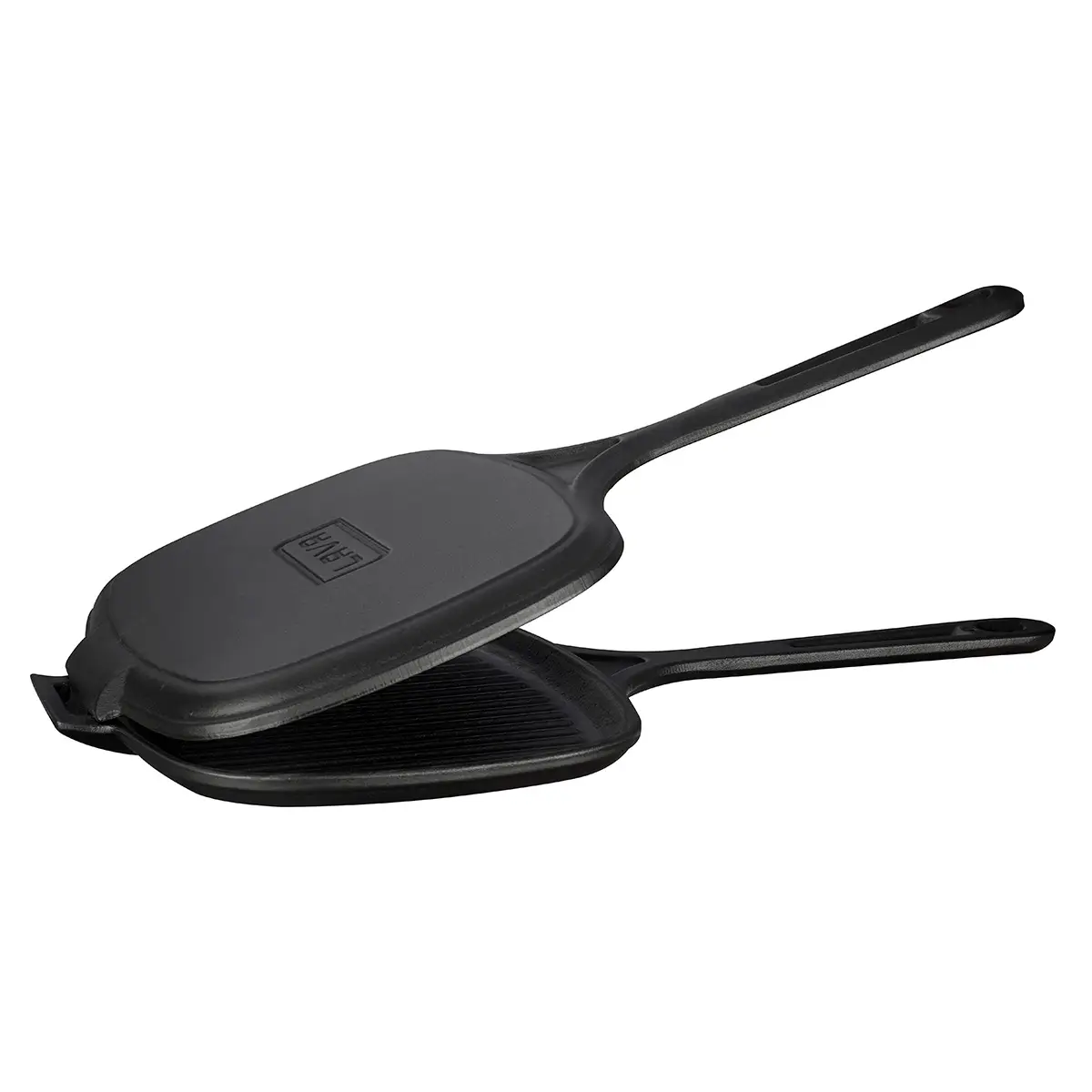
LAVA's enamelled cast iron toast pan, manufactured in Eskişehir, features two cooking surfaces for preparing toast and removable plates that can also be used for grilling where permitted by the product instructions. Its cast iron construction can help provide controlled cooking performance in outdoor conditions.
Explore the LAVA Rectangular Cast Iron Grill Toast Pan 18 × 26 cm to discover its dimensions, weight, material and usage features.
24.09.2026






Lava Döküm Online Fabrika Satış Mağazası. © 2026 All Rights Reserved.


0
)

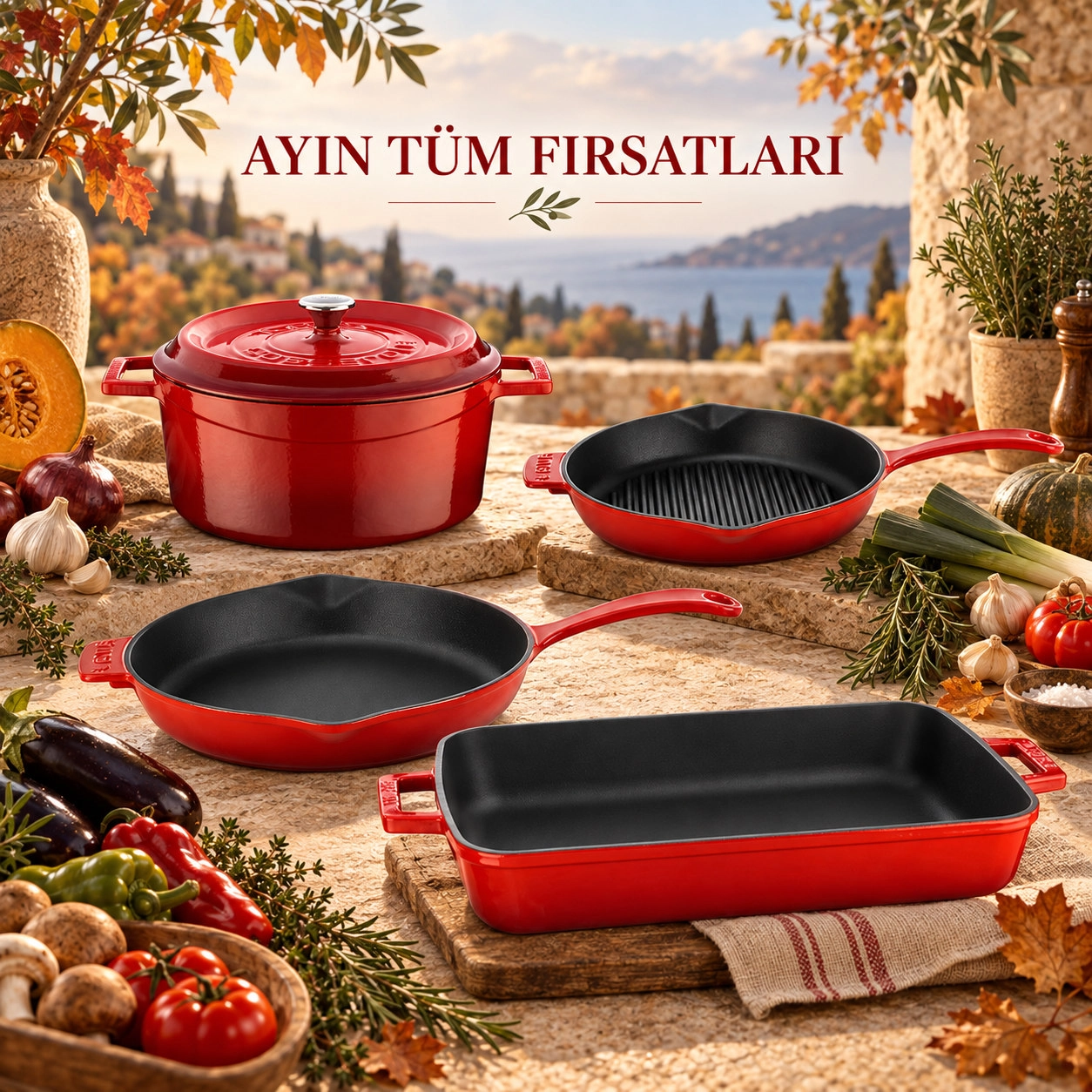
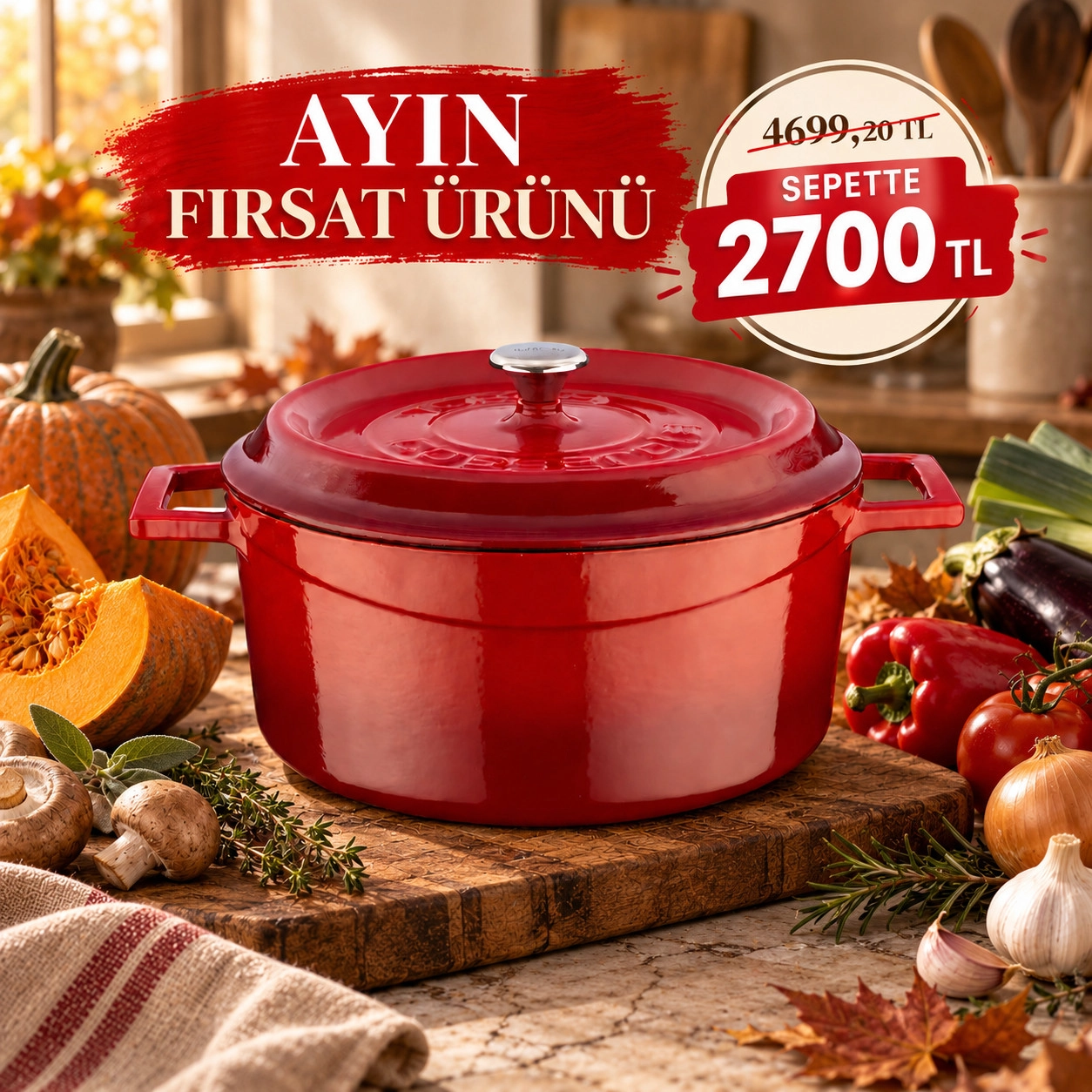 LAVA Round Cast Iron Casserole – Trendy Ø24 cm
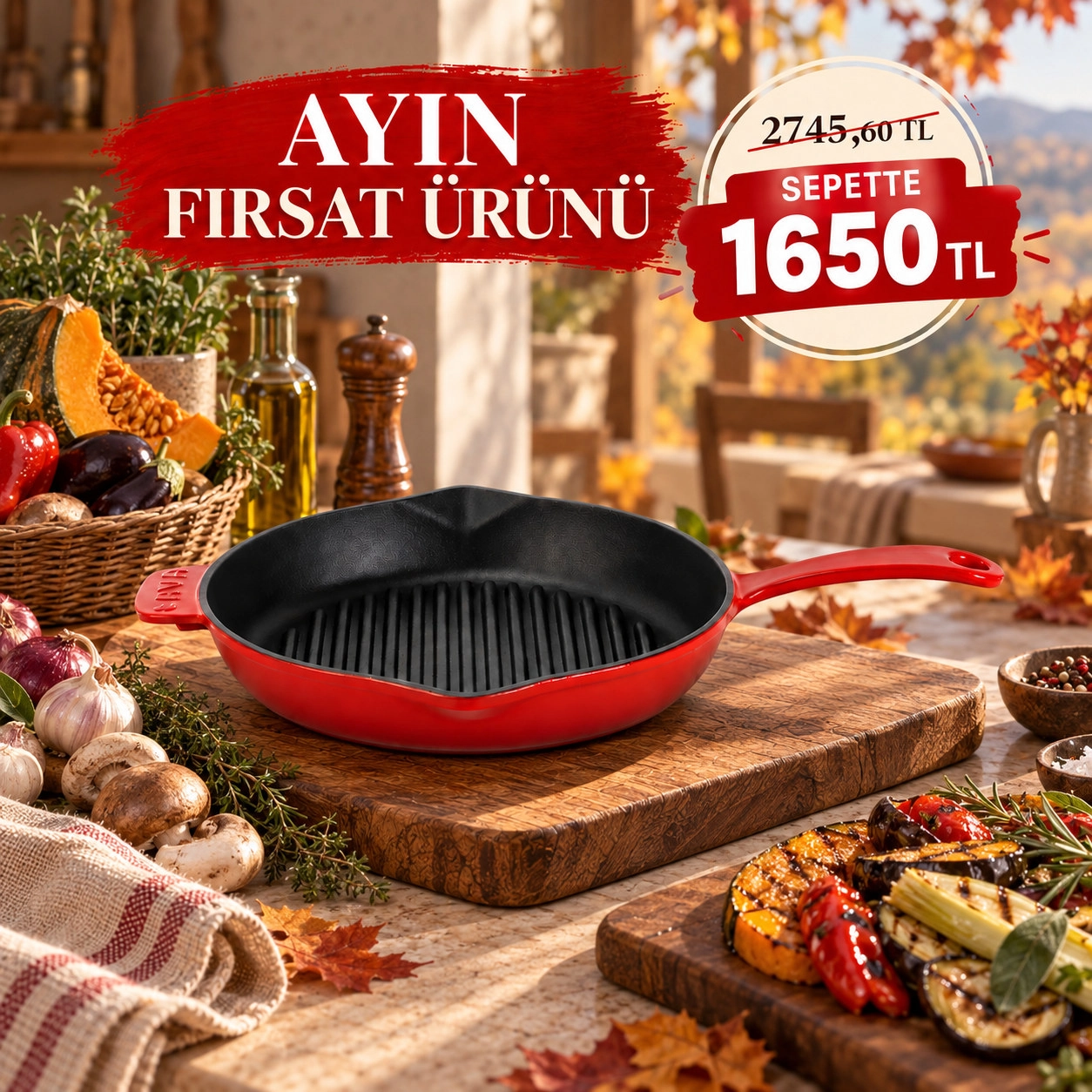 LAVA Round Cast Iron Grill Pan 28 cm Single Handle
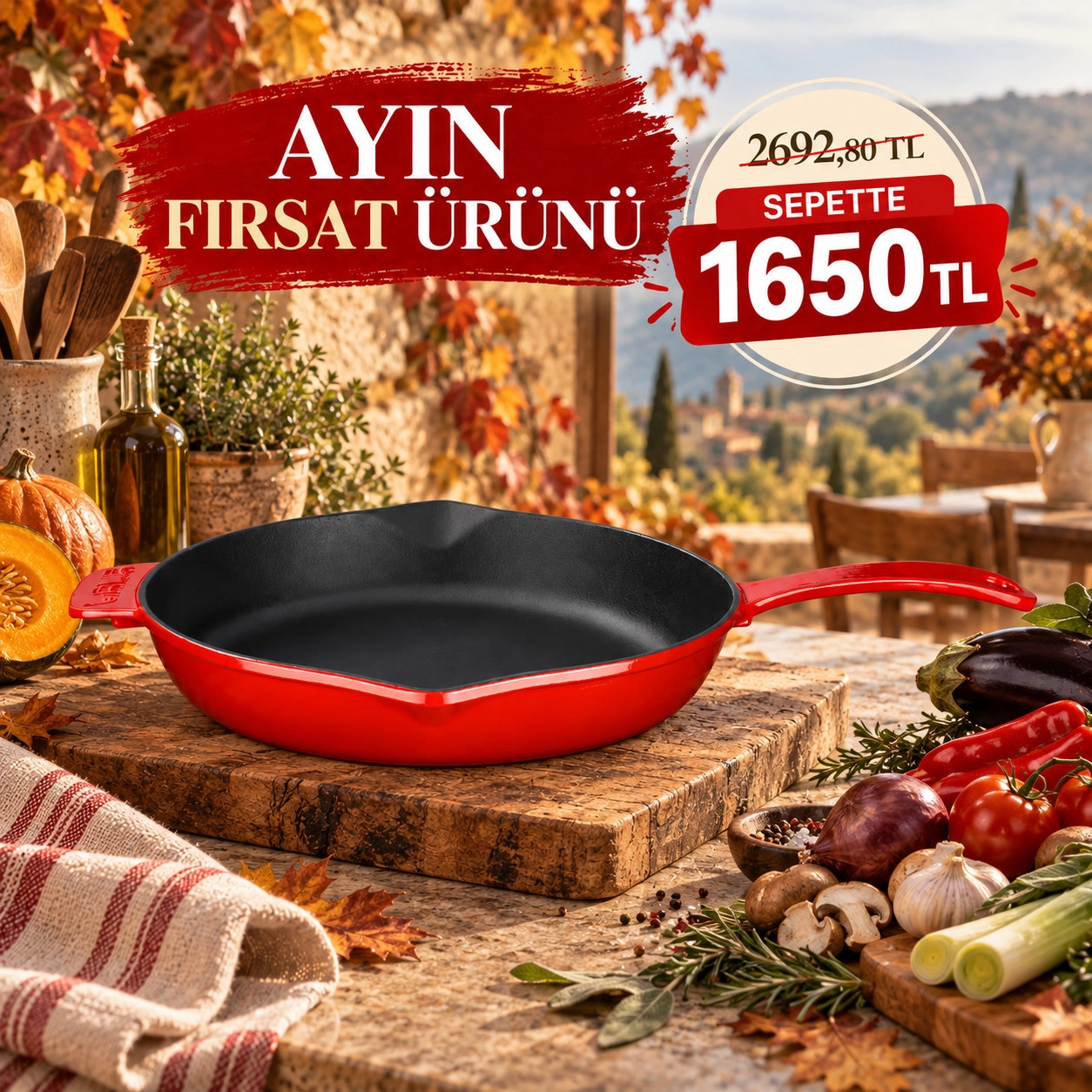 LAVA Round Cast Iron Frying Pan 28 cm Single Handle
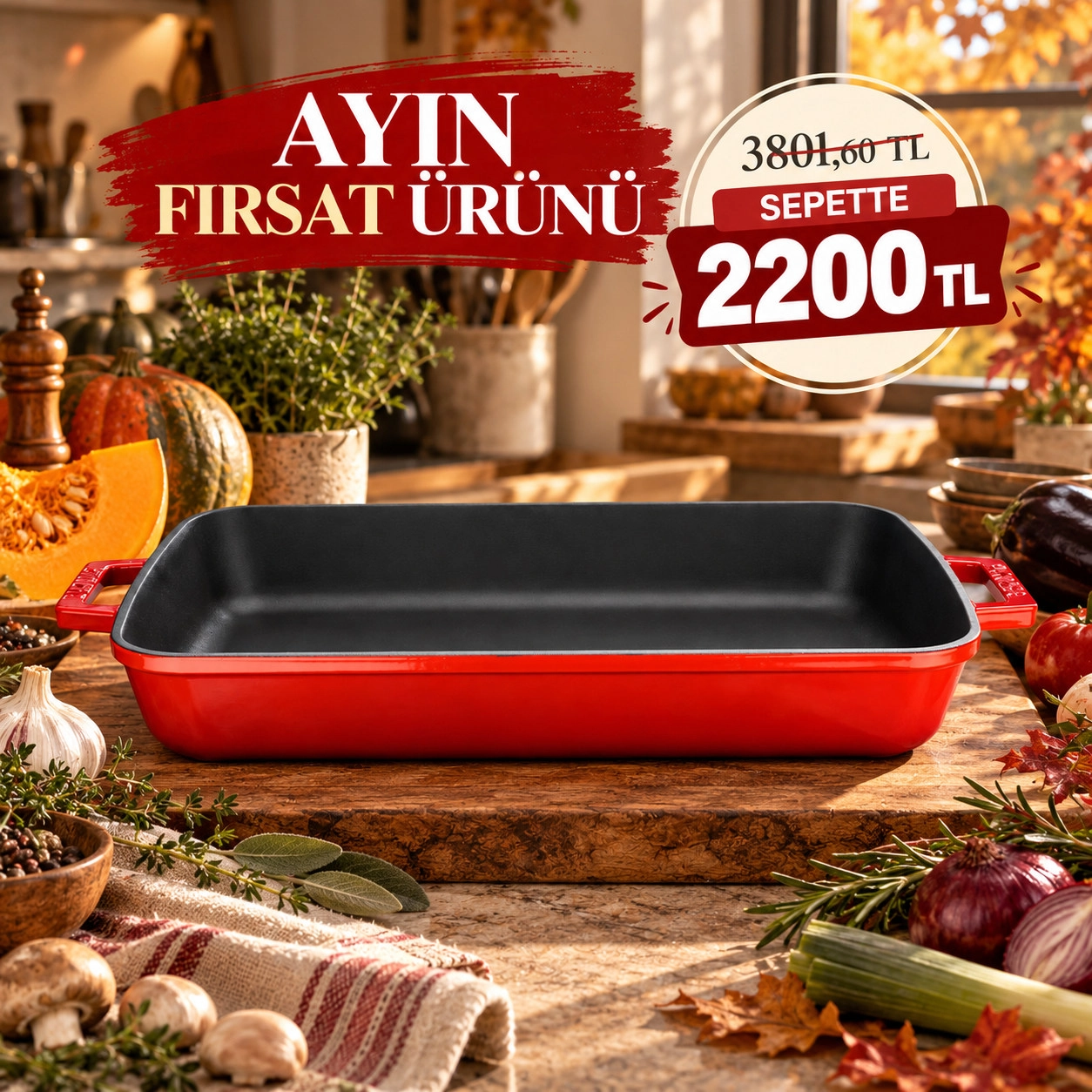 LAVA Rectangular Cast Iron Roasting & Oven Tray 26x40 cm Twin Handles
 All This Month's Deals