×

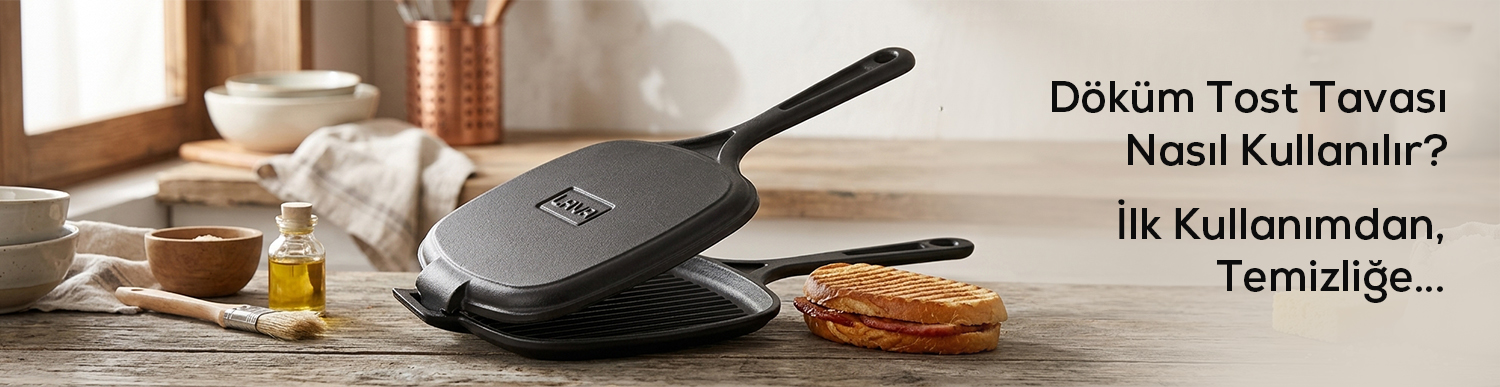
A stovetop toastie maker is a kitchen utensil consisting of top and bottom cooking surfaces, used on a hob or another heat source with which the product is compatible, instead of relying on an electrical heating element. Models crafted from cast iron are also referred to as "cast iron toastie pans". To use a cast iron toastie pan efficiently, the product should be heated gradually over low or medium heat, sudden temperature shifts must be avoided, and the enamelled surface should not be cleaned with abrasive materials. Following cleaning, the product must be dried completely and stored in a manner that prevents scratching the surfaces.
Estimated reading time: 8 minutes
Not every appliance used for making toasties needs to run on electricity. A stovetop toastie maker is a cooking utensil used over an external heat source that allows you to prepare toasties, toasted sandwiches, and various other recipes between two cooking surfaces.
Models made from cast iron stand out for spreading heat evenly across the surface and retaining it throughout the cooking process. For this reason, users looking for a stovetop cast iron toastie maker or a cast iron toastie pan should pay attention not only to the product's dimensions, but also to its material, surface coating, weight, compatible heat sources, and maintenance requirements.
In this guide, you will find out what a stovetop toastie maker is, how to use a cast iron toastie pan, how to care for an enamelled surface, and the cleaning and storage steps you can follow to protect the product over the long term.
A stovetop toastie maker is a dual-surfaced cooking utensil that lacks its own electrical heating system and is heated via an external heat source, such as a hob. It generally consists of a bottom surface where the food is placed and a second cooking surface that closes over it.
Thanks to this structure, both sides of a toastie or sandwich can be cooked within the same unit. Unlike an electrical appliance, temperature control is managed through the flame or power level of the hob being used.
Stovetop models made from cast iron may be searched under different names in daily language:
Stovetop toastie maker
Cast iron stovetop toastie maker
Stovetop cast iron toastie maker
Iron cast toastie maker
Cast iron toastie pan
Double-sided cast iron toastie pan
These expressions may not always define the exact same technical structure. When selecting a product, do not look solely at its name; inspect its material, surface texture, coating, and usage instructions as well.
The working principle of a stovetop toastie maker relies on the transfer of heat from the hob to the cast iron body, and from there to the cooking surface. When cast iron heats up, it retains heat within itself and helps distribute it evenly across the surface.
The bottom surface heats up through direct contact with the hob. The top plate, meanwhile, takes advantage of the bottom surface, the design of the product, and the temperature generated during cooking. Both surfaces coming into contact with the food allows toasties, sandwiches, or similar recipes to cook from both sides.
Due to the high heat retention capacity of cast iron, it is not necessary to use the product continuously over high heat. Controlled and gradual heating makes it easier to manage the cooking outcome while protecting the enamelled surface.
"Stovetop toastie maker" emphasizes the product's operating method, whereas "cast iron toastie pan" highlights its material and form.
A product made of cast iron, used on a hob, and possessing two cooking surfaces can be defined by both terms. However, not every stovetop toastie maker on the market is made of cast iron, nor is every cast iron pan designed for preparing double-sided toasties.
Therefore, when choosing the right product, the following specifications should be checked together:
The material from which the body is manufactured
The structure of the cooking surface
How the top and bottom plates operate
The dimensions and weight of the product
Whether it has an enamel or a different surface coating
Compatible heat sources
The manufacturer's usage and care instructions
The most distinctive feature of cast iron stovetop toastie makers is their performance in spreading heat across the surface and maintaining it throughout cooking. Models with ribbed grill surfaces can help produce clear grill marks on the food.
Enamel-coated cast iron models follow a different usage and maintenance routine compared to raw cast iron products. The enamel coating forms a protective layer over the cast iron surface. Consequently, seasoning operations applied to raw cast iron products do not need to be performed on enamel-coated items.
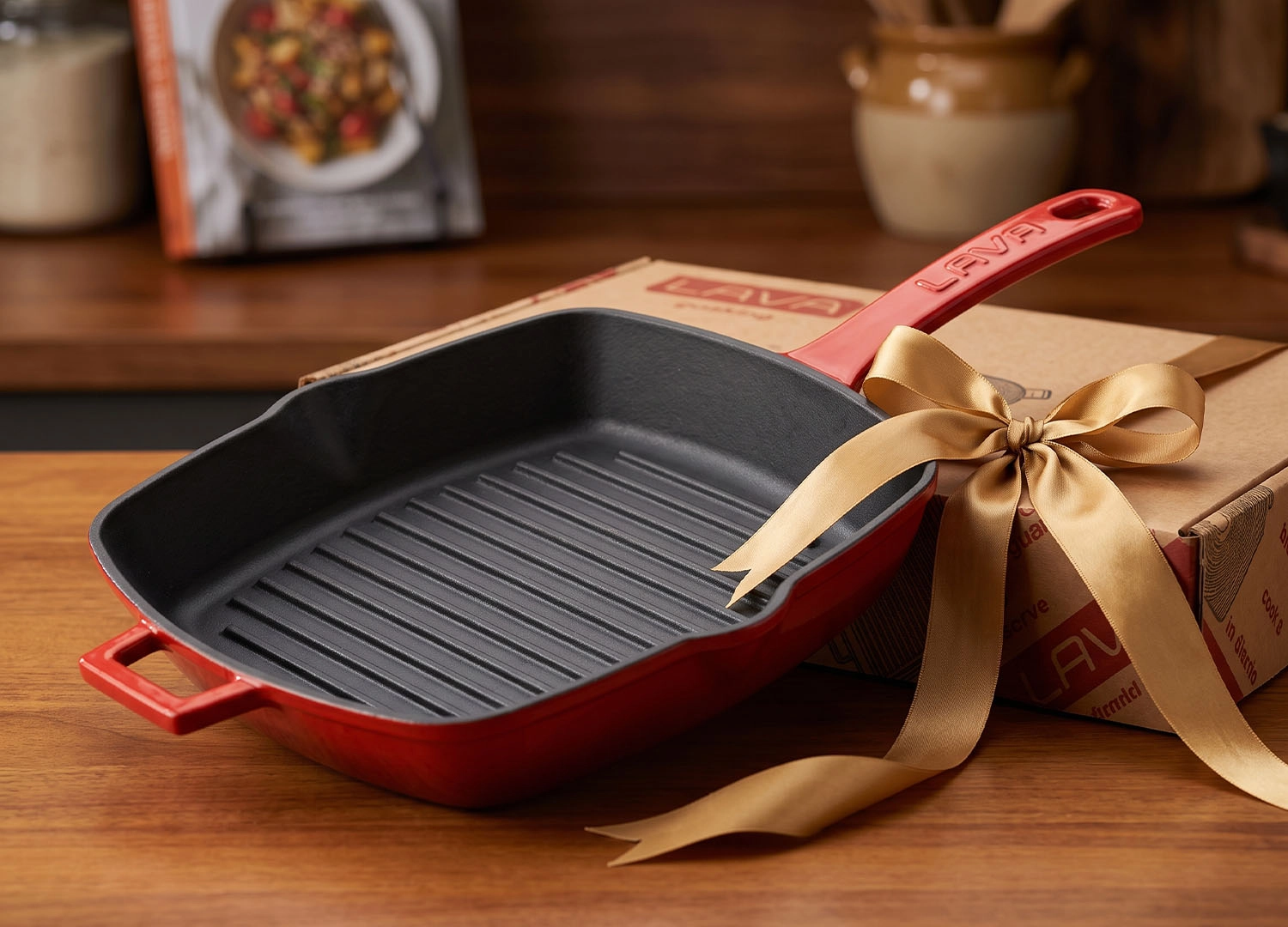
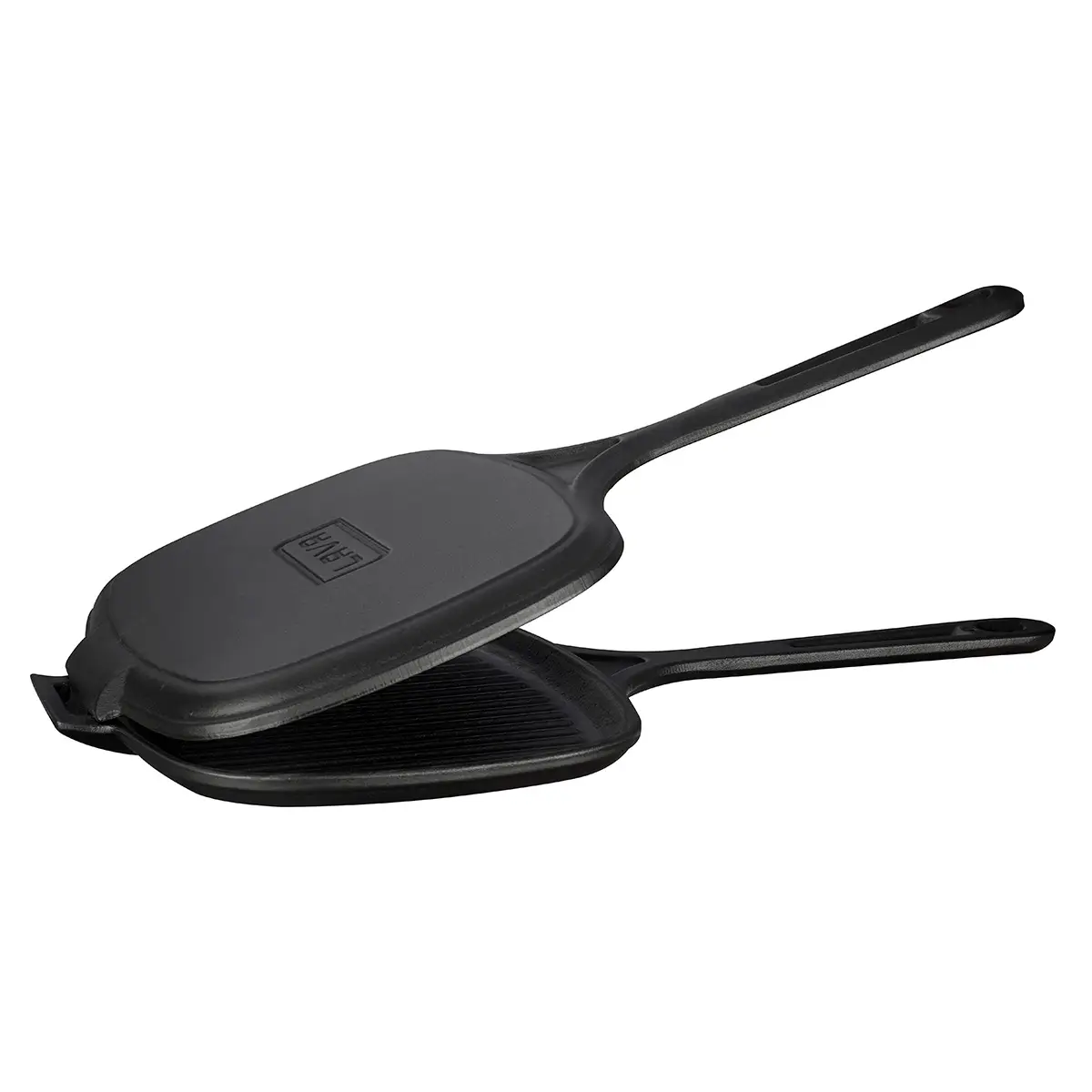
Model specifications can vary from product to product. For example, the LAVA Cast Iron Rectangular Grill Toastie Pan (18 × 26 cm) features a cast iron body, an enamel-coated surface, and two plates that can be detached to serve as individual grills. Weighing 3 kg, the product is offered as suitable for 1–2 portions.
Preparing a cast iron toastie pan for its first use should be planned according to the product's surface coating. The preparation and care requirements for enamel-coated cast iron toastie pans and raw cast iron products are not the same.
Before using the product, check its packaging, surface, handles, and connection points. Next, follow the initial cleaning steps specified in the product's usage instructions.
You can wash an enamel-coated cast iron toastie pan before its first use using warm water, a suitable washing-up liquid, and a soft sponge. During cleaning, avoid metal scourers, harsh sponges, and abrasive cleaning agents that could scratch the surface.
After washing:
Rinse the product thoroughly with clean water.
Ensure no detergent residue remains on the surface.
Dry it completely with a soft cloth.
Check whether water remains in the joint and edge areas of the plates.
Always refer to the manufacturer's current usage instructions regarding the initial use of the product.
Seasoning is the maintenance process of bonding oil to raw cast iron surfaces under controlled heat. Because the surface of enamel-coated cast iron items is not bare iron, this process is not applied.
For this reason, you do not need to apply layers of oil and heat an enamel-coated cast iron toastie pan at high temperatures as you would with raw cast iron. The amount of oil used during cooking can simply be determined according to the recipe being prepared.
If you are unsure whether your product is enamel-coated, check the product description and the manufacturer's care guidelines.
Instead of placing the cast iron toastie pan directly over high heat, heat it gradually on a low or medium setting. Because cast iron holds heat within itself, it may heat up slowly at first; however, once it reaches the desired temperature, it retains that heat for a long time.
During initial heating:
Do not leave the pan empty on the hob for an extended period.
Do not crank the heat up to the highest level all at once.
Allow the cooking surface to heat up evenly.
Keep in mind that the handles and outer surfaces of the product can also become hot.
Use heat-resistant oven gloves or cloth holders when handling the product.
The most important phase when using a cast iron toastie pan is temperature control. Excessive heat can cause the exterior of the food to brown rapidly while leaving the inside insufficiently heated.
Gradual preheating over low or medium heat yields a more controlled cooking result for your toastie or sandwich.
In most recipes, a cast iron toastie pan can be used over low or medium heat. The ideal temperature varies depending on the hob used, the weight of the product, the thickness of the toastie, and its fillings.
For a more controlled result:
Preheat the pan over low or medium heat.
Make sure the surface is evenly heated before placing the food inside.
Do not suddenly increase the temperature after putting the toastie in.
Monitor the cooking progress at regular intervals.
If necessary, gradually reduce or increase the heat power.
Because the cast iron surface continues to retain heat, the product will remain hot for a while even after you turn off the hob.
Arrange the bread and fillings so that the toastie remains balanced between the two surfaces. Fillings spilling excessively from the edges can both dirty the cooking surface and prevent the toastie from closing properly.
Do not apply sudden, excessive pressure when closing the top plate. Allow the plates to make balanced contact with the food according to the toastie's thickness.
To achieve a more controlled crispiness on the outer surface of the toastie, an appropriate amount of oil or butter can be applied to the bread. However, the amount of fat used is purely a recipe preference, independent of whether the product is enamelled, and should not be confused with seasoning.
Three points are essential for even cooking:
Preheating the cooking surface gradually
Placing the toastie evenly inside the pan
Controlling the heat throughout the cooking process
Since the bottom surface is closer to the heat source, checking the toastie's progress at regular intervals can be helpful. Depending on the design of the product and the hob used, you may need to flip or adjust the position of the pan. This action should only be carried out if the product's design supports it and it can be done safely.
The product description for LAVA's 18 × 26 cm rectangular cast iron toastie pan states that the plates can be separated and used individually as grill pans. Thus, in addition to toasties and warm sandwiches, the product can be utilized as a single-surface grill pan for suitable recipes.
Not every model with detachable plates operates in the same manner. The hinges, handles, and connecting structures must be checked, and the plates should only be separated as instructed by the manufacturer.
To explore recipes that can be prepared in a cast iron toastie pan, you can refer to the "What to Make in a Cast Iron Toastie Pan" guide.
The heat sources compatible with a stovetop toastie maker depend on the product's material, base structure, handles, and manufacturer guidelines.
Although cast iron is compatible with many heat sources, this general characteristic does not mean every product can be used on every hob or over an open flame.
Stovetop cast iron toastie pans can be used on appropriately sized gas or electric hobs. The product should be placed sturdily on the hob, taking care to ensure the handles are not directly exposed to flames.
On a gas hob, ensuring the flame does not extend beyond the base of the pan helps manage the heat more effectively. On electric surfaces, it is important that the base of the product sits flat and balanced on the ring.
Due to its magnetic properties, cast iron is generally an induction-compatible material. However, whether a specific toastie pan can be used on an induction hob depends on its base profile, surface contact, and official technical approval from the manufacturer.
Therefore, decisions should not be made based solely on the term "cast iron"; the product's specific instruction manual must be checked.
LAVA's current product description indicates that the item can be used over open flames and through various cooking methods, excluding the microwave. Nevertheless, for outdoor usage, the stability of the heat source, the positioning of the handles, the weight of the item, and safe handling conditions must be evaluated independently.
Detailed recommendations regarding camping stoves, barbecues, or direct fire usage should be addressed in a dedicated outdoor usage guide once technical compatibility is confirmed.
Cleaning a cast iron toastie pan should only begin once the product has cooled down completely. Applying cold water directly to a hot cast iron surface can cause thermal shock and damage the finish.
Harsh and sharp tools that could scratch the enamel coating must be avoided during cleaning.
Yes. Because cast iron retains heat for a long time, the product may hold a high internal temperature even if it appears cooler on the outside.
Before cleaning the product:
Turn off the hob.
Move the pan to a safe, heat-resistant surface.
Allow it to cool down naturally.
Do not pour cold water over a hot pan.
Do not force the plates apart while they are hot.
For daily cleaning of an enamel-coated cast iron toastie pan, you can follow these steps:
Wait for the product to cool down completely.
Wipe away loose food particles using a soft cloth.
Use warm water and an appropriate amount of washing-up liquid.
Clean the cooking ridges gently with a soft sponge.
Rinse thoroughly with clean water.
Dry completely with a soft cloth.
Pay close attention to hinges, handle attachments, and edge areas to ensure no water or food residue remains.
Scraping dried or burnt-on food residue with a sharp tool can ruin the enamel coating. Instead, pour warm water into the pan and allow the residue to soften.
If necessary:
Use a soft-bristled brush or sponge.
Repeat the cleaning process gently a few times.
Do not use wire wool or metal scourers.
Do not scrape the surface with knives or metal spatulas.
Avoid abrasive scouring powders.
If you notice damage, cracks, or enamel loss on the surface, contact the manufacturer before continuing to use the product.
LAVA’s current product description states that the enamelled cast iron toast pan can be washed in a dishwasher and that an additional rinse is required after washing. However, hand washing may be a more controlled method for helping to preserve the appearance of the surface and enamel coating over time. To help support the product’s service life, it is recommended to dry the surface thoroughly after cleaning and avoid leaving it damp. You can find further details on product use and care in the LAVA product and care information.
Before using a dishwasher:
Check the product's up-to-date care instructions.
Place the pan securely inside the machine.
Ensure other metal items cannot clatter against the enamelled surface.
Dry the product thoroughly as soon as the cycle ends.
Confirm that no detergent residue is left on the surface.
Drying and storing your pan properly is just as vital as cleaning it when it comes to extending its lifespan. Moisture must not be left behind, particularly around joint areas and where the enamel coating terminates.
Rather than leaving the product to air-dry on a draining rack after washing, wipe it completely dry using a soft towel. If the plates separate, inspect the joint and hinge areas individually.
Before the product is totally dry:
Do not close the plates together.
Do not pack it away in a cupboard.
Do not stack another pan on top of it.
Do not leave it sitting on a damp cloth or towel.
If the product's plates detach, ensure both surfaces are fully dry. If stored with the plates closed, make sure there is no trapped moisture or food debris inside.
To prevent the surfaces from rubbing against each other, you can place a clean, dry felt pan protector between the plates. As the product is heavy, ensure the shelf it is stored on has adequate load-bearing capacity.
To protect the enamel coating:
Do not place sharp-edged metal utensils on the product.
Do not stack pans directly on top of each other without a protective layer.
Do not drag the product across surfaces.
Never scrape the surface with metal kitchen utensils.
Avoid storing the product on high or unstable shelves where it might fall.
The main errors that compromise the proper use and surface preservation of a cast iron toastie pan include:
Heating the product directly over high flame: Makes it difficult to utilize the gradual heat distribution of cast iron.
Leaving an empty pan on the hob for too long: Can cause the surface to overheat excessively.
Applying cold water to a hot pan: Sudden thermal shifts can damage the enamel layer.
Using abrasive scourers or wire wool: Can scratch and dull the enamel coating.
Storing the product while damp: Invites surface degradation around edges and joints.
Assuming handles won't get hot: Cast iron and metal parts can reach extremely high temperatures during use.
Failing to check heat source compatibility: Not every product is suitable for all hobs or open flame setups.
Attempting to season an enamel-coated pan: An unnecessary and unsuitable process for enamelled surfaces.
Forcing plates apart while hot: Can damage joint mechanisms and poses a burn risk.
Storing the item on a weak shelf: Increases the risk of drops and structural damage.
A stovetop cast iron toastie pan does not have an integrated electrical heating element. It is used on a compatible hob or another external heat source.
Exact heating times vary based on the product's weight, the hob type, heat settings, and ambient room temperature. Rather than relying on a fixed duration, heat the pan gradually over low or medium power and monitor the surface temperature.
Enamel-coated cast iron toastie pans do not require seasoning like bare cast iron. The amount of oil used during cooking can be adjusted strictly according to your recipe and personal taste.
This varies by model. The product description for LAVA's 18 × 26 cm enamel-coated cast iron toastie pan notes that it is dishwasher safe. However, to preserve the product over time, review the latest care guidelines and ensure the pan is dried completely post-wash.
An enamel coating shields the underlying cast iron from external elements. However, if moisture is left for extended periods on areas where the enamel is damaged, worn, or exposed, surface issues can arise. Always dry the product thoroughly after washing.
Depending on the plate design, you can prepare toasted sandwiches, flatbreads, gözleme, grilled vegetables, halloumi, and various grill recipes. Refer to manufacturer guidelines for alternative culinary uses.
It is ideal for users seeking a hob-based alternative to electric appliances that retains heat well and adapts to various grill recipes. Consider the product's weight, size, and maintenance routine before making a purchasing decision.
Achieving great cooking results from a stovetop toastie maker relies on controlled heating rather than scorching temperatures. Heating your cast iron toastie pan gradually, protecting the hot surface from thermal shock, and cleaning the enamel without harsh abrasives will preserve its performance for years to come.
Before use, verify your product's surface coating and heat source compatibility. Always allow it to cool completely after cooking, clean it with soft tools, and store it in a dry place.
Discover the LAVA Cast Iron Rectangular Grill Toastie Pan (18 × 26 cm), designed for preparing toasties, warm sandwiches, and diverse grill recipes right on your stovetop.
24.09.2026






Lava Döküm Online Fabrika Satış Mağazası. © 2026 All Rights Reserved.


0
)

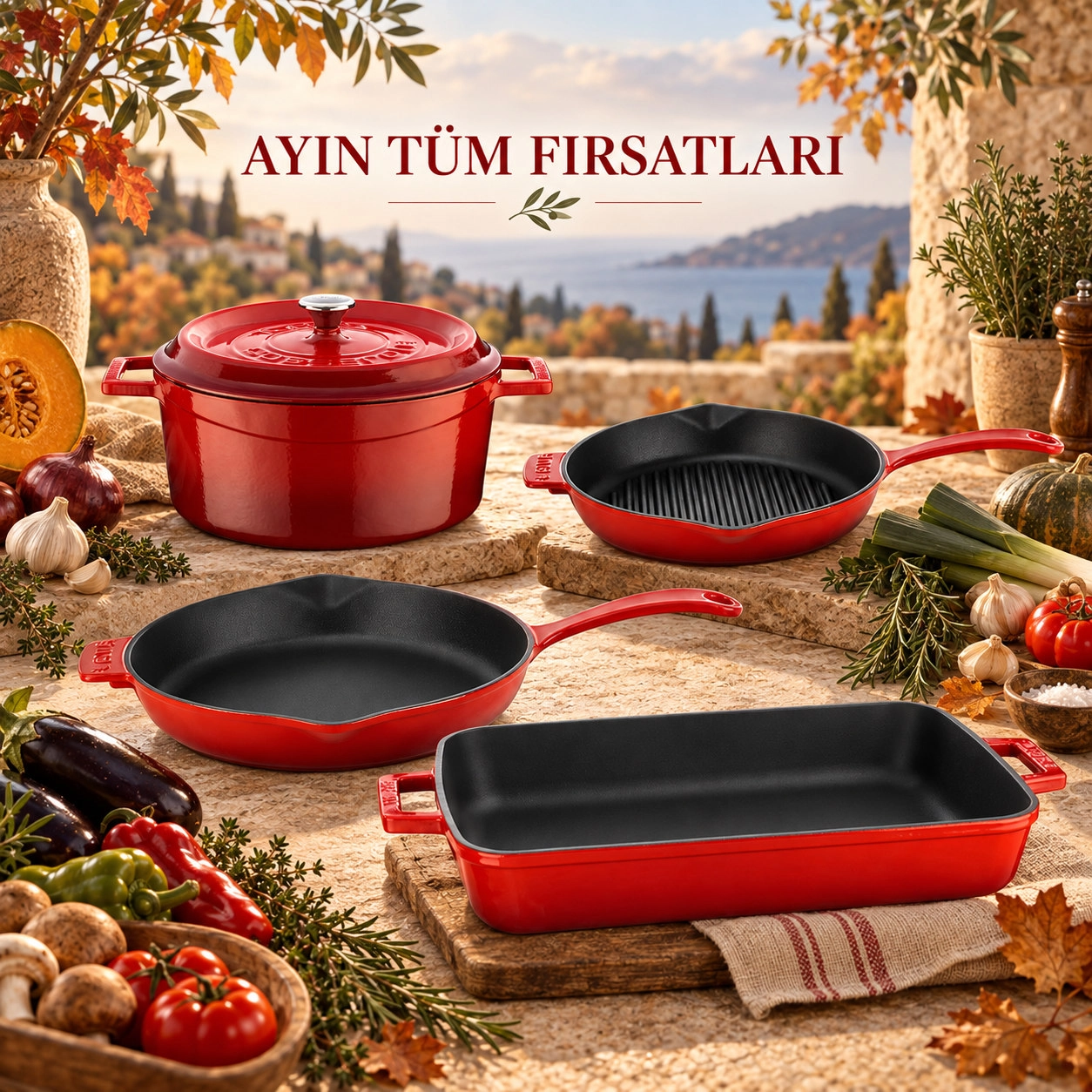
 LAVA Round Cast Iron Casserole – Trendy Ø24 cm
 LAVA Round Cast Iron Grill Pan 28 cm Single Handle
 LAVA Round Cast Iron Frying Pan 28 cm Single Handle
 LAVA Rectangular Cast Iron Roasting & Oven Tray 26x40 cm Twin Handles
 All This Month's Deals