×

When choosing a crepe or pancake pan, the material, cooking surface, diameter, side height, handle design and compatibility with different heat sources should all be considered together. In this guide, we explore the differences between crepe and pancake pans, compare cast iron, stainless steel and coated options, explain how to choose the right pan size, and highlight the benefits of LAVA cast iron pans. We also share practical tips for those who want to use the same pan for both crepes and pancakes, along with common mistakes to avoid.
Estimated Reading Time: 9 minutes
Preparing a paper-thin crepe or a pancake that is soft inside and evenly cooked on the outside depends not only on the recipe but also on the pan you use. The pan’s material, base construction, diameter, side height and handle design can all affect different stages of cooking, from spreading the batter to maintaining a consistent surface temperature.
So, what should a crepe pan be like? Do you really need a separate pan for pancakes? What features should you look for when choosing between cast iron, stainless steel and coated pans? In this guide, we take you through how to choose a crepe or pancake pan step by step according to your cooking habits.
A good crepe or pancake pan should:
Maintain heat consistently across the cooking surface,
Have a flat and sufficiently wide cooking area,
Make it easier to spread the batter and turn the food,
Be compatible with the type of hob you use,
Have a diameter suited to your portion requirements,
Offer a handle or grip that can be safely controlled,
Provide long-lasting use with proper care and handling.
There is no single “best pan” size or material. The right choice depends on whether you prepare thin and wide crepes or smaller pancakes, how many people you cook for, and whether you intend to use the pan on the hob only or also in the oven and for serving.
Although crepe and pancake pans share similar characteristics, the cooking requirements of the two recipes are not exactly the same.
Crepe batter is spread into a thin layer across a wide surface. For this reason, a flat base, low sides and a handle that makes the pan easy to control are particularly useful for crepes. Pancake batter, on the other hand, is poured in smaller portions and cooked to a greater thickness. Here, maintaining a consistent surface temperature and having enough space for multiple pancakes become more important.
A wide pan with a flat surface and good heat retention can be used for both recipes. Therefore, buying two separate products is not always necessary for home cooking. If the pan’s dimensions and shape are suitable for both recipes, the same cast iron pan can be used to prepare both crepes and pancakes.
| Selection criterion | Importance for crepes | Importance for pancakes |
|---|---|---|
| Flat surface | Helps the batter spread into a thin and even layer | Supports an even shape for the base of the pancakes |
| Heat stability | Helps reduce uneven browning across the crepe | Supports controlled cooking of the inside and outside |
| Low sides | Makes it easier to use a spatula and turn the crepe | Not essential but can make turning easier |
| Wide diameter | Provides an advantage for large and thin crepes | Provides space for preparing several pancakes at once |
| Handle design | Makes it easier to control the pan while spreading the batter | Provides control on the hob |
The material of a pan affects how quickly it heats up and how it retains temperature. Lightweight metals can heat up quickly but may respond more rapidly to changes in hob temperature. Cast iron requires more controlled preheating, but stores heat within the pan and helps reduce temperature fluctuations during cooking.
Maintaining the surface temperature is particularly important when preparing several crepes or multiple pancakes in succession. If the pan cools rapidly each time new batter is added, differences in cooking and browning may occur between the first and last products.
| Pan material | Key advantage | Point to consider |
|---|---|---|
| Cast iron | Retains heat for longer, supporting consistent cooking and long-term use | Heavier and should be preheated gradually and in a controlled manner |
| Stainless steel | Durable and versatile | Requires appropriate temperature and oil management to prevent batter from sticking |
| Aluminium/coated pan | Lightweight and heats up quickly | The coating type, care instructions and surface durability should be checked |
When choosing the material, consider not only ease of use from the first cooking session but also the pan’s long-term durability and care requirements. For practical tips on extending the life of your pan and caring for it correctly, explore the LAVA Care and Recommendations guide.
For crepe batter to spread into a thin layer, the centre of the pan should provide a wide and flat cooking area. The usable cooking surface is not determined solely by the overall diameter of the pan; where the sides begin also affects the actual cooking area.
For pancakes, a flat surface helps the batter portions maintain their shape. If you want to prepare several pancakes at the same time, assess the usable base area together with the overall dimensions of the pan.
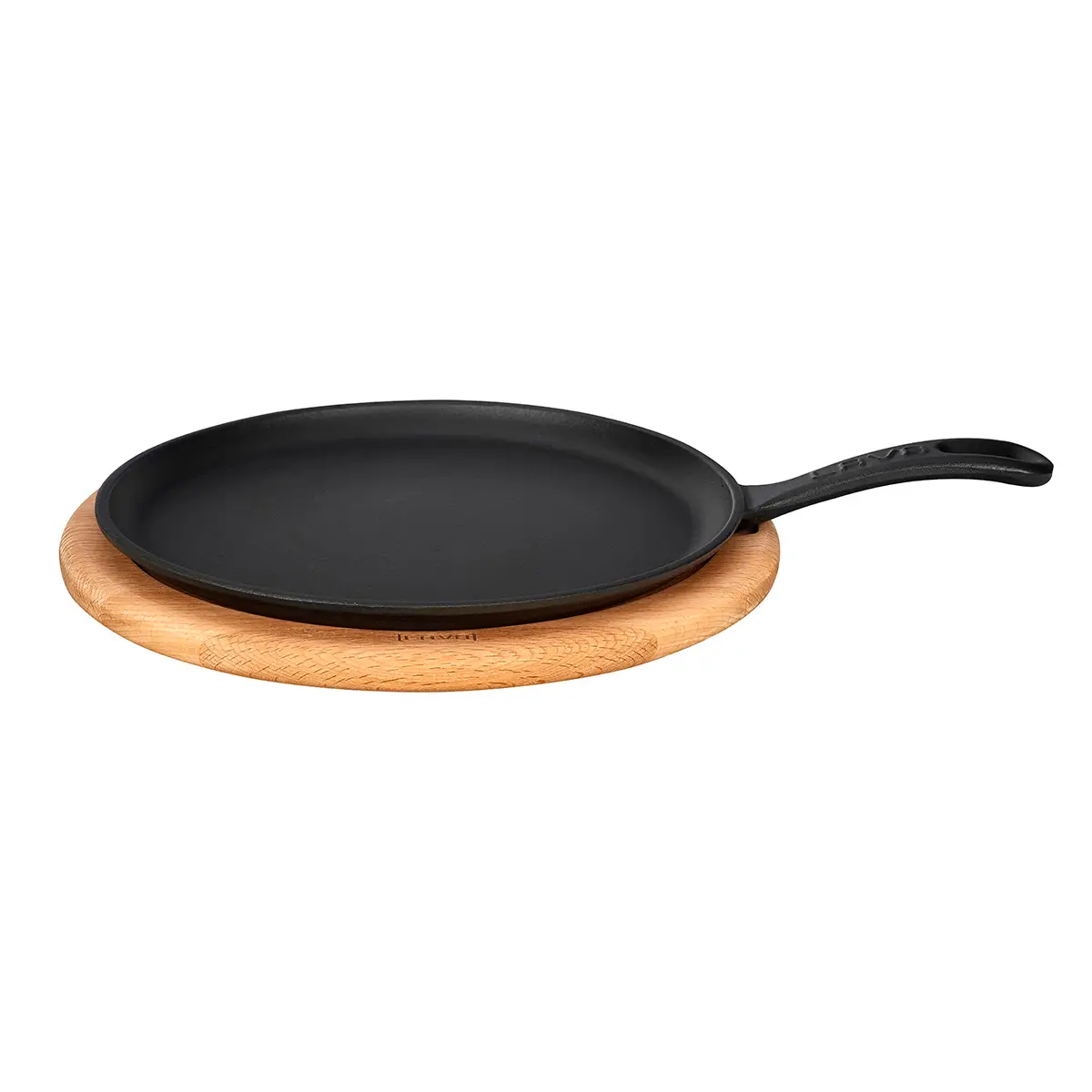
One of the features that generally distinguishes a crepe pan from a standard frying pan is its lower sides. Low and open sides make it easier for a spatula to slide underneath the crepe and allow it to be turned more easily.
Low sides can also be practical when making pancakes, although they are not as important as they are for crepes. If you plan to use the pan for different recipes as well, a pan with sides that are not too high but are sufficient to keep the batter contained can be a balanced choice.
The appropriate diameter for a crepe or pancake pan depends on the portions you prepare and how you intend to use it. The LAVA range includes 20, 26 and 28 cm options to suit different requirements.
| Pan diameter | Who might it suit? | Main use |
|---|---|---|
| 20 cm | Those preparing smaller portions and looking for a more compact option | Small crepes, pancakes, eggs and individual recipes |
| 26 cm | Those looking for everyday and versatile use | Medium-sized crepes and several small pancakes |
| 28 cm | Those looking for a wider cooking area | Large crepes, larger breakfasts and different batter-based recipes |
These dimensions are not strict portion rules. The size of your hob, available storage space, the weight of the product and how you want to handle the pan should also be considered. Matching the pan base appropriately with the hob ring can make heat management easier.
Single-handle pans provide a familiar way of controlling the pan on the hob and spreading crepe batter across the surface. However, cast iron handles can also become hot during cooking, so an appropriate handle cover or oven glove should be used.
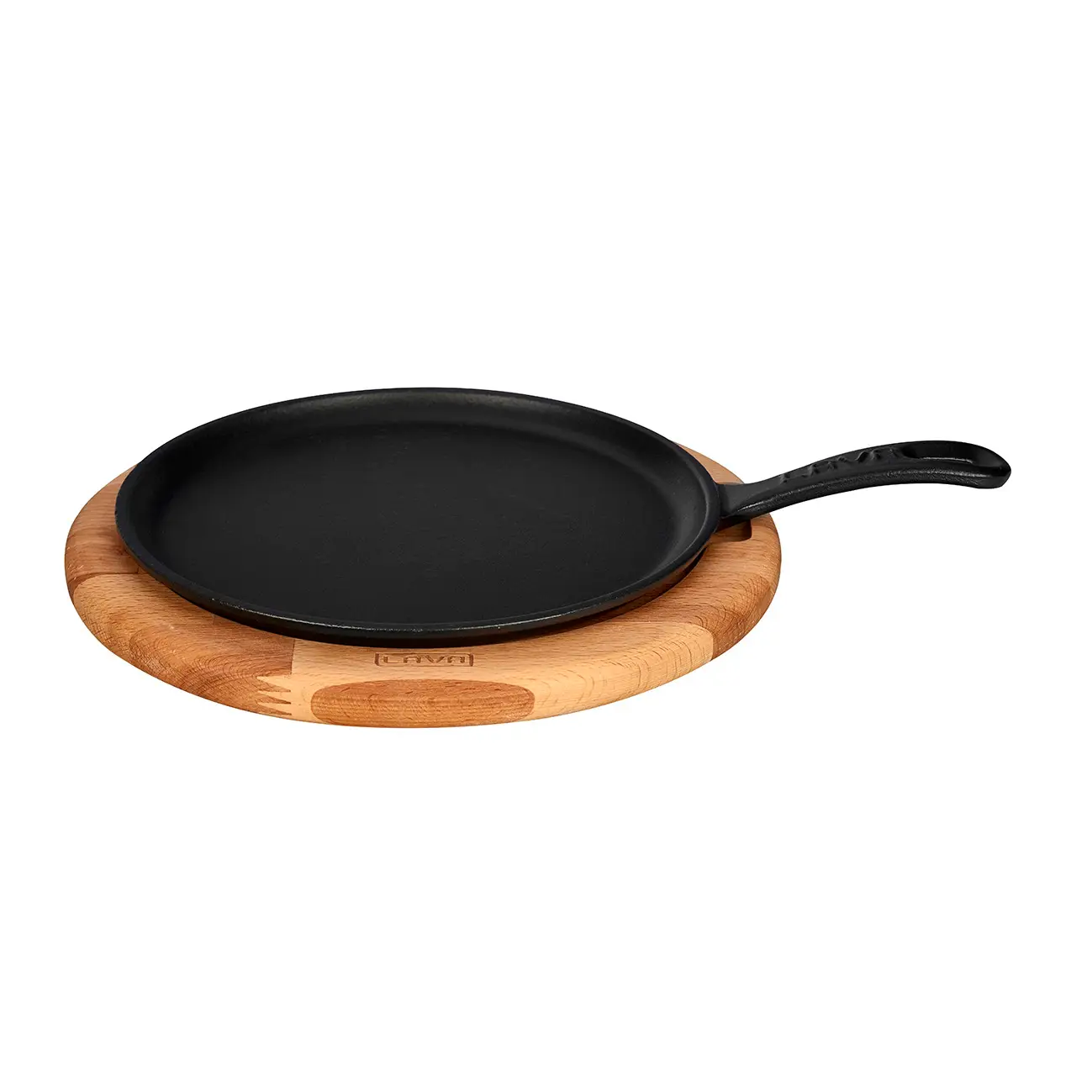
Twin-handle models can offer advantages when carrying the pan, placing it in the oven and serving at the table. Options supplied with beech serving wood allow the cooked food to be taken to the table in the same pan.
You can simplify your choice as follows:
If your priority is controlling the pan on the hob and preparing crepes, choose a single-handle model.
If your priority is oven use, carrying or serving at the table, consider a twin-handle model.
If you want to use one product from cooking through to serving, a model supplied with serving wood can be considered.
In all cases, check the usage and heat-source instructions for the specific product on its product page.
Before buying a pan, check its compatibility with your gas, electric, ceramic or induction hob. If you also want to use the pan in the oven, make sure that not only the body but all components of the product are suitable for oven use.
LAVA enamelled cast iron products are designed for use with cooking appliances other than microwaves. However, as the dimensions and usage conditions can vary between models, the usage information for the specific product should also be checked.
When choosing a pan, focusing only on the initial cooking experience is not enough. You should also consider how the surface should be cleaned, which kitchen utensils can be used with it and what precautions should be taken against sudden temperature changes.
Enamelled cast iron pans have different care requirements from raw cast iron products. The enamel surface protects the cast iron body and does not require the regular seasoning associated with raw cast iron. However, to protect the enamel, it is important to heat the product gradually, avoid exposing a hot pan to cold water suddenly and follow the manufacturer’s cleaning instructions.
One of the main advantages of choosing a cast iron crepe or pancake pan is heat stability. After preheating, the cast iron body retains heat within the pan. This supports more consistent results when preparing several products in succession.
Other notable features of cast iron pans include:
Long-lasting heat retention,
Suitability for controlled cooking at low and medium temperatures,
Versatile use from hob to oven,
Long-term use with proper care,
The ability to combine cooking and serving in the same product.
The weight of a cast iron pan and its ability to retain heat for longer should also be considered during use. Rather than heating the pan rapidly over very high heat, gradual preheating at a low or medium temperature provides a more controlled approach.
No. You do not necessarily need a non-stick coated pan to prepare crepes and pancakes. The cooking result is influenced not only by the pan material but also by preheating time, surface temperature, the ingredients in the batter and the amount of oil used.
An enamelled cast iron surface should not be treated in the same way as a synthetic non-stick coating. The pan should be preheated in a controlled manner, the amount of oil required by the recipe should be used and the batter should be turned at the right time. Particularly when using the pan for the first time, starting at a medium temperature rather than using very high heat can help you find the setting that works best for your hob and pan. For a reliable cooking experience, enamelled cast iron products can become a preferred choice once you are familiar with their use.
Yes. A pan with a wide, flat surface and suitable side design can be used for both crepes and pancakes. The main factors to consider are which recipe you prepare more often and what portion size you prefer.
If large and thin crepes are your priority, choose a wide-diameter model with a handle and low sides.
If you want to prepare several small pancakes at once, choose a model with a wide usable cooking surface.
If you want smaller portions and compact use, consider a 20 cm model.
If you want to cook and serve in the same product, consider a twin-handle or serving-wood model.
The overall diameter and actual cooking surface may not be the same. The point where the sides begin and the flat area of the base should also be considered.
Cast iron products offer heat retention and durability advantages but are heavier than lightweight pans. When choosing a single-handle model, consider how you will lift and control the pan.
Enamel coating and synthetic non-stick coating are not the same. Cooking technique and temperature management should be adjusted according to the characteristics of the material.
As cast iron retains heat for a long time, continuous high heat is generally unnecessary. Excessive heat can cause the outside of the batter to brown quickly while the inside does not cook to the desired level.
The pan base, handle, handles and any other components should be suitable for the intended heat source. Product instructions should be reviewed before purchase.
To make your choice easier, first determine your main usage priorities:
Do you prepare crepes or pancakes more often?
Are you preparing individual portions or larger portions for the whole family?
Would you find a single-handle pan or a twin-handle model easier to use?
Will you use the pan only on the hob, or also in the oven and at the table?
Is serving wood a useful feature for you?
You can compare LAVA cast iron pan options in 20, 26 and 28 cm sizes, including single-handle, twin-handle and beech serving wood models, to find the option that best suits your kitchen and cooking habits.
Explore LAVA cast iron crepe, pancake and pizza pans.
For smaller portions, 20 cm can be suitable; 26 cm can be considered for everyday and versatile use, while 28 cm models provide a larger cooking area for bigger crepes. The most suitable diameter depends on your hob size and the portions you want to prepare.
A 20 cm pan may be sufficient for individual or smaller portions. Those who want to prepare several pancakes at once can consider larger cooking surfaces such as 26 or 28 cm.
Low and relatively open sides make it easier for a spatula to slide underneath the crepe and turn it. However, if you also want to use the pan for other recipes, a model that is not completely side-free may offer greater versatility.
Sticking does not depend solely on the pan material. The pan should be preheated sufficiently and in a controlled manner, the amount of oil required by the recipe should be used and the batter should be turned at the right point when it naturally releases from the surface. An enamelled cast iron surface should not be considered a non-stick coating.
LAVA enamelled cast iron pans do not require the regular seasoning associated with raw cast iron pans. The product’s usage and care instructions should be followed.
Depending on the product’s size and usage instructions, you can prepare pancakes, omelettes, eggy bread, gözleme, bazlama and various other batter-based recipes.
No. A pan with a flat, wide cooking surface and suitable side design can be used for both recipes. Whether you need separate pans depends on the portions you prepare and how frequently you use them.
When choosing a crepe or pancake pan, look beyond the product’s appearance or price and consider its material, usable cooking surface, diameter, side height, handle design and compatibility with your heat source. The right pan can help you spread the batter more evenly, manage surface temperature more consistently and achieve more consistent results when cooking several batches in succession.
Once you have identified your requirements, you can compare LAVA cast iron crepe and pancake pans in different sizes, with different handle and serving options, and choose the model that best suits your kitchen and cooking habits.
15.09.2026






Lava Döküm Online Fabrika Satış Mağazası. © 2026 All Rights Reserved.


0
)