×

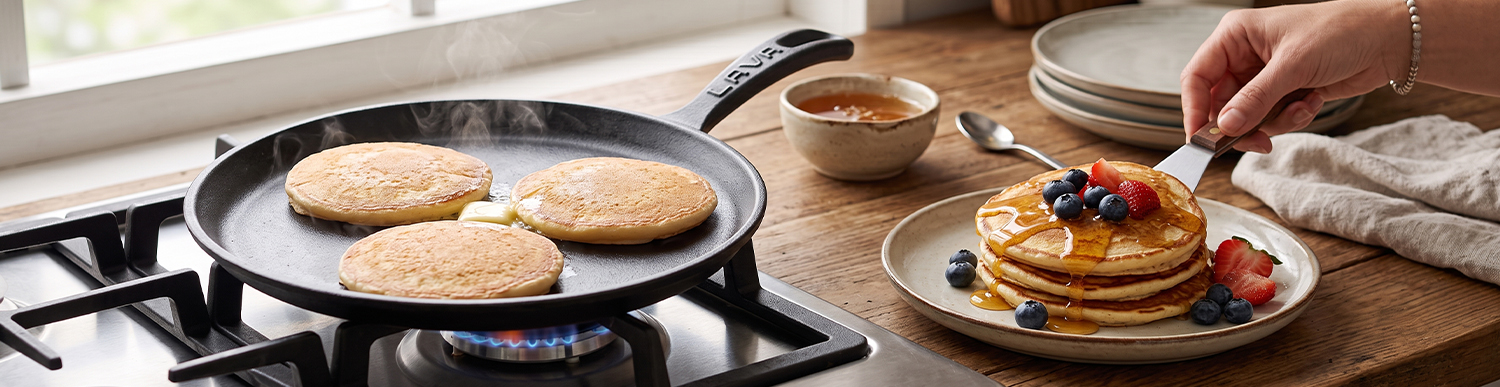
To make soft and evenly risen pancakes in a cast iron pan, the batter consistency, pan temperature and the right time to flip should all be considered together. In this guide, we explain step by step how to prepare pancake batter, preheat a cast iron pan correctly and cook pancakes with controlled heat. We also share practical tips for preventing pancakes from sticking or failing to rise properly, maintaining the ideal cooking temperature and achieving more consistent results.
Estimated Reading Time: 8 minutes
For pancakes that are lightly golden on the outside, soft inside and evenly risen, the pan temperature is just as important as the batter. If the surface is too hot, the outside of the pancake may brown quickly while the centre remains undercooked; if the pan is not hot enough, the batter may spread and the desired texture may not develop.
When preheated gradually and correctly, a cast iron pan retains its heat for longer. This helps maintain a more consistent surface temperature when cooking pancakes one after another. In this guide, we explain how to make pancakes in a cast iron pan, covering the right batter consistency and how to know when to flip the pancakes, step by step.
For approximately 10–12 small pancakes, depending on size:
1 egg
200 ml milk
150 g plain flour
2 tablespoons caster sugar
1 tablespoon vegetable oil or melted and slightly cooled butter
2 teaspoons baking powder
A pinch of salt
1 teaspoon vanilla extract or vanilla flavouring, optional
A small amount of vegetable oil or butter for greasing the pan
The amount of sugar can be reduced according to your serving preference. If you plan to serve the pancakes with honey, jam or fruit, a more neutral batter with less sugar can be used.
Whisk the egg and sugar in a mixing bowl until the sugar has mostly dissolved.
Add the milk and vegetable oil and mix.
In a separate bowl, combine the flour, baking powder and salt.
Add the dry ingredients to the wet mixture.
Mix gently and briefly until the flour is no longer visible.
Leave the batter to rest for approximately 5 minutes.
Pancake batter should be thicker than crepe batter. It should flow from the spoon but should not spread completely as soon as it reaches the pan. If the batter is too thick, add one or two tablespoons of milk. If it is too runny, add a small amount of flour.
Do not whisk the batter for too long in an attempt to make it completely smooth. Overmixing can give the pancakes a firmer texture. Mixing just until the ingredients are combined is sufficient.
To learn about the ideal consistency of crepe batter and the right cooking steps in a cast iron pan, explore our guide, How to Make Crepes in a Cast Iron Pan? Thin Crepe Recipe.
Preheat the cast iron pan gradually over a low or medium-low heat for a few minutes. Apply a very thin layer of oil to the surface. The oil should not pool on the pan; any excess can be carefully removed.
Test the temperature with a small amount of batter. If the batter starts cooking gradually and the underside does not darken immediately, the pan is approaching the right temperature. If the batter darkens instantly, reduce the heat and allow the cast iron pan some time to cool slightly.
Cast iron does not respond immediately to changes in temperature. Rather than making frequent and large adjustments to the hob setting, make small changes and observe the results.
Gently stir the rested batter once or twice.
Pour approximately 1.5–2 tablespoons of batter into the pan for each pancake.
Leave enough space between the pancakes for them to spread.
When small bubbles begin to appear on the surface and the edges start to look matte, check the underside.
Slide a spatula underneath the pancake and flip it in one smooth movement.
Cook the second side for less time than the first.
Remove the pancake from the pan when it springs back gently when pressed in the centre and there is no visible raw batter inside.
Cooking time can vary depending on the size of the pancakes, batter thickness, pan diameter and hob power. Rather than relying solely on the cooking time, also look for changes in the bubbles, edges and colour.
Do not press down on the pancake with the spatula after flipping. Pressing it can release the air in the batter and result in a denser, flatter pancake.
Baking powder that has been open for a long time may not provide the expected rise. Check the use-by date and storage conditions.
Stop mixing once the dry and wet ingredients are combined. Prolonged and vigorous mixing can make the pancake texture firmer.
Because cast iron retains heat, the pan may become hotter after the first batch. If the outside of the pancakes starts browning increasingly quickly, reduce the hob temperature.
Using the same measuring spoon or small ladle helps the pancakes cook in a similar amount of time. Cooking pancakes of very different sizes at the same time can make temperature and cooking control more difficult.
The appearance of bubbles alone is not always enough. Wait until the edges also begin to look matte and take shape. Flipping too early can cause the pancake to break apart, while flipping too late can make the underside too dark.
Common reasons why pancakes may stick to the pan include:
The pan has not been preheated sufficiently,
The oil has not been distributed evenly,
The pancake is flipped before the surface has set,
The batter is too runny,
Burnt residue from a previous batch remains on the pan,
The enamelled surface is being treated like a synthetic non-stick coating.
When the surface of the pancake has set properly, it should release from the pan more easily. If you need to force the spatula underneath the pancake, wait a few more seconds and check again.
Pancakes in a cast iron pan should generally be cooked over a low to medium heat. High heat can cause the outside to brown quickly while the centre remains undercooked.
The first batch can help you determine the right temperature. If the pancakes remain very pale and take too long to cook, increase the heat slightly. If the first side darkens within a few seconds, reduce the heat and allow the pan some time to settle before adding more batter.
There can be several reasons why pancakes do not rise sufficiently:
The baking powder is old or has lost its effectiveness,
The batter has been overmixed,
The batter is too runny,
The pan is not hot enough,
The pancake is flipped too early,
The pancake is pressed down after flipping.
Measuring the ingredients accurately, particularly maintaining the right balance between flour and liquid, makes it easier to achieve a more consistent batter every time.
Heating the pan rapidly over high heat
Whisking the batter for too long or too vigorously
Adding too much oil to the pan
Pouring the pancakes too close together
Flipping before bubbles and defined edges have formed
Pressing down on the pancake after flipping
Making large temperature changes between batches
Running cold water over the hot pan immediately after cooking
Once cooking is complete, allow the cast iron pan to cool gradually. Follow the product's cleaning and care instructions. For more detailed information on the correct use, cleaning and care of cast iron pans, please see our Usage Instructions page.
Serve pancakes with a variety of accompaniments such as seasonal fruit, yoghurt, honey, jam, hazelnuts or walnuts. For a savoury alternative, reduce the amount of sugar in the batter and create a breakfast plate with cheese, eggs and vegetables.
Keeping cooked pancakes stacked and covered until serving can help retain their warmth and soft texture. If serving with a cast iron product with a beech serving trivet, take the necessary precautions around hot surfaces.
Yes. Pancakes can be made in a cast iron pan with a wide, flat cooking surface. Gradual preheating and keeping the temperature at a low to medium level are important. For tips on choosing the right pan for pancakes, including cooking surface and size, explore our guide How to Choose a Pancake Pan?.
A pancake can be flipped when bubbles have formed on the surface, some of the bubbles have opened and the edges have become matte and defined. Check the colour of the underside with a spatula.
For this recipe, resting the batter for approximately 5 minutes is sufficient. As the baking powder begins to react when it comes into contact with the liquid, it is better not to leave the batter for too long before cooking.
If the batter is too runny or the pan is not hot enough, the pancake may spread more than intended. Measure the liquid accurately and preheat the pan gradually before adding the batter.
A 20 cm pan can be suitable for smaller portions. Those who want to cook several pancakes at once can consider models with a larger usable cooking surface, such as 26 or 28 cm. The size of your hob and the weight of the pan should also be considered.
Yes. A pan with a flat, wide cooking surface and suitable sides can be used for both crepes and pancakes. The choice of pan should depend on the portions you prepare and your cooking habits.
Good results when making pancakes in a cast iron pan come from not overmixing the batter, heating the pan gradually and flipping the pancakes at the right moment. The heat-retaining properties of cast iron can help achieve more consistent results when cooking pancakes one after another, provided the hob temperature is managed correctly.
Compare different sizes, handle and serving options with LAVA cast iron crepe, pancake and pizza pans.
16.09.2026






Lava Döküm Online Fabrika Satış Mağazası. © 2026 All Rights Reserved.


0
)