×


When choosing a cast iron toast press, you should consider more than the product’s appearance or price. The material of the body and cooking surface, enamel coating, internal cooking dimensions, weight, handle and hinge design, hob compatibility and manufacturer support should all be taken into account. Genuine cast iron construction stands out for its heat retention and balanced cooking performance. An enamel coating protects the cast iron surface, eliminates the need for seasoning and makes everyday use easier.
Estimated reading time: 9 minutes
The first feature to check when buying a cast iron toast press is the material from which the product is actually made. Terms such as “cast iron plate”, “cast iron-effect surface” and “cast iron body” do not necessarily mean the same thing.
When choosing a stovetop cast iron toast pan, consider the material, cooking area, weight, lid design, handle construction and the heat source you intend to use. The right product can be used not only for making toast but, depending on its design, also for sandwiches, vegetables, meat and different grilled recipes.
In this guide, you can explore the key criteria to consider when buying a cast iron toast press or cast iron toast pan, as well as the features of enamelled cast iron models.
When choosing a cast iron toast press or cast iron toast pan, check these ten points:
The actual material of the body and cooking surface
The quality of the enamel coating on the cast iron
Internal cooking area and portion capacity
Total product weight
Whether the handles provide a secure and balanced grip
Whether the lid and hinge system accommodates different food thicknesses
The design of the grill channels
Whether the plates can be separated and used for different purposes
Compatibility with the hob or heat source you intend to use
Manufacturer information, instructions for use, warranty and after-sales support
The “best cast iron toast press” is not necessarily the same product for everyone. The most suitable choice depends on how many people you are cooking for, the hob you will use, how often the product needs to be lifted and whether you intend to use it only for toast or for different recipes as well.
The presence of the word “cast iron” in a product name does not necessarily mean that the entire body is made from cast iron. Some electric toast presses may have cast iron cooking plates only. Other products may use a coating over an aluminium body to create a cast iron appearance.
For this reason, the material information should be clearly stated in the product description.
No. A cast iron body means that the main cooking components of the product are made from cast iron. Cast iron plates, on the other hand, may indicate that only the cooking surface or removable plates are made from cast iron.
With stovetop cast iron toast pans, heat is transferred directly from the hob to the product. Therefore, the body material, base design and thickness can directly affect cooking performance.
Before purchasing, check that the product page clearly states:
Body material
Cooking surface material
Type of coating
Internal and external dimensions
Product weight
Compatible heat sources
Care and cleaning instructions
Country of manufacture and manufacturer information
Terms such as “cast iron coating” or “cast iron effect” alone are not sufficient to confirm that a product is made from genuine cast iron.
Cast iron is naturally heavier than many other cookware materials. This weight is related to the material’s ability to retain heat and maintain its temperature.
However, a heavier product cannot automatically be considered higher quality. Alongside material quality, you should also assess manufacturing standards, surface finish, lid balance, enamel application and ergonomics.
An enamelled cast iron toast pan is made by coating the cast iron body with a glass-based enamel layer. This surface protects the cast iron from external factors while making everyday use and care easier.
Enamel is not simply a decorative colour layer. It is a functional surface that affects the product’s user experience and care requirements.
Enamel is a glass-like coating applied to a metal surface at high temperatures through suitable manufacturing processes. It bonds to the cast iron surface to create a protective and easy-care layer.
The quality of enamel coating is related to the preparation of the raw material, application process, firing temperature and quality control stages. Therefore, when choosing an enamelled product, it is important to consider not only whether it has an enamel coating but also the manufacturer’s experience in cast iron and enamel production.
Bare cast iron products have a directly exposed metal surface and may require regular oiling or seasoning to help protect the surface.
With enamelled cast iron products, the cast iron surface is protected by an enamel layer. As a result, the seasoning process used for bare cast iron is not required for enamelled surfaces. Users should always follow the care instructions provided for their specific product.
This difference does not mean that one material is universally superior to the other. The choice should depend on the user’s cooking habits and care preferences.
Enamelled cast iron toast pans offer the following features:
Protect the cast iron surface with a protective coating.
Do not require the seasoning process used for bare cast iron.
Make everyday cleaning and care easier.
Provide a smooth surface that can help reduce the transfer of odours and flavours.
Allow for a range of colour and design options.
Combine the heat retention of cast iron with everyday ease of use.
Although enamel surfaces are durable, care should be taken to protect them from impacts, dropping and contact with hard metal utensils.
When purchasing, check the surface for any obvious cracks, chips or sharp coating defects. Even enamel coverage and clear care instructions from the manufacturer are also important.
Due to the production process and hand-finishing involved in cast iron products, minor visual variations may occur on the surface. These do not always indicate a performance issue. However, cracks or loss of coating that affect the integrity of the surface should be referred to the manufacturer.
Looking only at the external dimensions can be misleading when choosing a product. The usable cooking area, the space occupied by the product when closed and the total length including the handles can all be different measurements.
For this reason, it is preferable for product pages to provide the internal dimensions, external dimensions and total length separately.
The internal cooking area determines how many portions of toast or sandwiches can be prepared at once. A smaller model may be sufficient for one or two portions, while larger surfaces may be more suitable for larger households.
A larger surface is not always the better choice. Larger cast iron products can be heavier, require more storage space and may not be suitable for a small hob.
Exact capacity depends on the size of the bread, the thickness of the recipe and the internal shape of the product. Therefore, rather than looking only at the dimensions in centimetres, check the portion capacity specified by the manufacturer.
In general:
Compact models can be suitable for one- or two-person use.
Larger cooking surfaces can be suitable for family use.
For camping and caravan use, models that balance portability and capacity may be more practical.
No. The external frame, edge height, hinge connection and handles increase the overall dimensions of the product. When choosing a product, consider both the usable internal cooking area and the dimensions of the cupboard or drawer where it will be stored.
Cast iron toast pans are heavier than lightweight metal pans due to the properties of the material. While this weight helps the cookware retain heat evenly, it also increases the importance of ergonomics in everyday use.
The dense structure of cast iron gives the product a significant weight. This structure contributes to retaining heat across the cooking surface and maintaining a more consistent temperature.
The weight can also help the product remain stable on the hob. However, the product should be moved and turned carefully.
Users who have difficulty with hand, wrist or arm movements should check the product’s weight in kilograms before purchasing. The total weight can affect ease of use, particularly with models where two plates are lifted together.
Where possible, consider not only the total weight but also whether the plates can be separated.
The handle should help you control a hot, filled product safely. Handle length, grip area, connection method and the product’s centre of gravity should all be considered together.
With wire-handled models, check the stability of the handle and whether a locking mechanism is included. Remember that handles and metal components can become hot during use. Suitable protective equipment should be used according to the manufacturer’s instructions.
The shape of the cooking surface affects how food contacts the product and can influence the cooking result. When choosing a cast iron toast pan, consider not only the appearance of the surface but also whether it is suitable for your intended use.
Grill channels help create defined cooking marks on food. They can also reduce continuous contact between the food and the oils and liquids released onto the surface.
Very deep channels may require additional attention during cleaning. For this reason, accessibility of the surface should be considered alongside cooking performance.
A flat surface provides broader contact between the food and the pan. A grill surface creates defined cooking marks and a different surface texture.
For users who want to prepare toast, sandwiches and grilled recipes using the same product, the surface design of both plates should be examined.
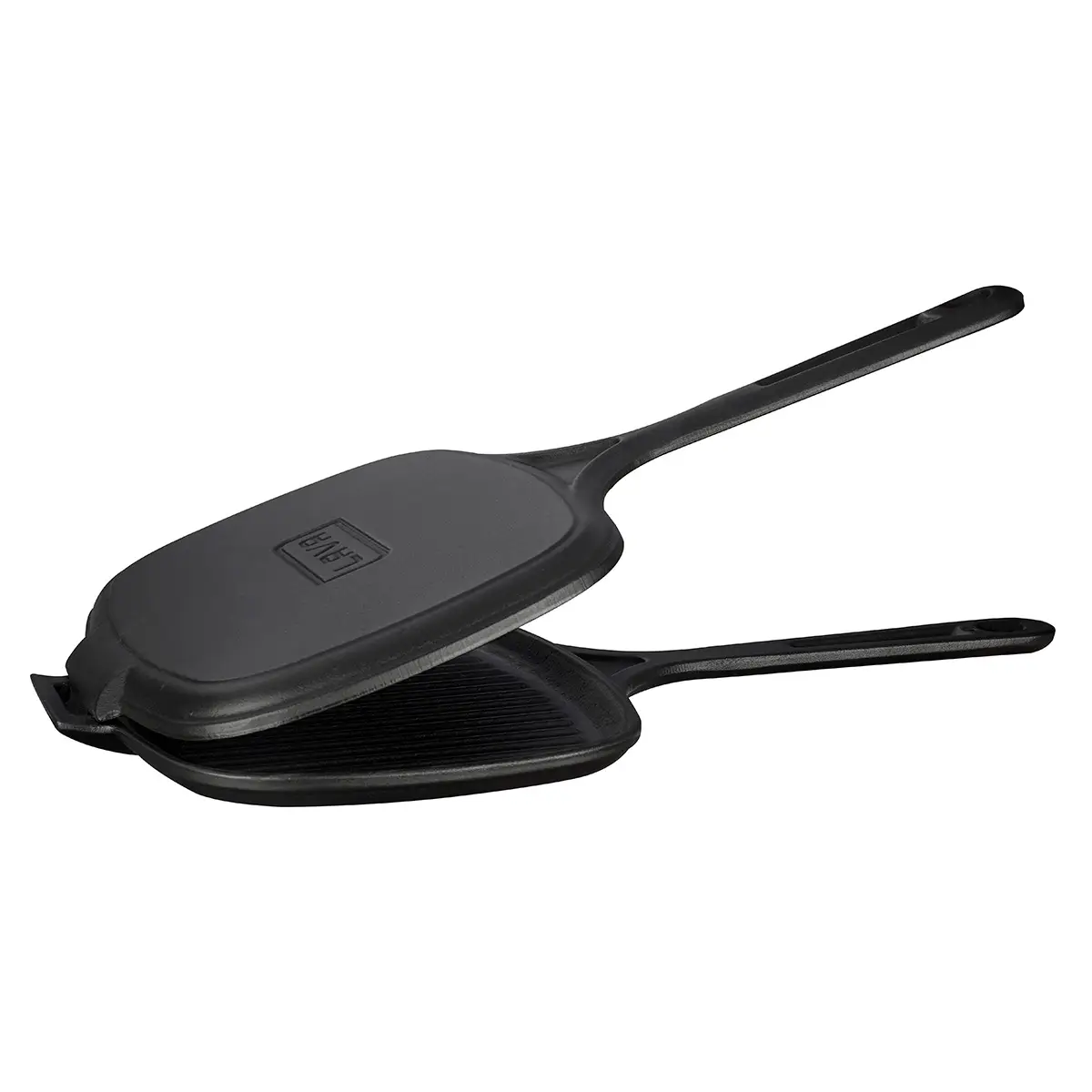
Depending on the product design, plates that can be separated may allow the two sections to be used as separate grill pans. This can provide a wider cooking surface and support different cooking scenarios.
A removable design can also make cleaning and storage easier. However, the strength of the connection system and whether the plates can be safely and easily reassembled should also be checked.
A well-designed toast pan should allow the bread to make balanced contact with both cooking surfaces. If the lid or upper plate closes at a completely fixed angle, pressure may not be distributed evenly when preparing thicker sandwiches.
Thin sliced bread and a generously filled sandwich do not have the same height. The movement range of the upper plate and the hinge design should allow contact with foods of different thicknesses.
Before purchasing, examine not only the product photographs but also images showing the product in both open and closed positions.
The connection should keep the two plates balanced, provide controlled opening and closing, and avoid unnecessary movement during use. With removable products, it is important that the mechanism can be safely detached and reassembled by the user.
Before buying a cast iron toast press, determine which type of hob you intend to use. Gas, electric, ceramic and induction hobs operate differently.
Cast iron is a material that can be used with many heat sources. However, the handle design, base shape, enamel application and overall construction can affect the suitable applications.
Therefore, do not assume that a product can be used everywhere simply because it is made from cast iron. Check the hob compatibility information on the product page and the manufacturer’s instructions.
Although cast iron has magnetic properties, the base diameter, flatness and the detection requirements of the induction hob can affect compatibility. For a definitive answer, refer to the manufacturer’s information for the specific model.
If you intend to use the product over an open fire, on a camping stove or with another outdoor heat source, confirm that the product is explicitly suitable for that use. The position of the handles, flame distribution, stability of the cooking surface and safe handling of the hot product should also be considered.
Care requirements are as important as cooking performance when choosing a product. A product that will be used frequently should be easy to clean and store as part of your everyday routine.
Plates that can be separated may make it easier to clean each surface individually in the sink. Being able to access areas around the hinge can also be useful when cleaning.
The same cleaning method does not apply to every enamelled cast iron product. Dishwasher compatibility should be checked according to the specific model and the manufacturer’s instructions.
For long-term surface appearance and service life, the recommended cleaning method should be clearly stated in the product instructions.
The product page should answer questions such as:
What should be done before first use?
Is seasoning required?
Which cleaning tools can be used?
Is the product dishwasher safe?
How should the surface be dried and stored?
Are there any recommendations regarding the use of metal kitchen utensils?
For detailed practical steps, link to the “Stovetop Toast Press Use and Care Guide”.
The price of a cast iron toast press is not determined solely by its size. The amount of material used, manufacturing process, enamelling process, product weight, component design, quality control and manufacturer support can all affect the price.
Preparing the cast iron, moulding, surface treatment, enamelling and quality control are all part of a multi-stage manufacturing process. Body thickness and the amount of material used can also affect the overall production value.
For this reason, comparing only the external dimensions of two products is not enough when comparing prices.
A wider and heavier model may contain more material. Removable plates, specialised hinge systems, wire-handle designs or different cooking surfaces can also affect the product’s design and manufacturing process.
For kitchen equipment expected to provide long-term use, having access to the manufacturer is important. Instructions for use, warranty conditions and after-sales support can affect the long-term value of a product regardless of its initial purchase price.
Rather than evaluating cast iron cookware solely on its initial price, it is more useful to consider its expected service life and frequency of use together.
The most suitable cast iron plate toast press is one that provides an appropriate size, reliable material information, balanced heat performance and ergonomics suited to your intended use.
For home use, the following criteria may be particularly relevant:
Base dimensions compatible with your hob
Cooking area suitable for your daily portion requirements
Weight that you can comfortably handle
Safe handle and connection design
Easy-to-clean enamelled surface
Overall dimensions suitable for your storage space
For users who want to prepare vegetables, sandwiches or other grilled recipes in addition to toast, removable plates and versatile cooking surfaces can offer additional functionality.
The recipes a product can be used for should be assessed based on the applications recommended by the manufacturer.
For long-term value, consider the following features together:
Genuine cast iron construction
High-quality enamel application
Robust handle and hinge system
Clear usage and care instructions
Manufacturer expertise
Warranty and after-sales support
Before making your purchase, answer the following questions:
Is the product made from genuine cast iron?
Are only the plates made from cast iron, or is the main body also cast iron?
Is the surface enamelled?
What is the internal cooking area?
How many portions is it suitable for?
Is the total weight manageable for me?
Is the handle and hinge design secure?
Can the plates be separated?
Is it compatible with the type of hob I use?
Are dishwasher and cleaning instructions clearly stated?
Is manufacturer and country-of-manufacture information available?
Is warranty and after-sales support provided?
If most of these questions cannot be clearly answered on the product page, contact the manufacturer for further information before purchasing.
The most important feature is clear information about the actual material used to make the product. After that, consider enamel quality, internal cooking dimensions, weight, handle and hinge design, and hob compatibility.
Cast iron plates indicate that the cooking surface may be made from cast iron. In products with a cast iron body, the main cooking components are made from cast iron. Check the material details in the product description.
Enamelled cast iron toast pans combine the heat retention of cast iron with a protective and easy-care surface. Not requiring seasoning and offering convenient everyday care are among the key features of enamelled models.
Weight is related to the material structure of cast iron but is not, on its own, a measure of quality. Manufacturing standards, surface integrity, ergonomics, enamel application and connecting components should also be considered.
The size should be selected according to the number of portions, bread size, hob width and available storage space. The usable internal cooking area should be considered rather than relying solely on the external dimensions.
The most suitable model is the one that best matches your intended use. Consider material transparency, a well-applied enamel surface, suitable dimensions, safe ergonomics, heat source compatibility and manufacturer support together.
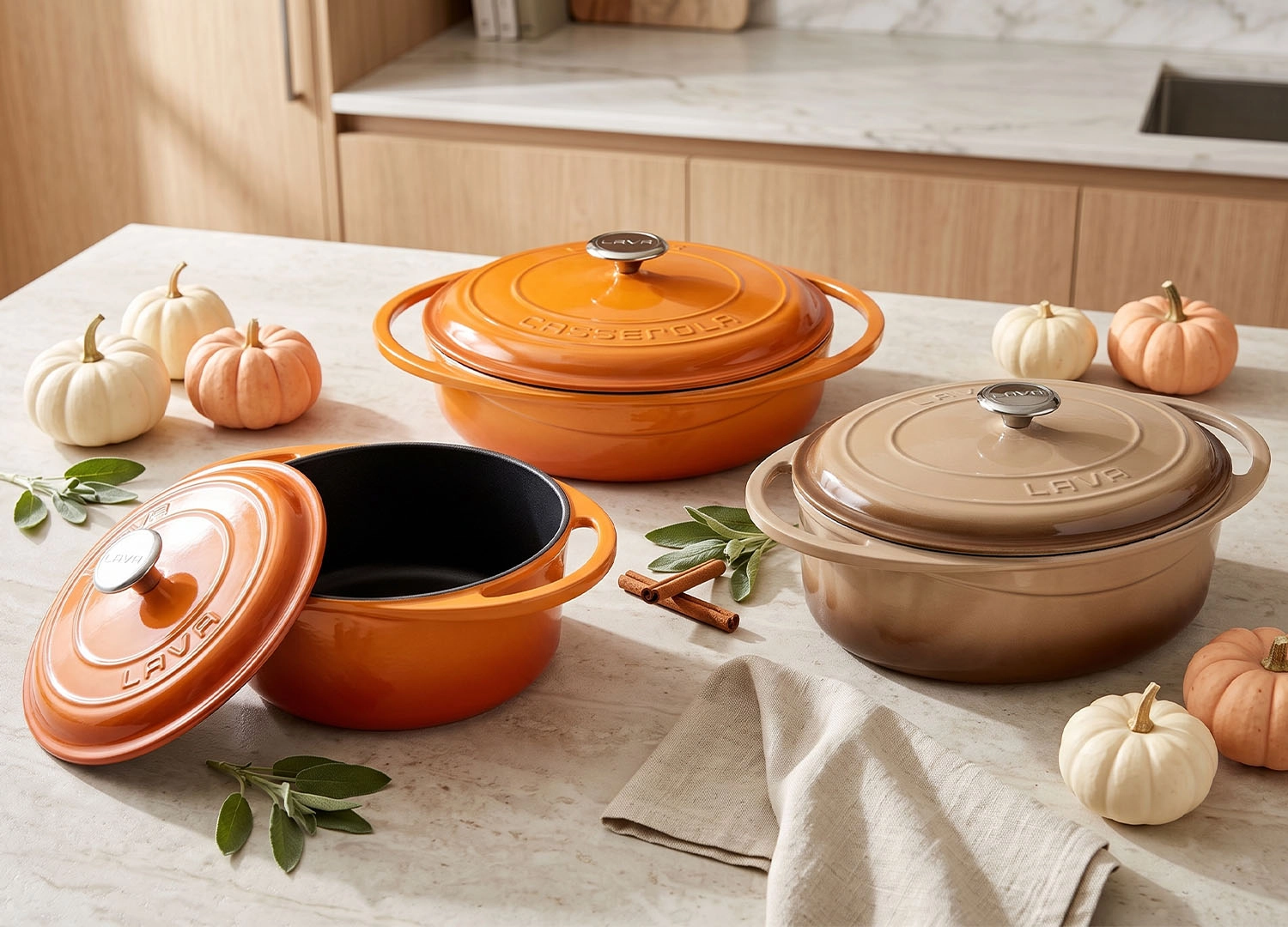
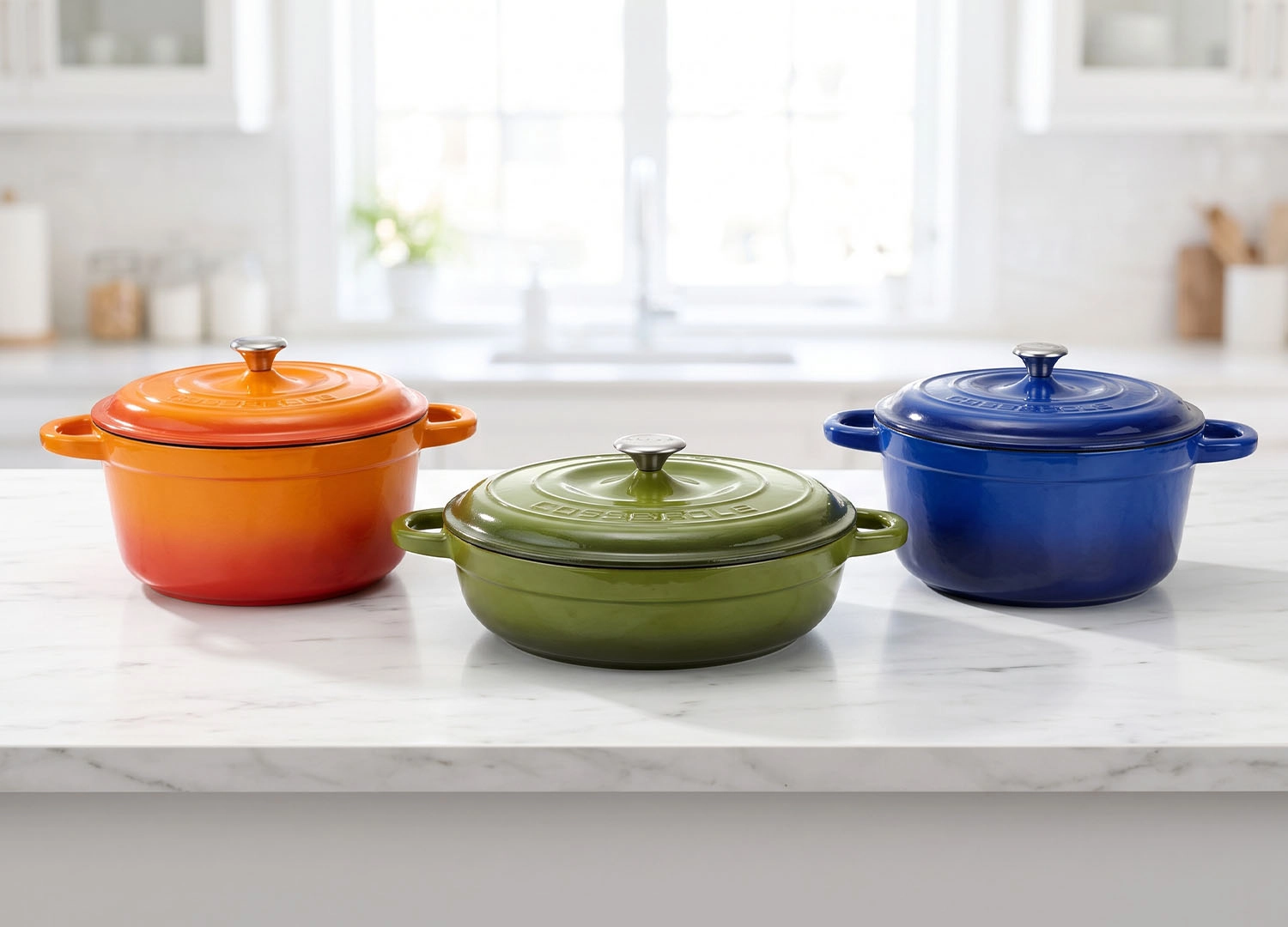
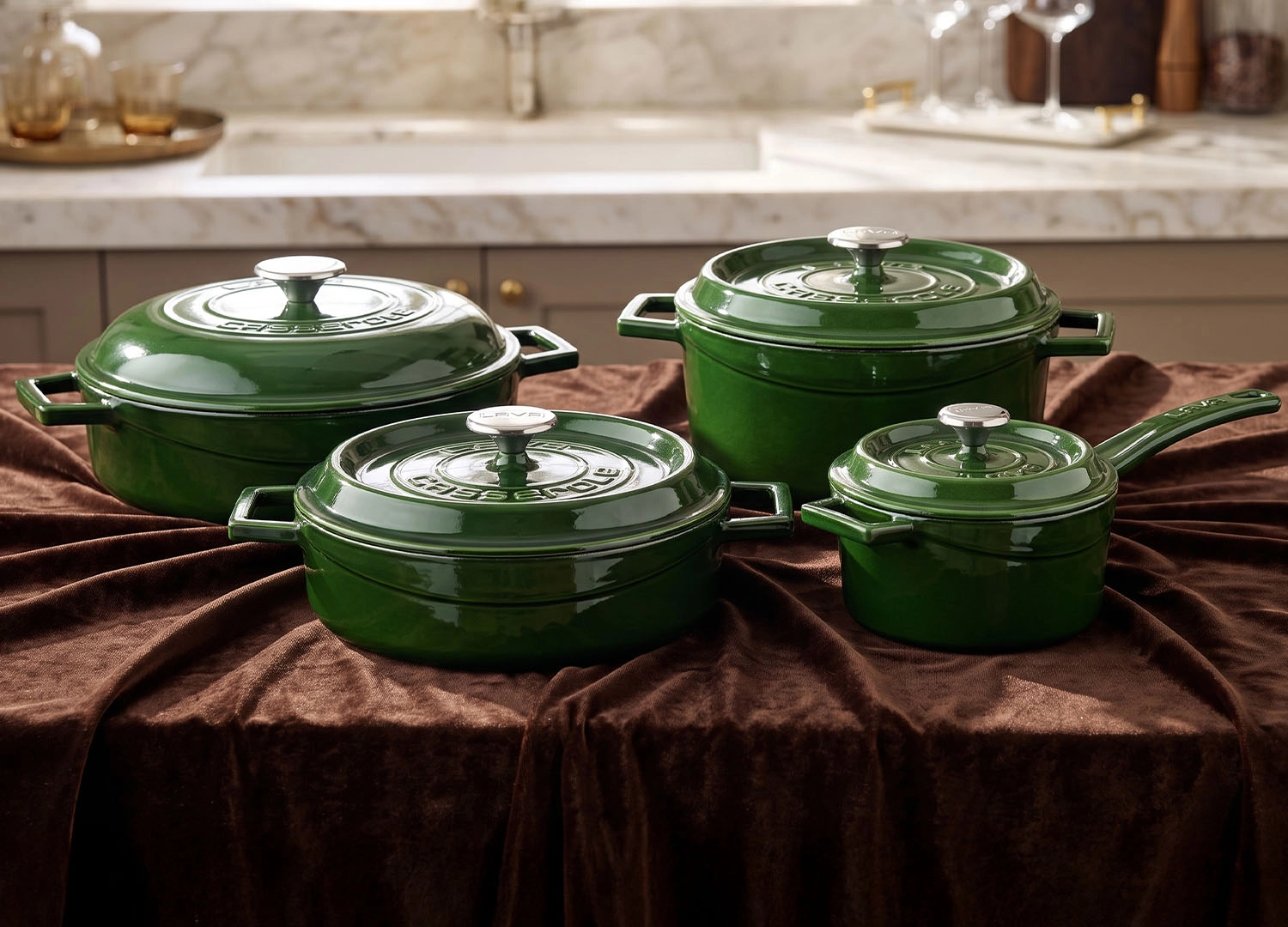
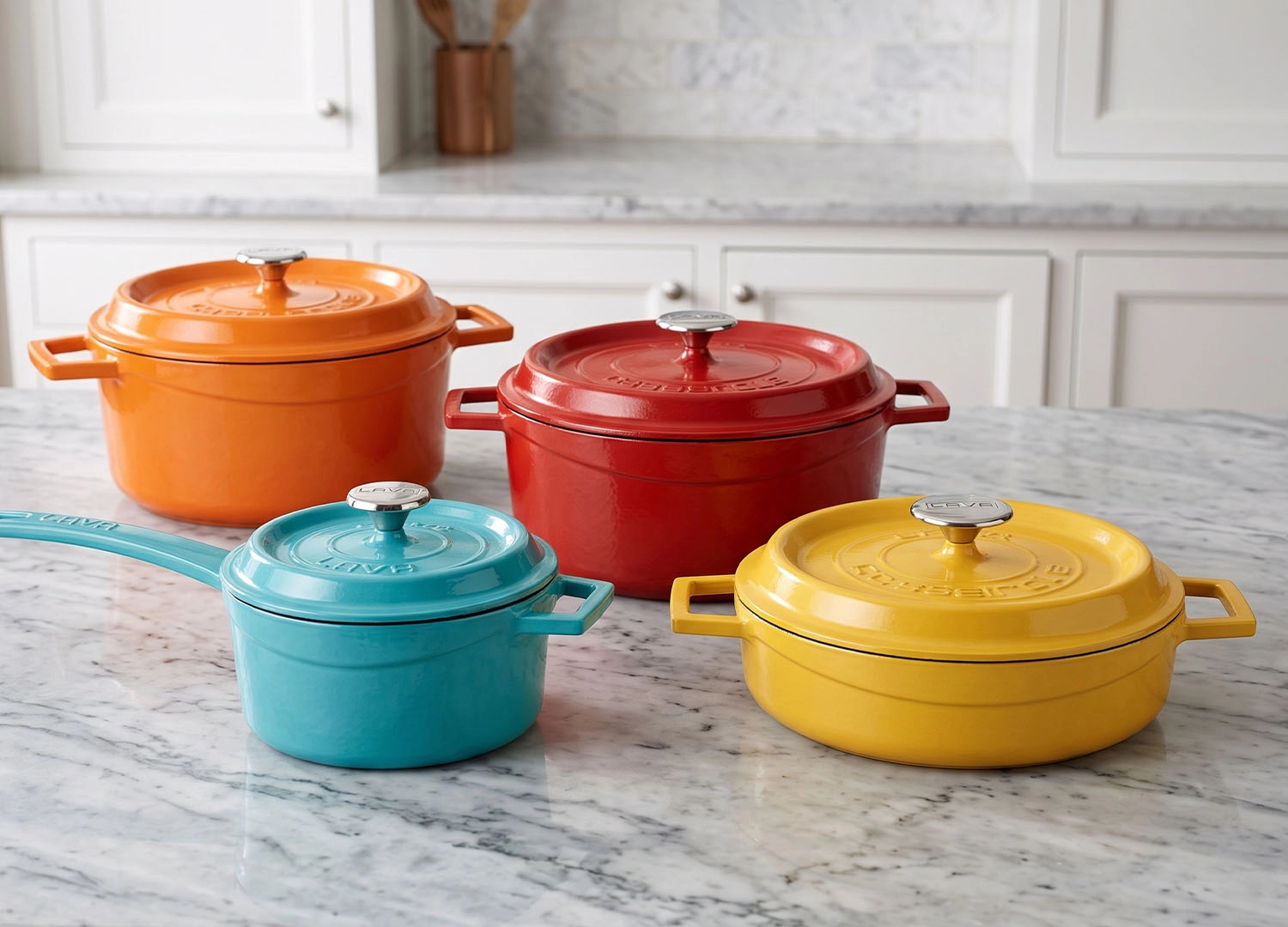
LAVA’s enamelled cast iron products, manufactured in Eskişehir, combine cooking performance, durability, ease of use and long-term value.
When choosing a cast iron toast pan, consider not only the initial purchase price but also how frequently you will use it in your kitchen, the recipes you can prepare with it and its long-term value.
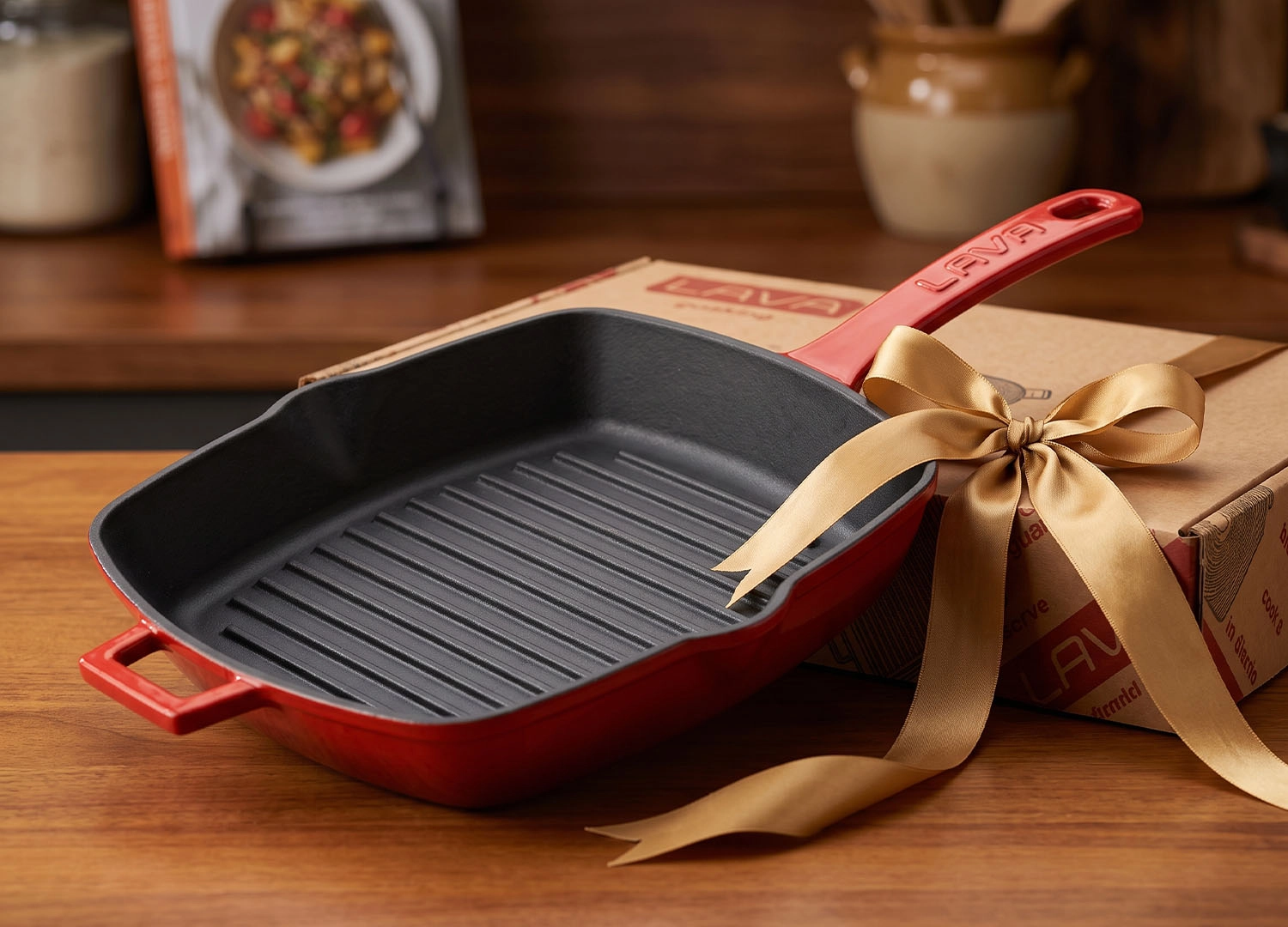
Explore the LAVA Rectangular Cast Iron Grill Toast Pan 18 × 26 cm to discover its dimensions, material and usage features.
24.09.2026






Lava Döküm Online Fabrika Satış Mağazası. © 2026 All Rights Reserved.


0
)

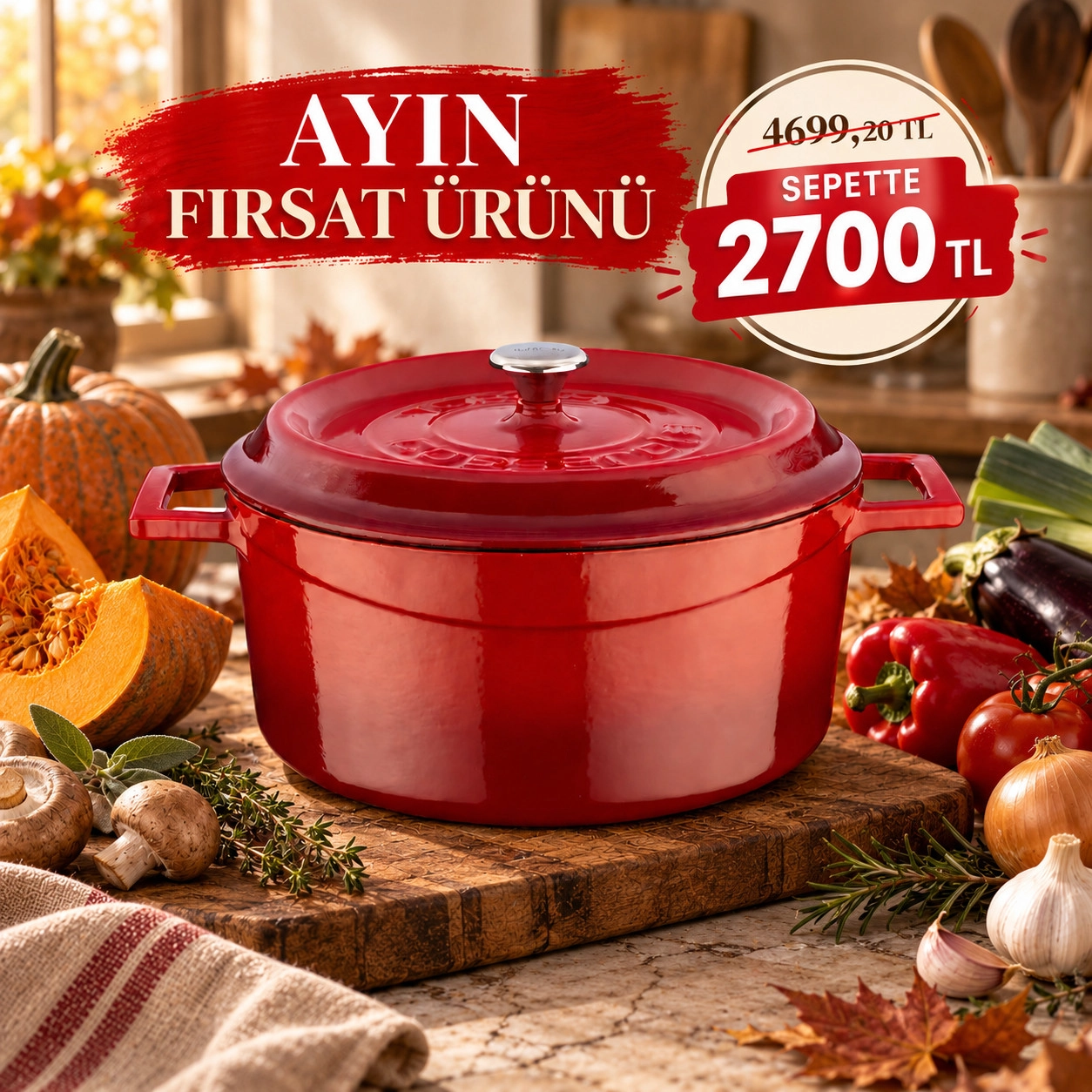 LAVA Round Cast Iron Casserole – Trendy Ø24 cm
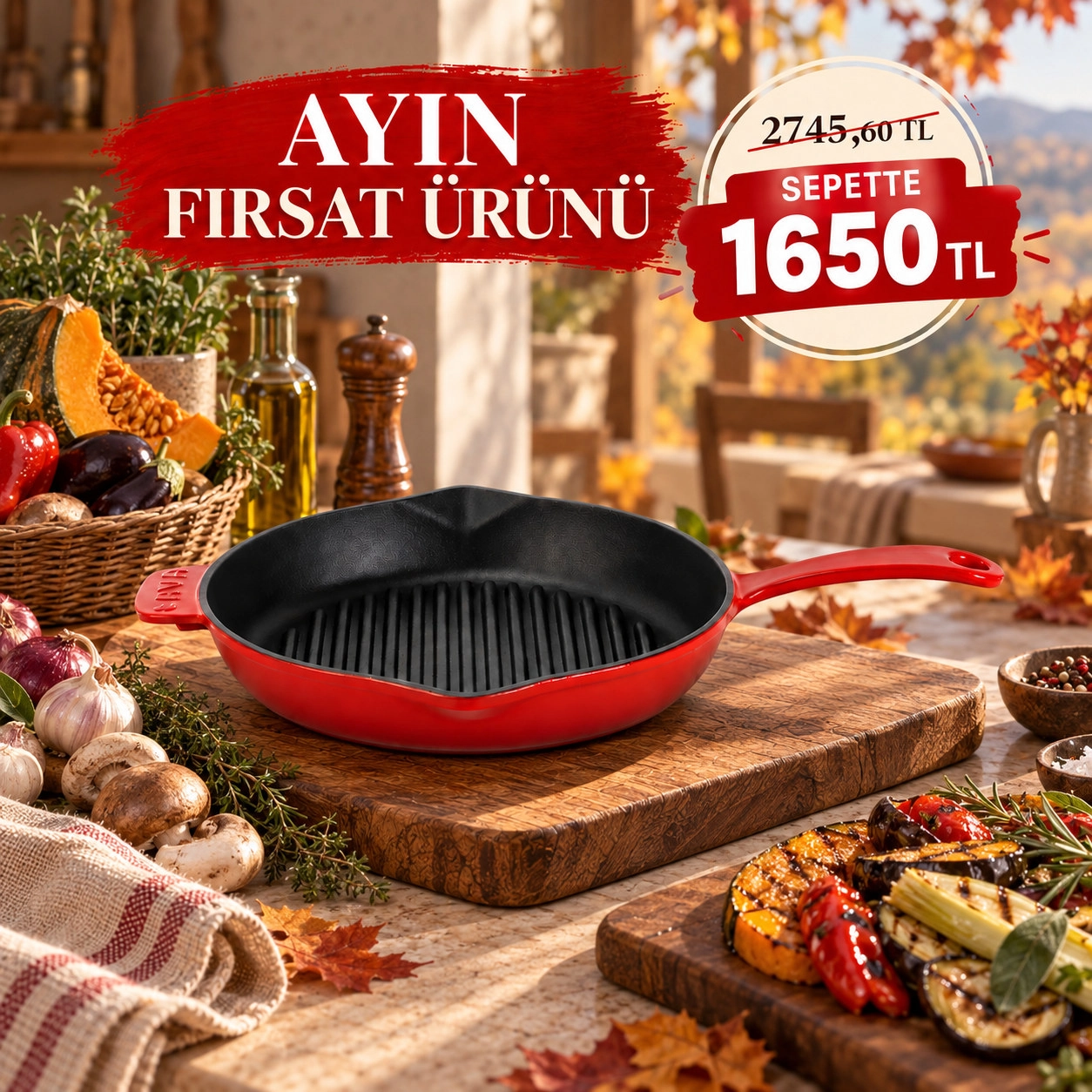 LAVA Round Cast Iron Grill Pan 28 cm Single Handle
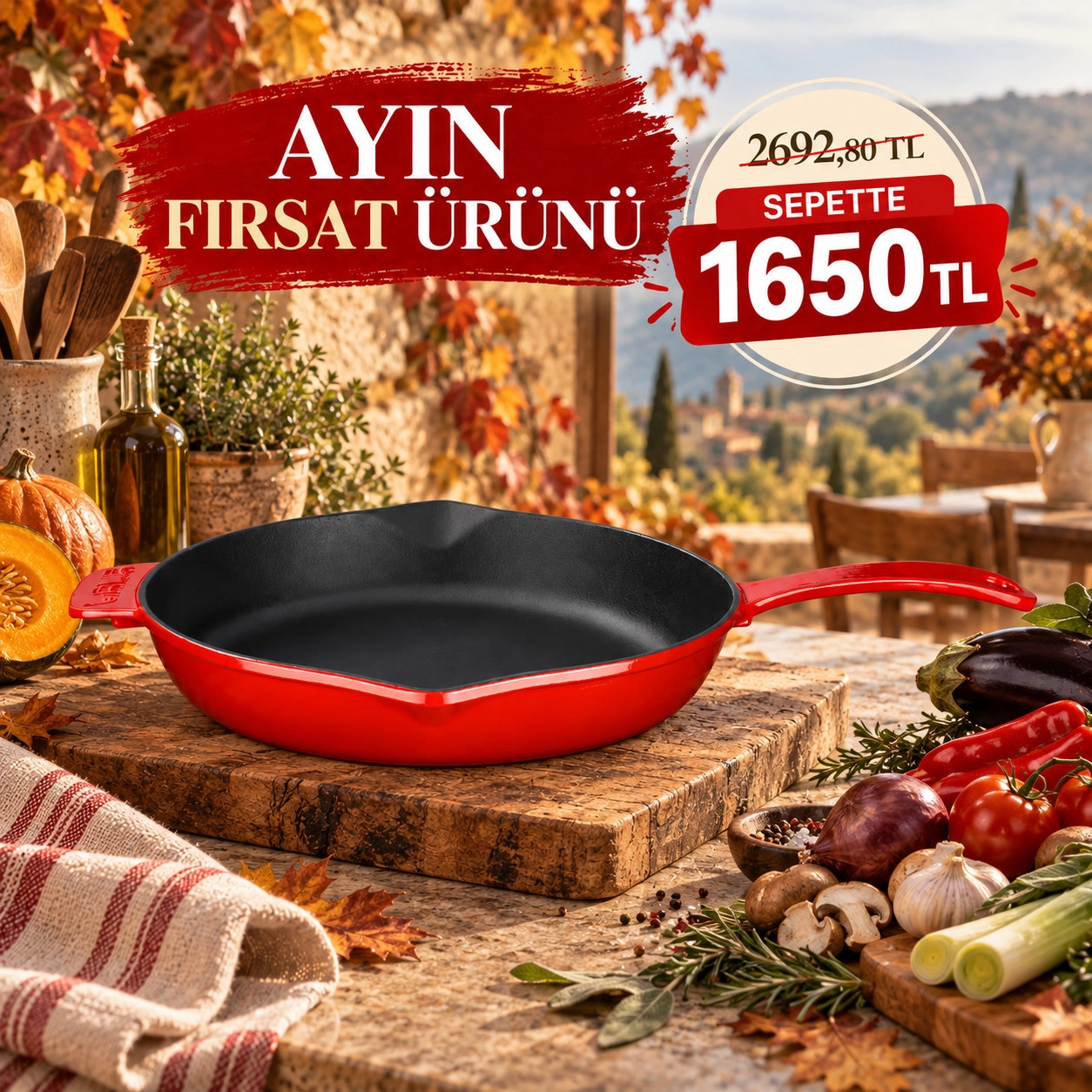 LAVA Round Cast Iron Frying Pan 28 cm Single Handle
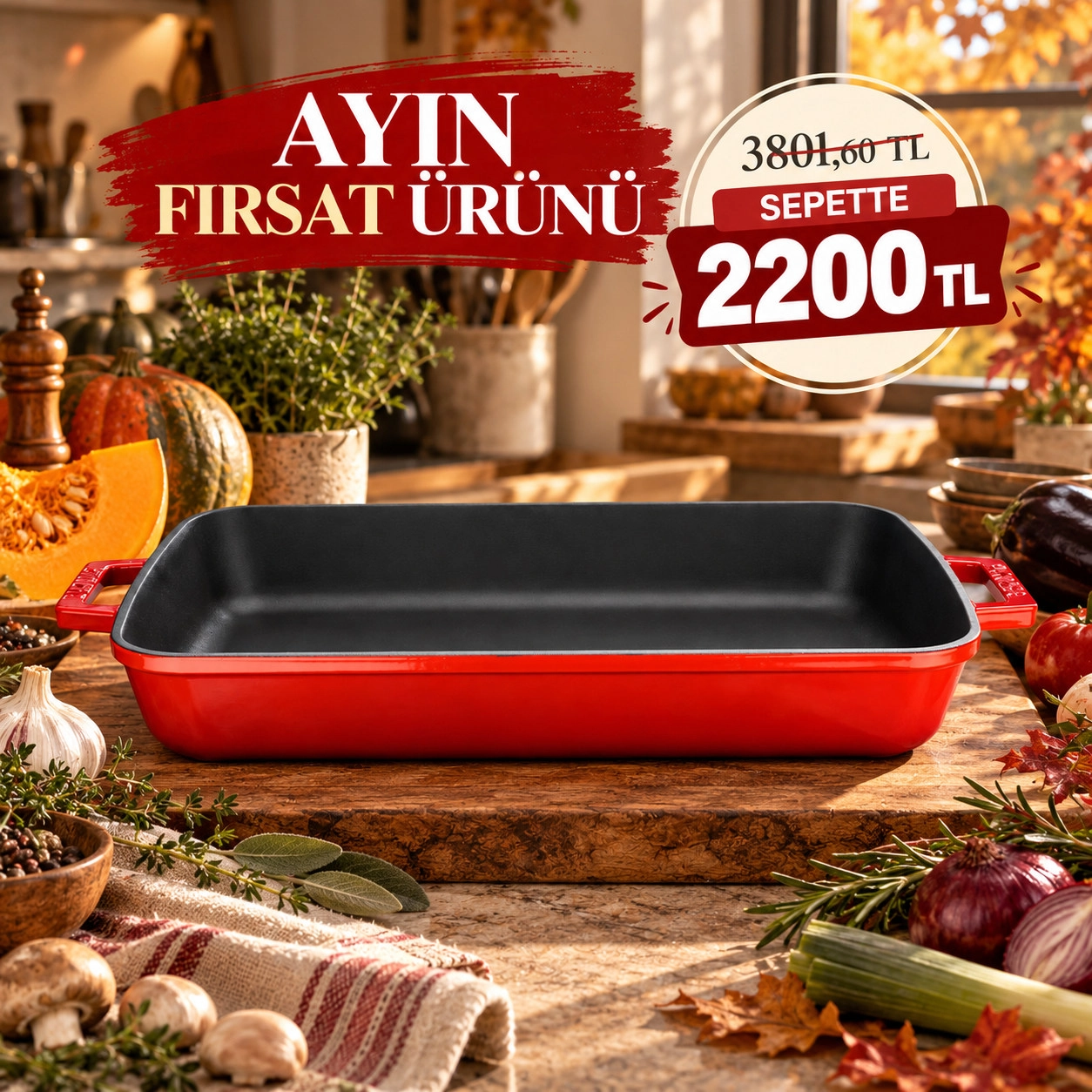 LAVA Rectangular Cast Iron Roasting & Oven Tray 26x40 cm Twin Handles
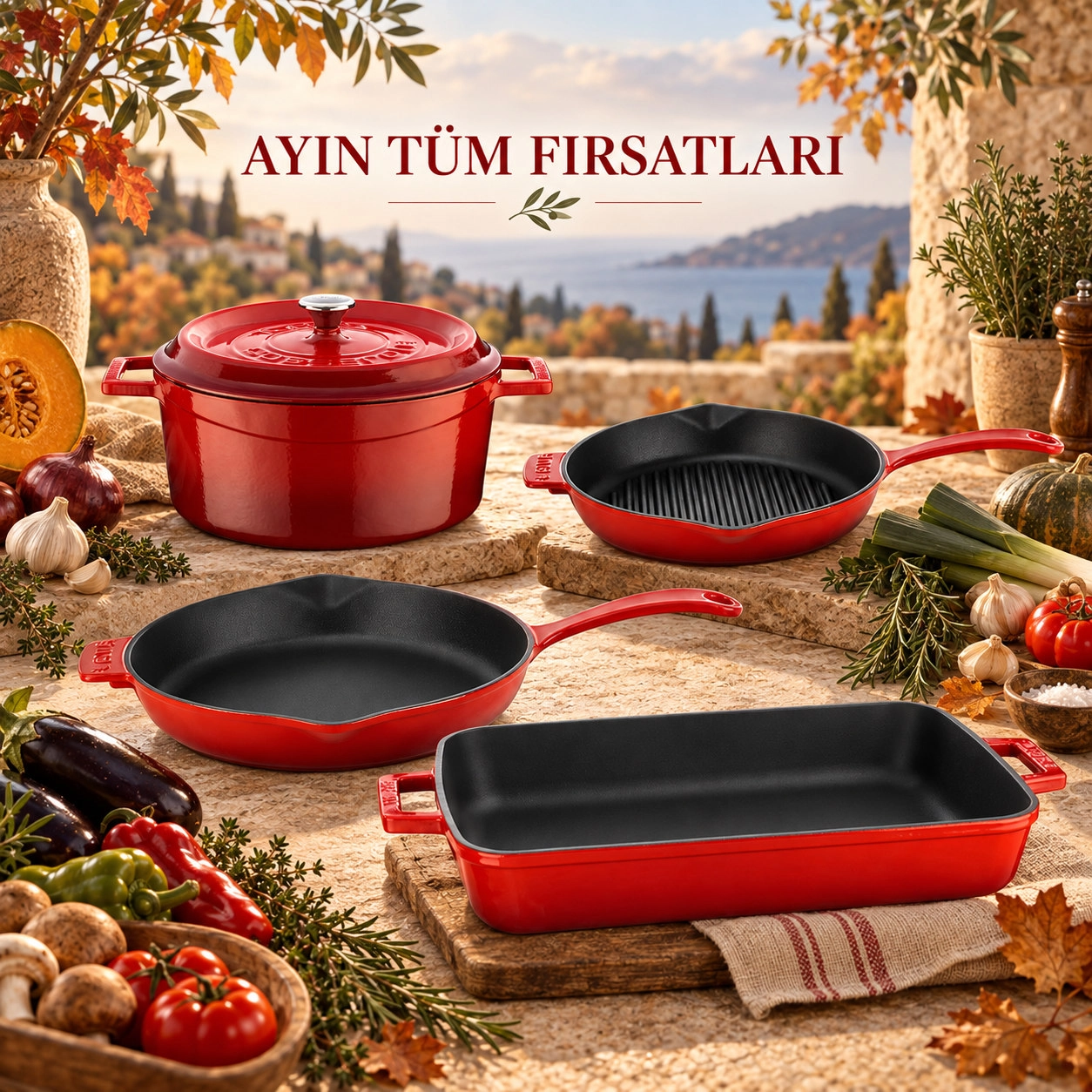 All This Month's Deals