×

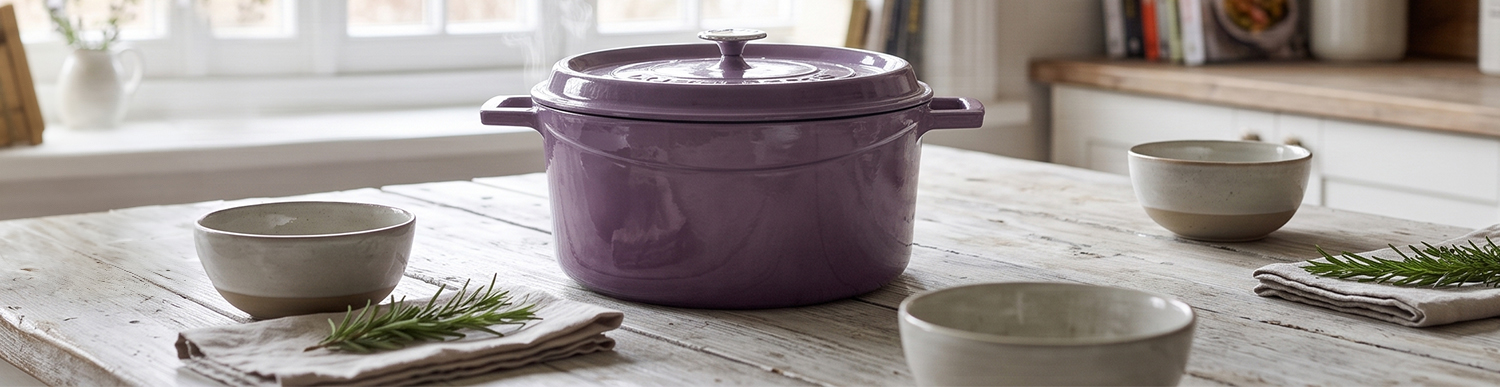
Enamel itself does not rust in the conventional sense; however, if the enamel surface is damaged and the underlying cast iron remains in contact with moisture for an extended period, rust may develop. Enamel coating creates a protective barrier between cast iron and water and the external environment. LAVA enamelled cast iron products do not require additional seasoning. Protecting the product from sudden temperature changes and impacts, cleaning it correctly, drying it completely and storing it in a dry environment are important for long-term use.
As enamel is not a metal, it does not rust in the conventional sense. However, if the enamel surface cracks, chips or becomes seriously damaged, exposing the underlying cast iron, rust may develop if this area remains in contact with moisture for an extended period. Therefore, the key factors determining the risk of rust in enamelled cast iron products are the integrity of the enamel surface, exposure to moisture, and whether the product is cleaned and dried correctly.
Estimated Reading Time:
8 minutes
As enamel is not a metal, it does not rust in the conventional sense. However, in an enamelled cast iron product, if areas where the surface integrity has been compromised or the cast iron has become exposed remain in contact with moisture for an extended period, corrosion and rust may develop on the underlying iron surface. One of the key advantages of enamel coating is therefore that it creates a protective barrier between cast iron and moisture and the external environment.
The important distinction here is that enamel itself rusting is not the same as the cast iron underneath the enamel rusting.
Therefore, questions such as “Does enamelled cast iron rust?”, “Does enamel-coated cast iron rust?”, “Does an enamelled cast iron casserole rust?” and “Does an enamelled cast iron pan rust?” depend primarily on the condition of the enamel surface and whether the cast iron has been exposed to moisture.
Enamelled cast iron casseroles and pans that are used correctly, have their surfaces protected, and are cleaned and stored appropriately can be used for many years. The fact that LAVA products do not require additional seasoning also makes their care more practical than that of uncoated cast iron products.
The main component of cast iron is iron. When an iron surface remains in contact with moisture and oxygen for an extended period, oxidation can begin. The rust we see during everyday use is the result of this chemical process.
Therefore, the basic answer to questions such as “Why does a cast iron casserole rust?” or “Why does a cast iron pan rust?” is often related to moisture, inadequate surface protection and incorrect storage.
One of the most critical factors in rust formation is moisture.
An unprotected iron surface may gradually corrode through a reaction with oxygen when:
it remains in contact with water for an extended period,
it is left wet after washing,
it is stored in a damp environment,
its surface protection has been compromised.
For this reason, protecting the surface of cast iron products is important not only for their appearance but also for their service life.
One of the main differences between uncoated cast iron and enamelled cast iron is whether the cast iron surface comes into direct contact with the external environment.
With uncoated cast iron products, the cast iron surface is exposed. Certain oiling and seasoning practices may therefore be required to protect the surface.
With enamelled cast iron products, a protective enamel surface covers the cast iron. This enamel surface limits the direct contact of the cast iron with water, moisture and food during everyday use.
For this reason, LAVA enamelled cast iron products do not require additional seasoning.
It would be incomplete to think of enamel coating simply as a decorative layer of colour on a cast iron product.
One of the main functions of the enamel surface is to create a physical barrier between the cast iron and the external environment.
This barrier helps to limit the chain:
cast iron → moisture → oxidation → rust
LAVA's production process documentation states that the primer applied as the first layer of the enamel system helps protect the products against rust and provides a foundation for the surface. It also explains that subsequent enamel layers support the protection of the surface against external factors.
As long as the enamel surface remains intact, most of the cast iron does not come into direct contact with environmental moisture and water.
This is one of the important advantages of enamelled cast iron casseroles and pans in everyday use.
However, it would not be accurate to state categorically that an enamelled product can never rust under any circumstances.
Rust may develop on the cast iron surface if:
the enamel surface becomes seriously damaged,
metal becomes exposed,
the product is left damp for an extended period,
unprotected edges or contact areas remain wet.
In other words, the source of rust in enamelled cast iron is generally not the enamel itself, but the exposed cast iron surface that becomes accessible when the integrity of the enamel is compromised. This distinction is important when answering the question “Why does enamel rust?”
LAVA's technical documentation explains that the enamel system consists of multiple layers. While the primer application helps protect the cast surface, subsequent enamel layers support the durability of the inner and outer surfaces.
This layered structure shows that the enamel surface is not simply aesthetic but also functions as a protective system.
Therefore, when considering the service life of an enamel coating, it is important to consider not only the material itself but also the quality of application and the integrity of the surface.
One of the questions users ask most frequently is:
Does an enamelled cast iron casserole rust?
Under normal conditions of use, the enamel surface protects a significant portion of the cast iron. However, certain usage practices can weaken this protective structure or cause metal areas to remain in contact with moisture for an extended period.
Rust formation in enamelled cast iron products is generally not caused by a single factor. Enamel surface damage, exposed cast iron, prolonged exposure to moisture and storing the product while wet should be considered together to understand when the risk of rust may arise.
Although cast iron is a highly durable material, an enamel surface can be affected by hard impacts.
Dropping the product onto a hard surface, striking it forcefully against a metal surface or allowing it to come into contact with other heavy cookware may cause cracking or loss of enamel from the surface.
For this reason, it is important to handle heavy cast iron products carefully due to their weight.
Not every surface mark has the same significance.
Minor marks caused by normal use should be distinguished from damage where the enamel surface has cracked completely or cast iron has become exposed.
If there is significant enamel loss or deep surface damage, the underlying cast iron may have greater exposure to the external environment. If such an area remains continuously damp, the risk of rust formation may increase.
Therefore, the answer to “Will cast iron rust if enamel is scratched?” depends on the depth of the scratch and whether the underlying metal surface has become exposed. Not every surface mark directly means that rust will develop; however, serious surface damage that exposes cast iron should be assessed more carefully in relation to moisture.
In such circumstances, following the manufacturer's usage and service recommendations is the most appropriate approach when deciding whether to continue using the product.
Although most of the surface of an enamelled product is protected, leaving the product wet for an extended period after washing is not a suitable care practice.
In particular, the following areas should be checked after cleaning:
lid edges,
product rims,
base areas,
metal contact points.
Drying the product completely before storage helps prevent rust formation.
Depending on the product design, certain edges or joining points of cast iron casseroles and pans may be exposed to more physical contact than other areas.
For this reason, attention should be paid to the entire product rather than only the main cooking surface during cleaning and storage.
Instead of leaving the lid and casserole closed together while damp for an extended period, make sure that both products are completely dry before storing them.
It would not be accurate to give a standard number of years for the service life of an enamelled cast iron product.
Product life is determined by a combination of factors such as:
production quality + frequency of use + heat management + surface protection + cleaning + storage
When the strong and durable structure of cast iron is combined with a quality enamel coating and correct use, products can remain in use in the kitchen for many years.
The key to the long service life of enamelled cast iron casseroles and pans is protecting the surface.
There is no need for expensive or complicated maintenance procedures.
The basic approach should be to:
use the correct heat level,
protect the product from thermal shock,
avoid hard impacts,
use suitable kitchen utensils,
clean the product correctly,
store the product dry.
One of the most important characteristics of cast iron products is their durable construction.
LAVA's technical documentation also describes cast iron casseroles and pans with a focus on long-term use, with the concept of products being used “from generation to generation” forming part of the brand approach.
Here, “use from generation to generation” should not be viewed simply as an emotional brand statement.
Being able to use a durable cookware product for many years without having to replace it frequently increases its practical value and contributes to more sustainable consumption.
The main aim of caring for enamelled cast iron products is to preserve the integrity of the enamel surface.
Unlike uncoated cast iron products, there is no need to apply continuous oiling or seasoning cycles.
However, a few basic usage habits can help preserve the product for many years.
Do not place a very hot cast iron product directly under cold running water.
Although cast iron and enamel can withstand high temperatures, sudden and extreme temperature changes can create unnecessary thermal stress on the surface.
Allowing the product to cool naturally for a short period after cooking is a more appropriate way to use it.
Although an enamel surface is hard and durable, it is not unbreakable.
To help protect the enamel surface:
do not drop the casserole or pan onto a hard surface,
do not allow it to strike against other cast iron products,
do not allow lids to knock against each other without control.
Unnecessary scraping with sharp or hard metal utensils should be avoided on enamel surfaces.
Wooden, silicone or other surface-suitable kitchen utensils are more controlled options for everyday use.
The aim is to minimise mechanical wear on the surface as much as possible.
Cast iron products should be dried completely after cleaning.
It is particularly important not to leave the product damp if it is going to be stored for an extended period.
For lidded casseroles, make sure that the inside is completely dry during long-term storage.
For other practices that may shorten the service life of cast iron products, see the 10 Common Mistakes When Using Cast Iron Pans and Cast Iron Casseroles guide.
While this link continues to cover general usage mistakes, this article should be used as the main resource for information about the causes of rust and the role of the enamel surface in protecting against rust.
Daily cleaning of enamelled cast iron products does not require a complicated care routine.
Once the product has cooled, warm or lukewarm water, a suitable cleaning product and a soft sponge that will not scratch the enamel surface are sufficient.
To remove food residue stuck to the surface, soaking the product in water for a while is a more controlled method than scraping it with a wire scourer or abrasive equipment.
LAVA's technical documentation states that enamelled products can be washed in a dishwasher. However, hand washing is recommended to help preserve the enamel surface over the long term.
Completely drying the product after cleaning is also important for protection against rust.
It is particularly important not to leave the product wet after cleaning. Even when the enamel surface is intact, prolonged exposure to moisture around edges, contact points or damaged areas can increase the risk of rust forming on the cast iron.
For general cleaning and usage instructions, you can also refer to the How to Use Enamelled Cast Iron Casseroles and Pans guide.
One of the key advantages of enamelled cast iron products for everyday use is their more practical care requirements.
With uncoated cast iron products, oiling and heating processes known as seasoning may be required to protect the surface.
With enamelled cast iron, the surface is already covered by an enamel layer.
Therefore:
LAVA enamelled cast iron products do not require additional seasoning.
The focus of care is not on creating a layer of oil, but on protecting the existing enamel surface.
This difference is particularly important for people using a cast iron casserole or pan for the first time. Care recommendations intended for uncoated cast iron products should not be applied directly to enamelled products.
The purpose of this section is not to provide a general care guide, but to explain the relationship between the need for seasoning, rust and surface protection. Detailed usage and care instructions should be provided through the LAVA usage guide referenced above.
Although cast iron is an extremely durable material, as with any cookware product, usage habits affect its service life.
The basic principle of correct care for enamelled cast iron products is quite simple:
If you protect the enamel surface, you also protect the cast iron underneath.
There is no need for continuous special maintenance. It is generally sufficient to pay attention to a few basic requirements of the product.
| Correct use | Benefit to the product |
|---|---|
| Controlled use of heat | Helps reduce thermal stress on the enamel surface |
| Avoiding sudden temperature changes | Helps maintain surface integrity |
| Protecting against impacts | Reduces the risk of enamel cracking and chipping |
| Appropriate cleaning | Limits scratches and surface damage |
| Storing completely dry | Reduces the risk of moisture-related rust |
| Not applying seasoning | Preserves the enamel surface's intended use characteristics |
Among these practices, storing the product completely dry and preventing damage to the enamel surface are particularly important for reducing the risk of rust in enamelled cast iron products.
The long-term durability of the product depends largely on maintaining these simple usage habits consistently.
Alongside the question “Does enamel coating rust?”, users also want to know how to prevent rust on enamelled cast iron.
There are five key points to keep in mind:
Protect the enamel surface from impacts.
Hard impacts can compromise the integrity of the enamel.
Do not leave the product wet for an extended period.
Prevent moisture from accumulating, particularly around edges, contact points and damaged areas.
Dry the product completely after cleaning.
Make sure the surface and edges are dry before putting the product away.
Avoid sudden temperature changes.
Do not expose a very hot product directly to cold water.
Follow the manufacturer's recommendations if serious damage occurs to the enamel surface.
If deep cracks, breaks or chips expose the cast iron, consult the manufacturer for guidance on continued use.
In short, the key to preventing rust on enamelled cast iron is not seasoning, but protecting the enamel surface and storing the product in a dry environment.
Does enamel coating rust? The enamel surface itself is not a metal that rusts in the conventional sense. However, the cast iron underneath the enamel can corrode when the integrity of the enamel is compromised and the exposed metal remains in contact with moisture for an extended period.
Therefore, the fundamental protection principle for enamelled cast iron products is to maintain the integrity of the enamel surface.
LAVA enamelled cast iron products do not require additional seasoning. Correct heat management, protection from impacts, appropriate cleaning and completely drying the product before storage form the basis of long-term use.
When a quality enamel surface is combined with the durable structure of cast iron, a correctly used cast iron casserole or pan can remain one of the essential cooking tools in the kitchen for many years.
Therefore, the short answer to “Does enamel coating rust?” is: Enamel itself does not rust; however, if the enamel coating is seriously damaged and the underlying cast iron remains in contact with moisture for an extended period, the exposed metal surface may rust. Protecting the enamel surface, drying the product completely and storing it correctly are key practices that help reduce this risk.
As enamel is not a metal, it does not rust in the conventional sense. However, if the enamel surface is seriously damaged and the underlying cast iron remains in contact with moisture for an extended period, rust may develop on the exposed metal surface.
When the enamel surface is intact and the product is used correctly, the enamel layer helps protect the cast iron from moisture. Surface damage, prolonged exposure to moisture or exposed metal areas may lead to rust formation.
Rust generally does not form on the enamel itself but on exposed cast iron that comes into contact with moisture. Surface damage, leaving the product wet or unsuitable storage conditions may increase the risk.
Not every surface mark means that the cast iron has become exposed. However, if deep damage or enamel loss exposes the underlying metal, prolonged exposure to moisture can lead to rust formation.
The product should be completely dried after cleaning and should not be left in a damp environment. Particularly with lidded products, make sure that the interior surfaces and edges are completely dry before storage.
No. LAVA enamelled cast iron products do not require additional seasoning. Continuous oiling and seasoning methods used for uncoated cast iron should not be applied directly to enamelled surfaces.
The main cause of rust in enamelled cast iron is generally not the enamel itself, but cast iron that has become exposed due to damage to the enamel and remains in contact with moisture and oxygen for an extended period. An intact enamel surface creates a protective barrier between the cast iron and the external environment.
Protecting the enamel surface from impacts, avoiding leaving the product in water or a damp environment for an extended period, drying it completely after cleaning and following the manufacturer's recommendations if serious surface damage occurs can help reduce the risk of rust.
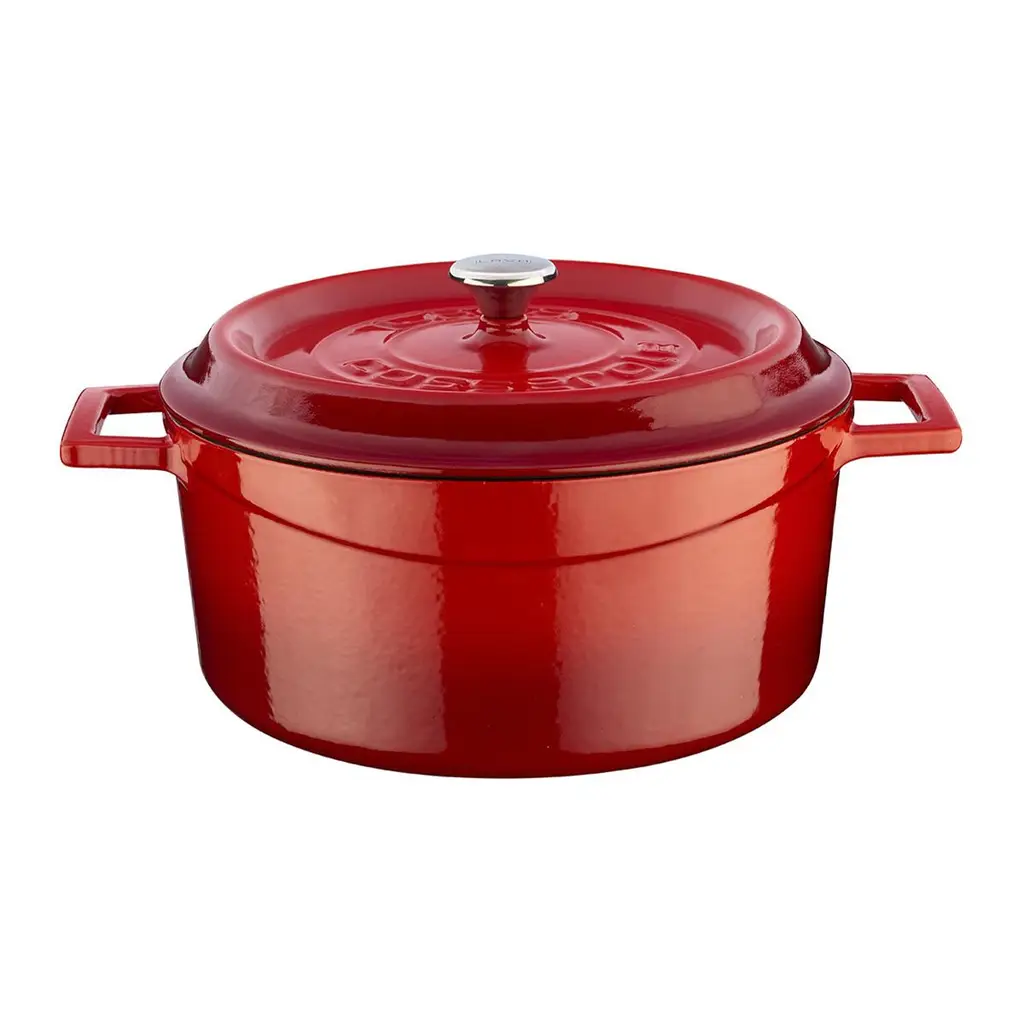
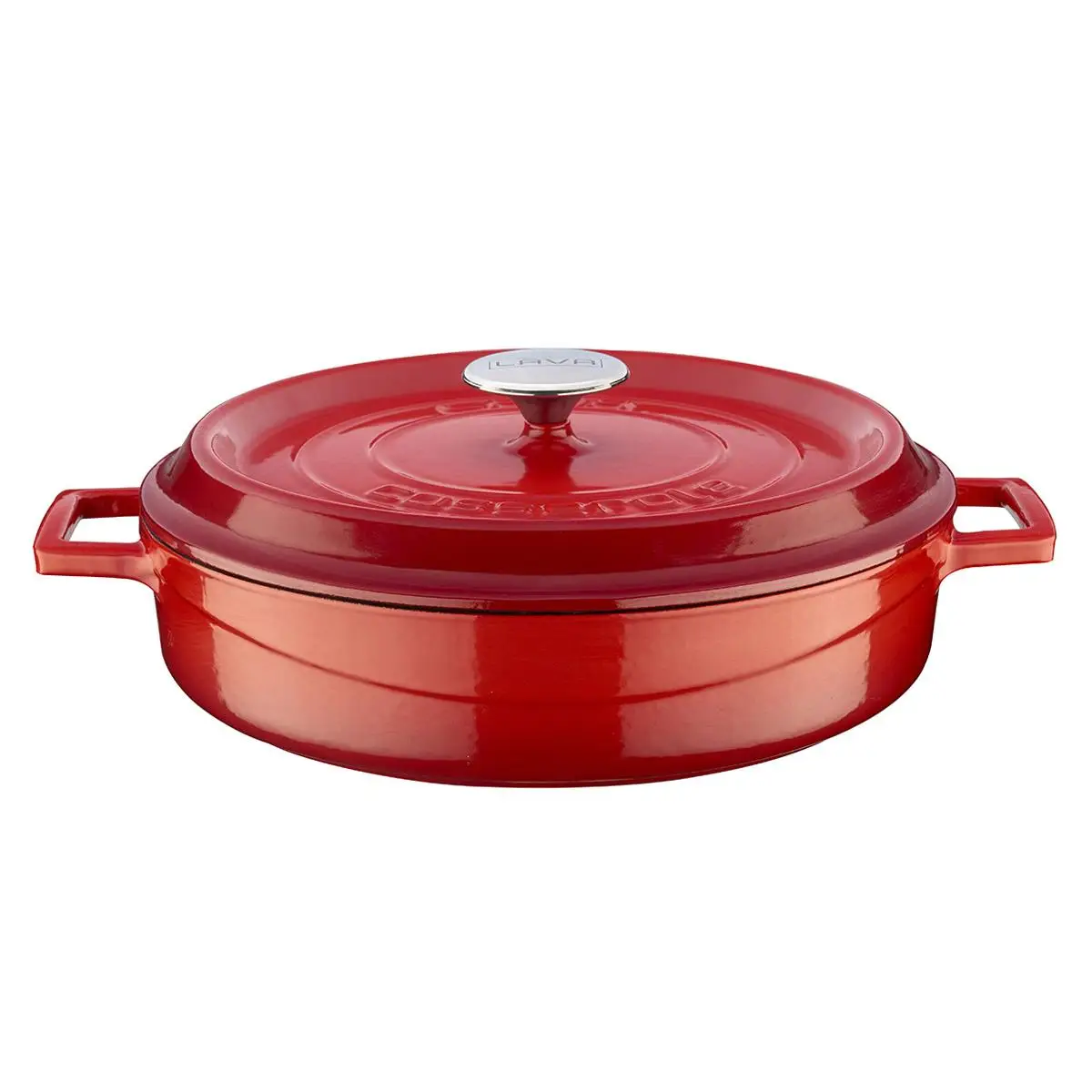
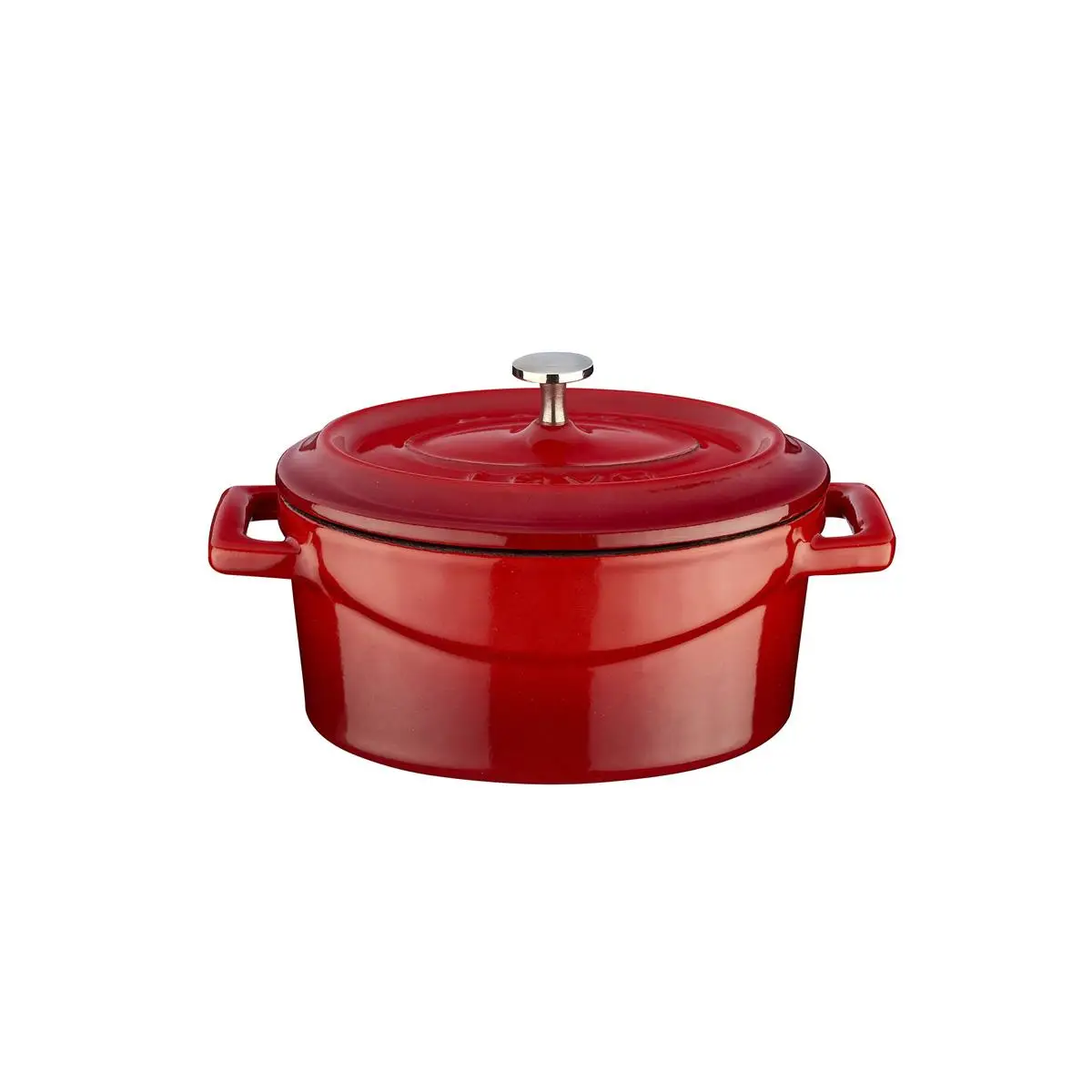
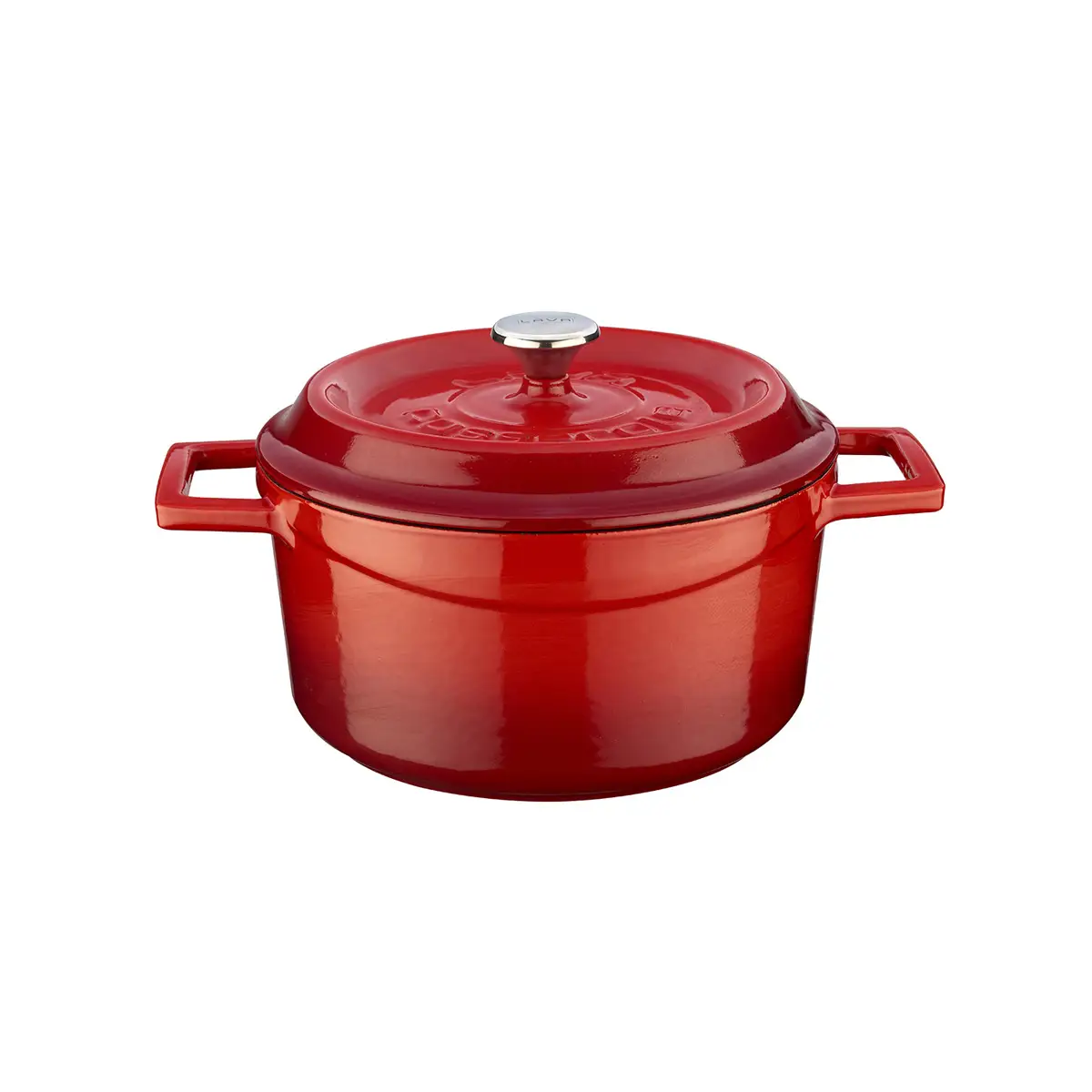
Discover LAVA enamelled cast iron casseroles and pans, combining the protective properties of enamel coating with the strong heat performance of cast iron.
For correct use from the first day, see the How to Use Enamelled Cast Iron Casseroles and Pans guide. For more information about enamelled cast iron products from a healthy cooking perspective, you can also read Is Enamel Coating Safe?.
11.08.2026






Lava Döküm Online Fabrika Satış Mağazası. © 2026 All Rights Reserved.


0
)

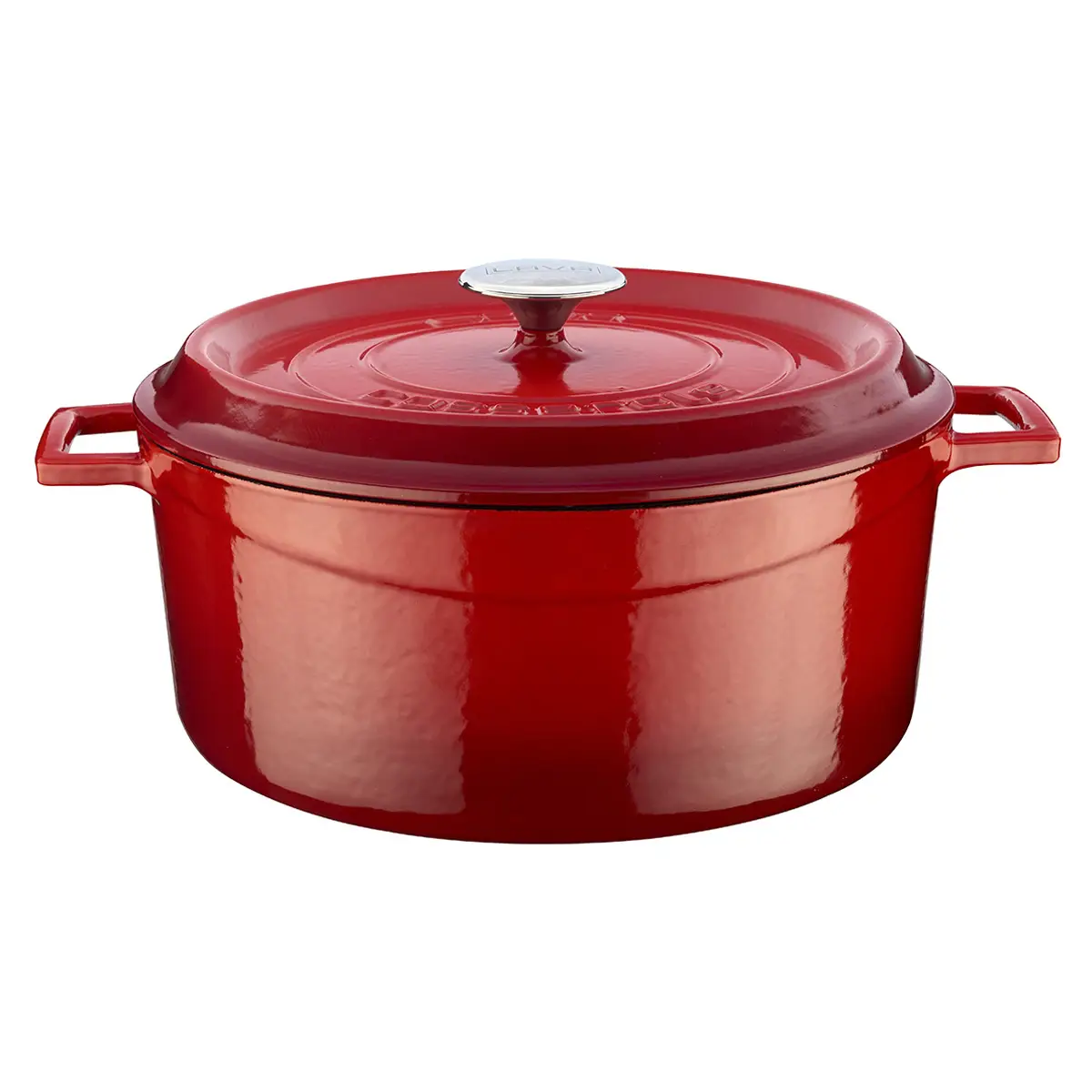
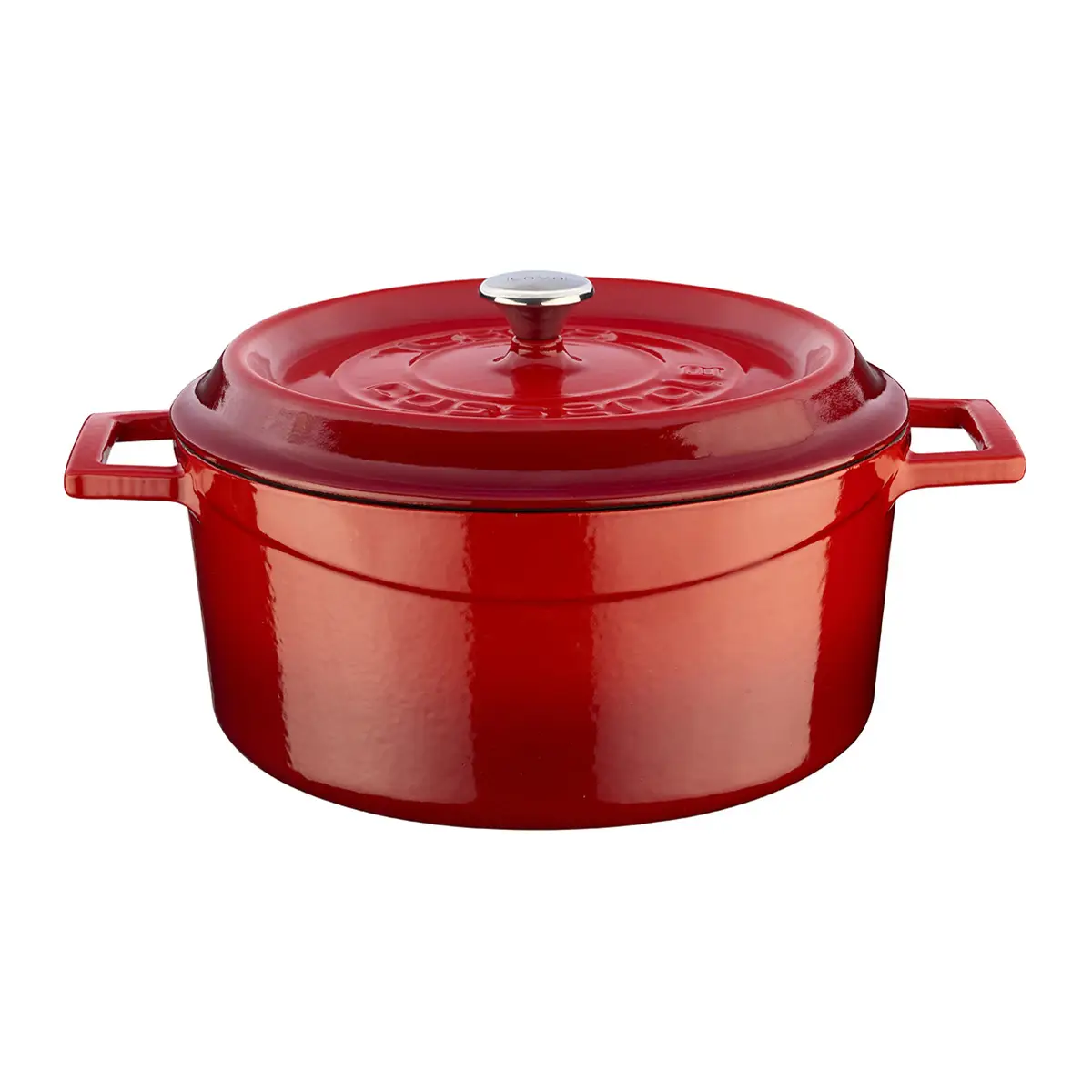
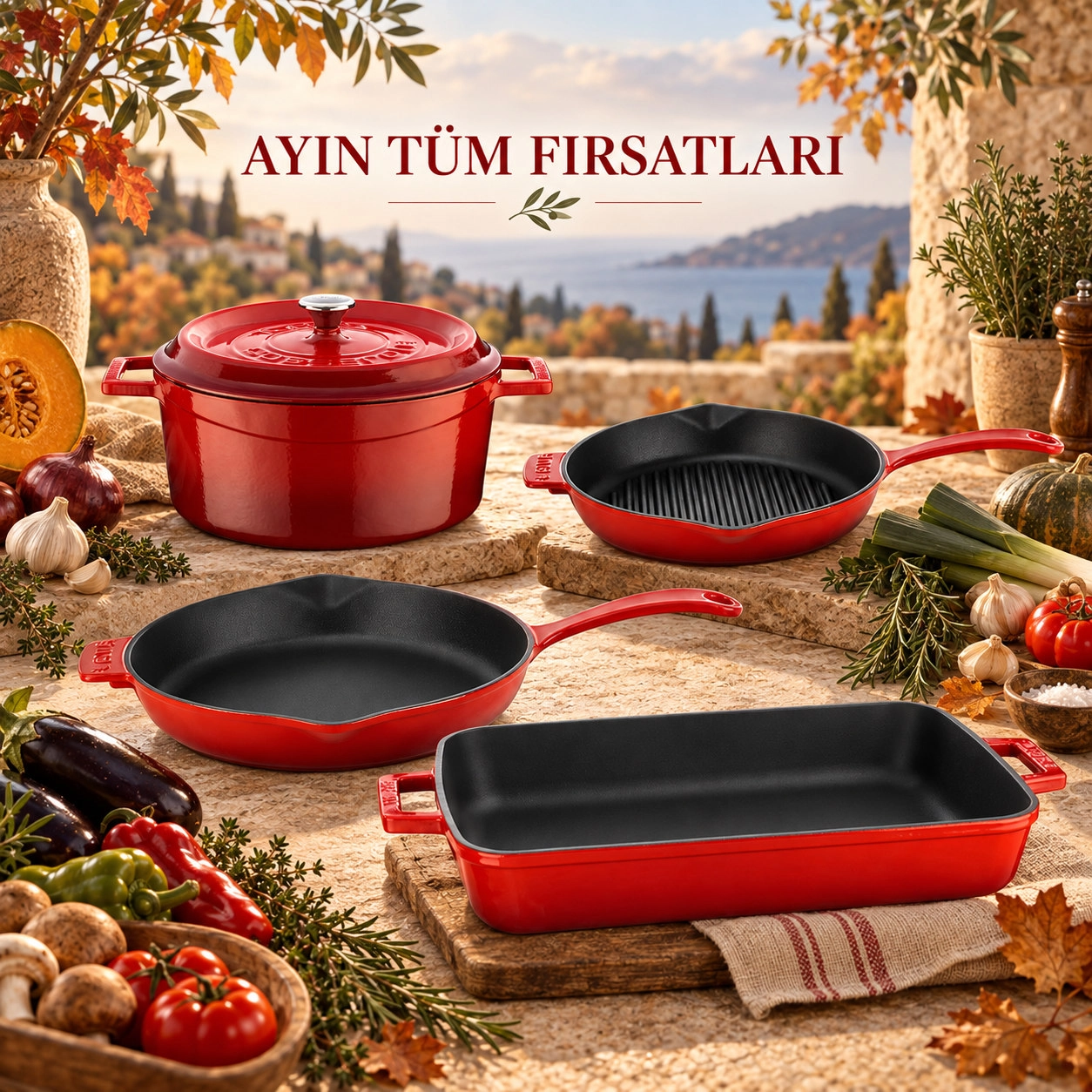
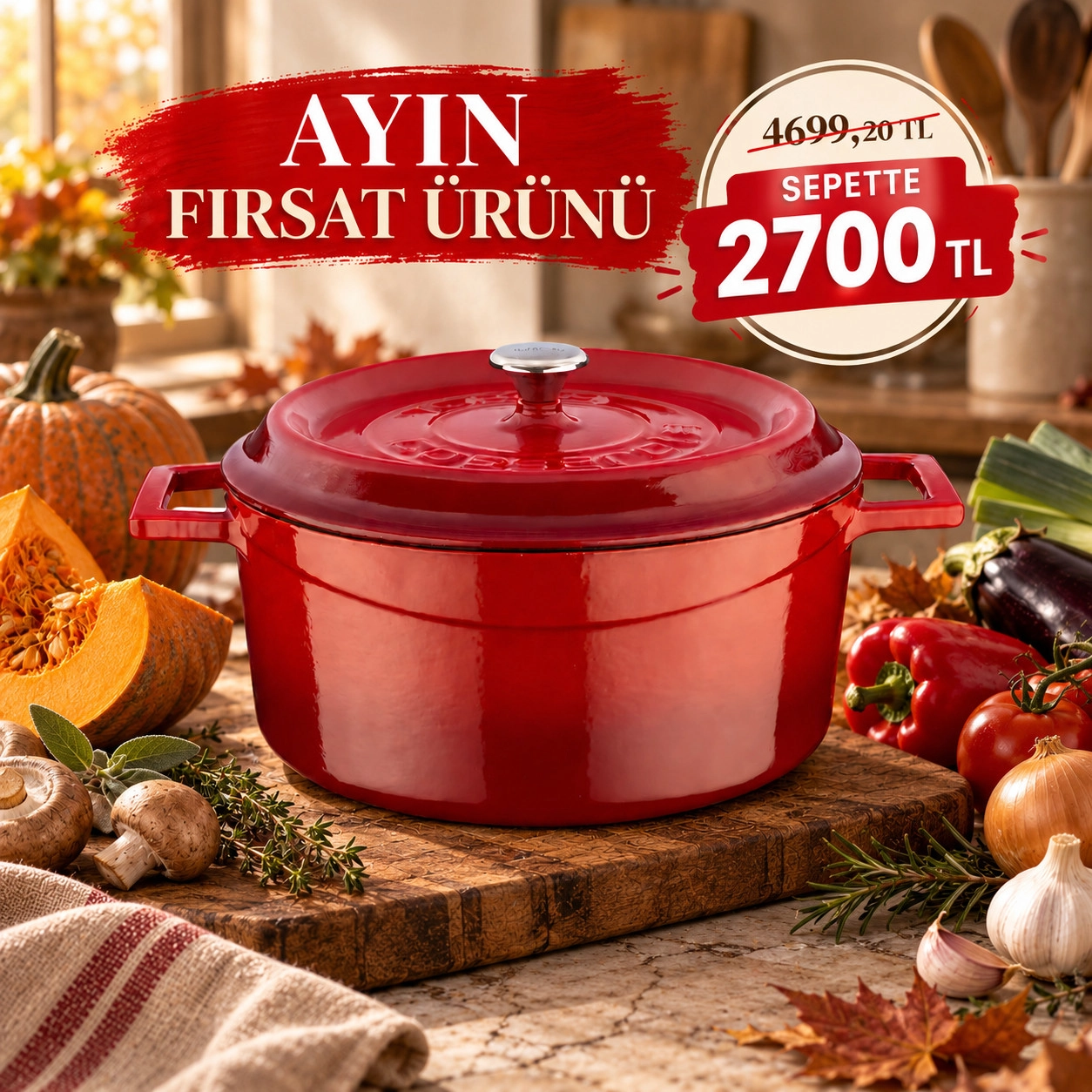 LAVA Round Cast Iron Casserole – Trendy Ø24 cm
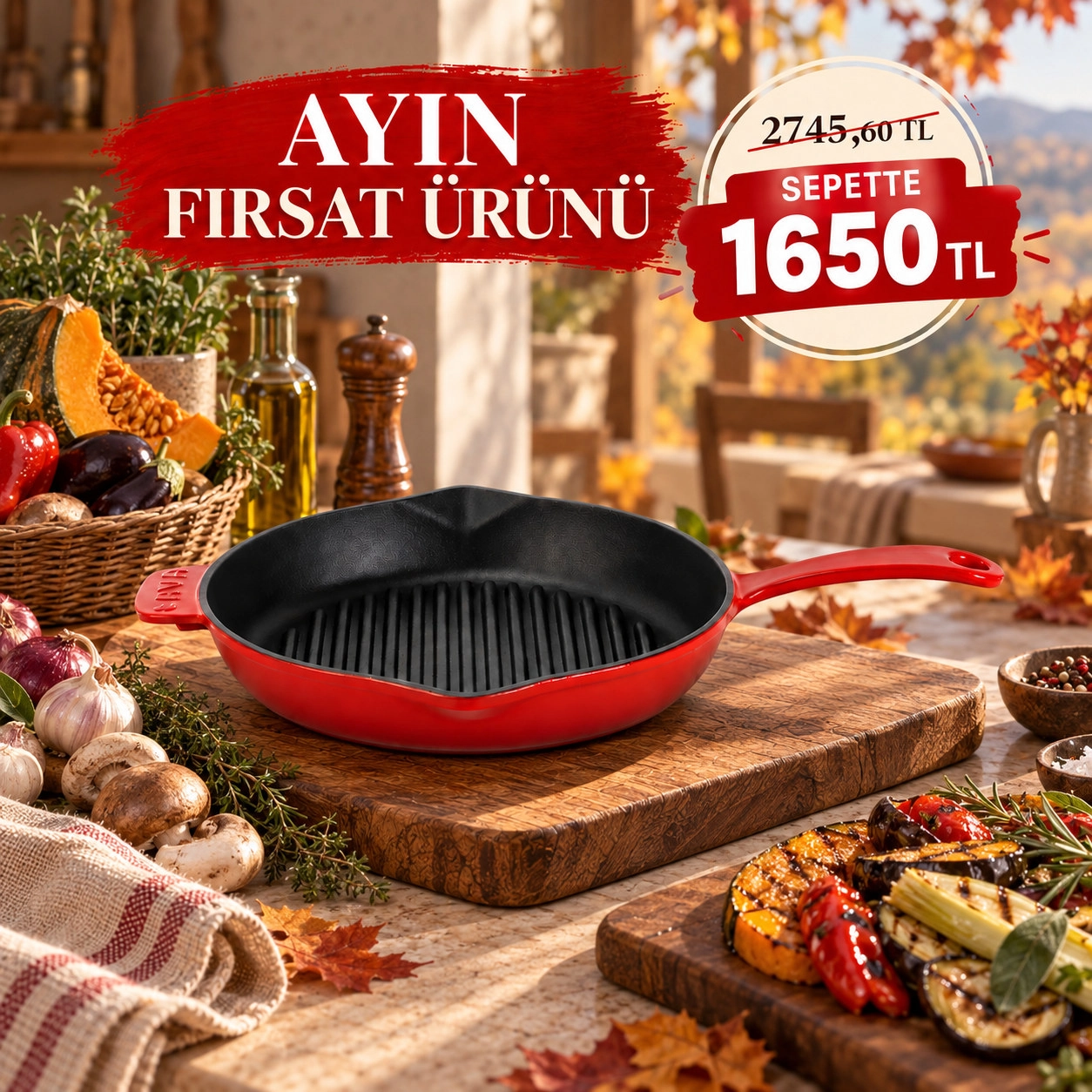 LAVA Round Cast Iron Grill Pan 28 cm Single Handle
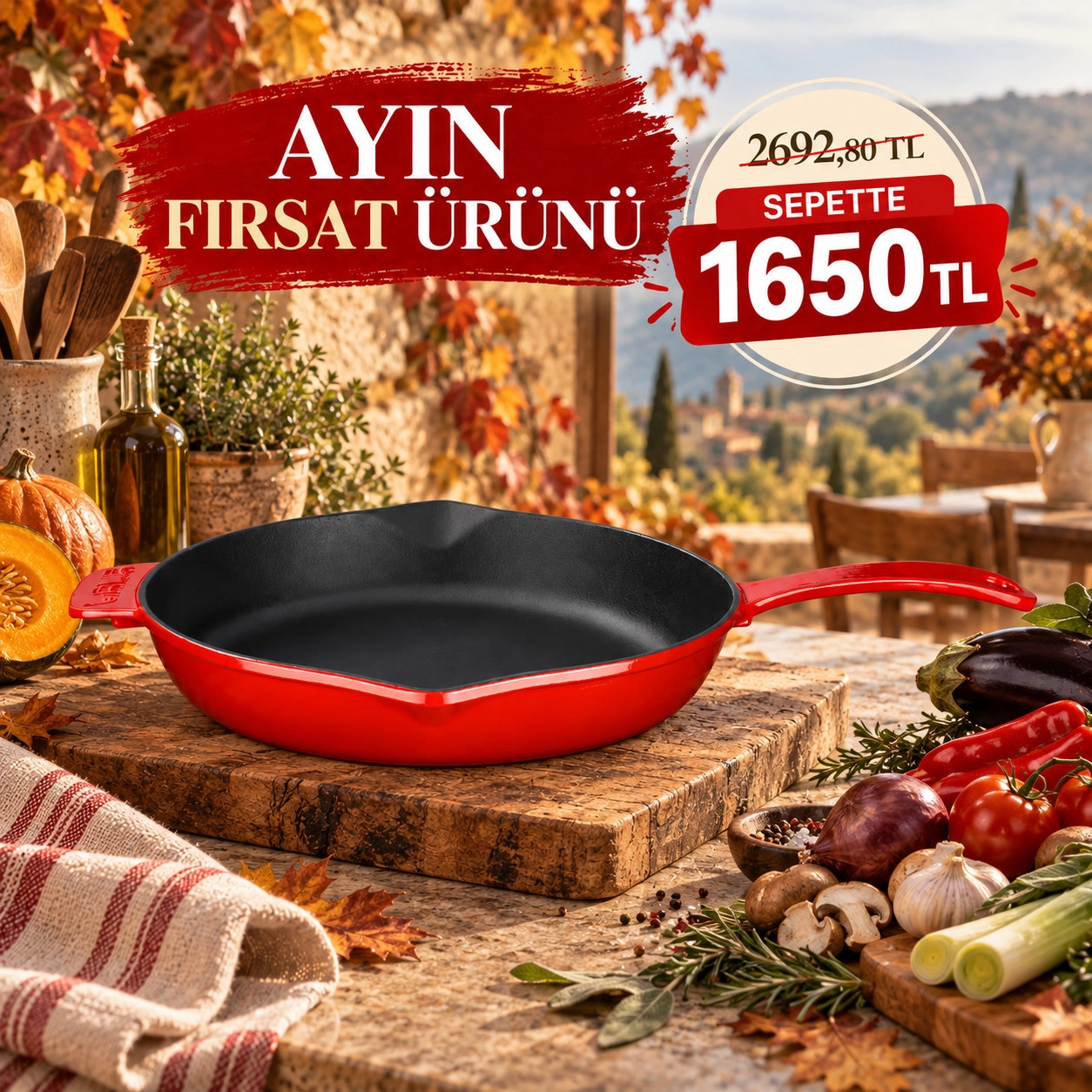 LAVA Round Cast Iron Frying Pan 28 cm Single Handle
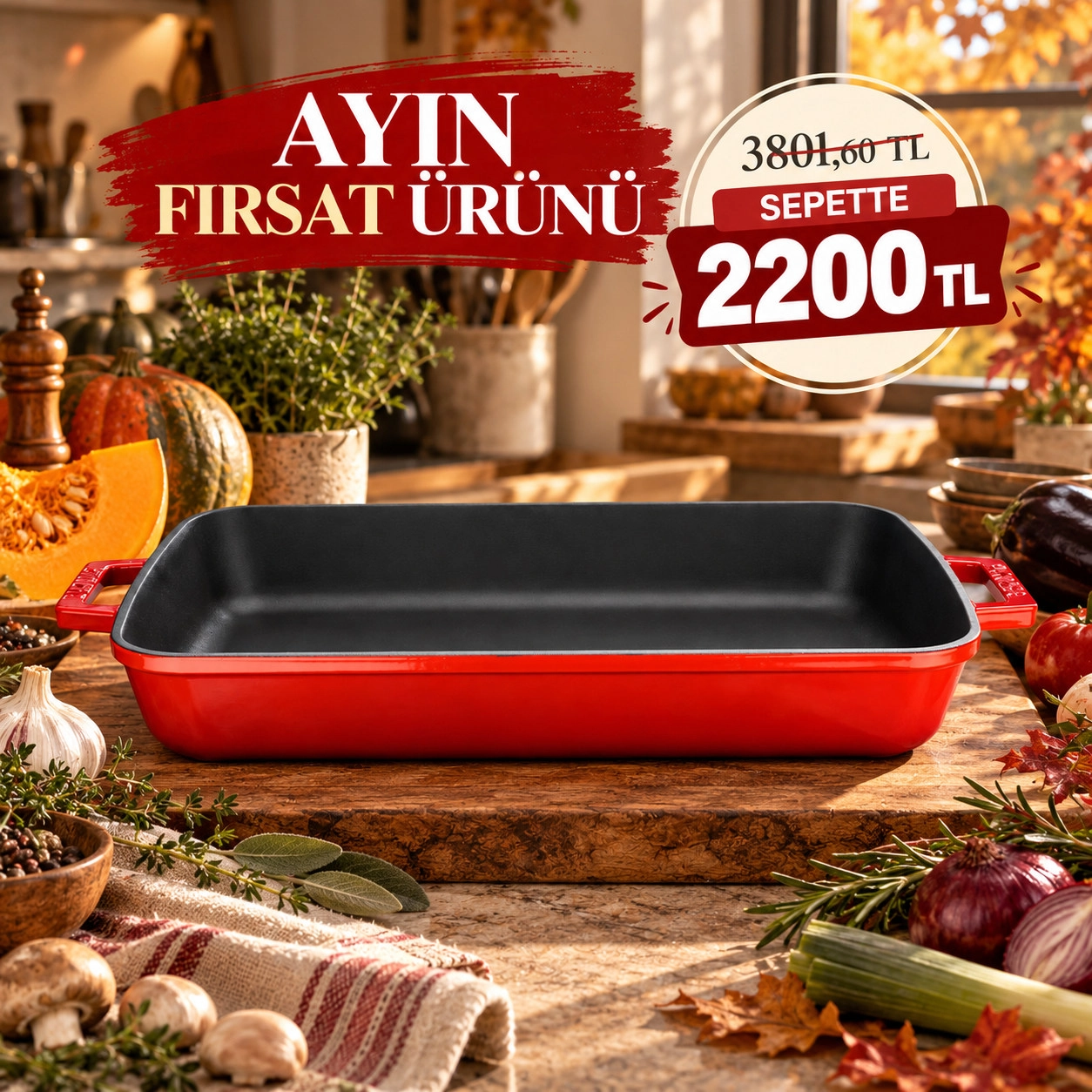 LAVA Rectangular Cast Iron Roasting & Oven Tray 26x40 cm Twin Handles
 All This Month's Deals