×

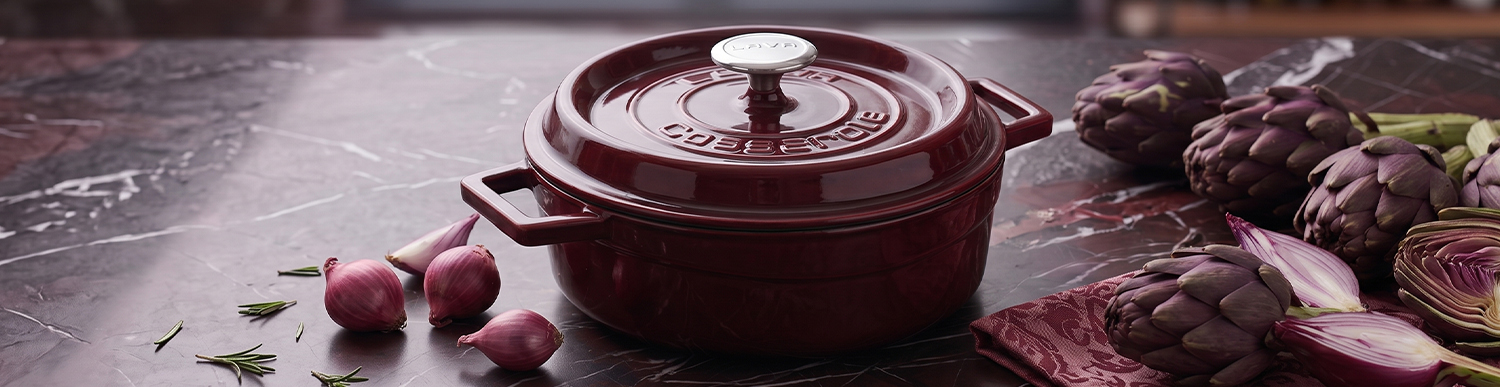
Food-contact-safe enamel surfaces that are manufactured appropriately and have undergone the necessary quality checks are used in cookware to provide a safe cooking surface. In enamelled cast iron products, food comes into contact with a glass-based enamel surface rather than directly with uncoated cast iron. LAVA enamelled cast iron products do not require additional seasoning. For safe use, food-contact suitability, laboratory testing, enamel surface quality and the manufacturer's usage instructions should be considered together.
Estimated Reading Time:
7–8 minutes
High-quality enamel surfaces manufactured for food contact and subjected to the necessary testing are used to provide a safe cooking surface in cookware. In enamelled cast iron products, food comes into contact with a glass-based enamel coating rather than directly with an uncoated cast iron surface. Therefore, when choosing a product, it is important to consider not only the fact that it is “enamelled”, but also the quality of production, food-contact suitability, laboratory testing and the technical documentation provided by the manufacturer.
LAVA's enamelled cast iron products combine the heat retention and even heat distribution properties of cast iron with the ease of use and care provided by an enamelled surface. This is intended to provide a controlled and safe cooking experience for both everyday meals and longer cooking techniques.
Enamel coating is a glass-based coating applied to a metal surface that bonds with the surface at high temperatures. In cookware, one of the main functions of enamel is to protect the metal surface from external factors while creating a smooth and durable surface that comes into contact with food.
This characteristic is particularly important when it comes to cast iron. While retaining cast iron's high heat retention capacity and even cooking performance, the enamel layer on the surface makes everyday use easier.
LAVA's technical product documentation also states that enamel coating limits direct contact between cast iron and food, with the enamel forming the food-contact surface. The same documentation specifically highlights the glass-based structure of enamel.
An enamel surface should not be considered simply as a decorative layer that gives the product its colour. A well-applied enamel coating is a functional layer that complements the surface properties of cast iron.
LAVA's production documentation explains that different enamel layers can serve different functions, including surface protection, durability during use and resistance to external factors. It states that the first layer helps protect the cast surface, while subsequent enamel applications improve the properties of both the inner and outer surfaces.
Therefore, when evaluating an enamelled cookware product, it is important to consider not only its appearance but also the quality of the enamel application and whether the product has been manufactured for safe food contact.
Cast iron is a durable material, but when uncoated it can be affected by moisture and environmental conditions. Enamel coating creates a protective layer between the cast iron surface and the external environment, making the product easier to use on a daily basis.
It also reduces some of the maintenance requirements associated with uncoated cast iron products. LAVA enamelled cast iron products do not require additional seasoning. The main aim of care is to protect the enamel surface from conditions that could damage it, such as impact, harsh abrasives and sudden temperature changes.
The healthy use of a cookware product is not determined solely by the material from which it is made. The quality of the food-contact surface, correct use of the product, cooking temperature, care practices and the manufacturer's food safety controls should all be considered together.
One of the key features of enamelled cast iron products is that they combine the thermal performance of cast iron with the practical properties of an enamelled surface.
In an enamelled cast iron casserole or pan, the main surface that comes into contact with food is the enamel. This structure reduces direct contact between uncoated cast iron and food and provides a cooking surface that is easier to manage.
However, an important distinction should be made here:
The presence of the word “enamel” alone does not mean that every product meets the same quality and safety standards.
Therefore, the correct way to assess questions such as whether an enamelled casserole or enamelled cast iron pan is safe is to consider the quality of the materials used, production standards and whether the product's food-contact safety has been verified.
One of the important properties of cast iron is its ability to absorb heat, distribute it evenly across the surface and retain it for an extended period.
This is particularly useful for different cooking techniques, including:
vegetable dishes,
pulses,
meat dishes,
slow-cooked recipes,
searing,
oven cooking.
These properties can help heat to be used more consistently and under greater control.
LAVA's product documentation also states that the thick structure of cast iron allows heat to spread across a broad surface and provides an advantage when cooking dishes that require long cooking times over a low heat.
For more information about the other benefits of enamel surfaces on cast iron products, you can read Advantages of Enamel Coating on Cast Iron Products.
Because cast iron stores a significant amount of heat, it is generally not necessary to continuously use very high hob settings once the cookware has heated up.
This can make cooking easier to control and allow the temperature to be managed more consistently during longer recipes.
The basic principle is simple:
Rather than continuously using a cast iron casserole at the highest heat setting, make use of its heat retention capacity and manage the appropriate temperature in a controlled way.
This approach supports both cooking results and the long-term preservation of the enamel surface.
Because cookware comes into direct contact with food, surface safety is one of the key criteria to consider when choosing a product.
Therefore, looking only at colour, design, price or product weight is not sufficient. When choosing an enamelled cast iron casserole or pan, it is also important to consider whether the manufacturer has quality control processes and food-contact testing and documentation.
When assessing food-contact suitability, the materials used in production and the coating structure are important, together with relevant laboratory testing and applicable standards.
LAVA's previous technical documentation also referenced various European, American and German standards and laboratory tests relating to food safety.
A reliable answer to the question “Is enamel coating safe?” cannot be based simply on saying that it is “safe”.
Confidence should instead come from the combination of:
material + production standards + laboratory testing + food-contact suitability + correct use
For detailed information about LAVA products' current laboratory tests, quality controls and certification information, you can visit the Laboratory, Tests and Certificates page. If you need more detailed information about a specific product or certificate, you can contact LAVA and request the latest technical documentation.
Although enamelled cast iron and uncoated cast iron are based on the same core material, the food-contact surface and care requirements are different.
With uncoated cast iron products, food comes into direct contact with the cast iron surface. Certain care and oiling methods may be required to maintain the surface's properties during use.
With enamelled cast iron products, a protective enamel surface covers the cast iron. This allows users to benefit from cast iron's heat retention properties while also benefiting from the more practical care requirements of an enamelled surface.
For this reason, the care of enamelled cast iron products such as those from LAVA should not be treated in the same way as the care of uncoated cast iron products.
No.
LAVA enamelled cast iron casseroles and pans do not require additional seasoning.
Rather than continuously oiling the product in an attempt to create a protective layer, the enamel surface should be used and cleaned correctly.
This point is often confused because of the care recommendations commonly given for uncoated cast iron pans online.
Although enamel surfaces are durable, correct use directly affects the product's performance and service life.
In particular, it is important to:
avoid leaving an empty product over high heat for longer than necessary,
avoid exposing a very hot product to cold water suddenly,
avoid subjecting the enamel surface to hard impacts,
avoid abrasive cleaning equipment,
clean the product appropriately after use.
For more detailed information about using LAVA enamelled cast iron products, see the How to Use Enamelled Cast Iron Casseroles and Pans guide.
You can also read 10 Common Mistakes When Using Cast Iron Pans and Cast Iron Casseroles to learn about practices that may shorten the product's service life.
When it comes to cleaning, hand washing is recommended to help preserve the enamel surface over the long term, even where the product's specifications allow other cleaning methods.
Choosing the right product for healthy cooking is not simply a matter of buying a “cast iron casserole” or an “enamelled casserole”.
The following criteria should be considered together when choosing a product:
| Criterion | Why is it important? |
|---|---|
| Food-contact suitability | For the safety of the cooking surface |
| Enamel surface quality | For durability and service life |
| Manufacturer and quality control | For consistency in product standards |
| Heat distribution | For controlled cooking performance |
| Care requirements | For long-term and correct use |
| Tests and documentation | For verifying product safety claims |
For other criteria to consider when purchasing, see the What to Consider When Buying an Enamelled Cast Iron Casserole or Enamelled Cast Iron Pan guide.
Is enamel coating safe? When considering this question, it is important to look beyond the name of the coating and consider the quality of the enamel surface, food-contact suitability, production processes, laboratory testing and correct product use together.
Enamelled cast iron products combine cast iron's strong heat retention and even heat distribution properties with the ease of use and protective structure of an enamelled surface.
The fact that LAVA enamelled cast iron casseroles and pans do not require additional seasoning also makes everyday use easier. The user's main responsibility is to use the enamel surface correctly, protect the product from excessive physical impact and thermal shock, and follow the product's care instructions.
When choosing healthy cooking equipment, the most reliable approach is to look beyond brand claims and check food-contact suitability, laboratory testing and current certification information.
Enamel surfaces manufactured for food contact and subjected to the necessary quality and laboratory checks are used to provide a safe food-contact surface in cookware. When choosing a product, the manufacturer's testing and certification information should also be checked.
Rather than categorising enamel coating on its own as either “harmful” or “harmless”, the quality and composition of the coating, its suitability for food contact and the correct use of an undamaged product should all be considered. This is why a reliable manufacturer and verifiable testing documentation are important.
Enamel coatings used in cookware should be manufactured to be suitable for food contact. Current product-specific suitability and certification information should be checked in the manufacturer's official documentation.
Not every fine mark caused by use has the same significance. However, if the enamel has developed significant cracking, chipping or damage that compromises the integrity of the surface, it is safest to consult the manufacturer before continuing to use the product.
Enamelled cast iron casseroles that have been manufactured to a high standard and have verified food-contact suitability can form part of a healthy cooking approach. The even heat distribution of cast iron and the food-contact properties of the enamel surface can provide combined benefits.
No. LAVA enamelled cast iron pans do not require additional seasoning. Continuous oiling and seasoning advice intended for uncoated cast iron products should not be applied directly to LAVA's enamelled products.
Discover LAVA enamelled cast iron casseroles and pans, combining even heat distribution, strong heat retention and a protective enamel surface.
For more detailed information about product safety, laboratory tests or certification information for a specific product, you can visit the LAVA Laboratory, Tests and Certificates page or contact LAVA directly.
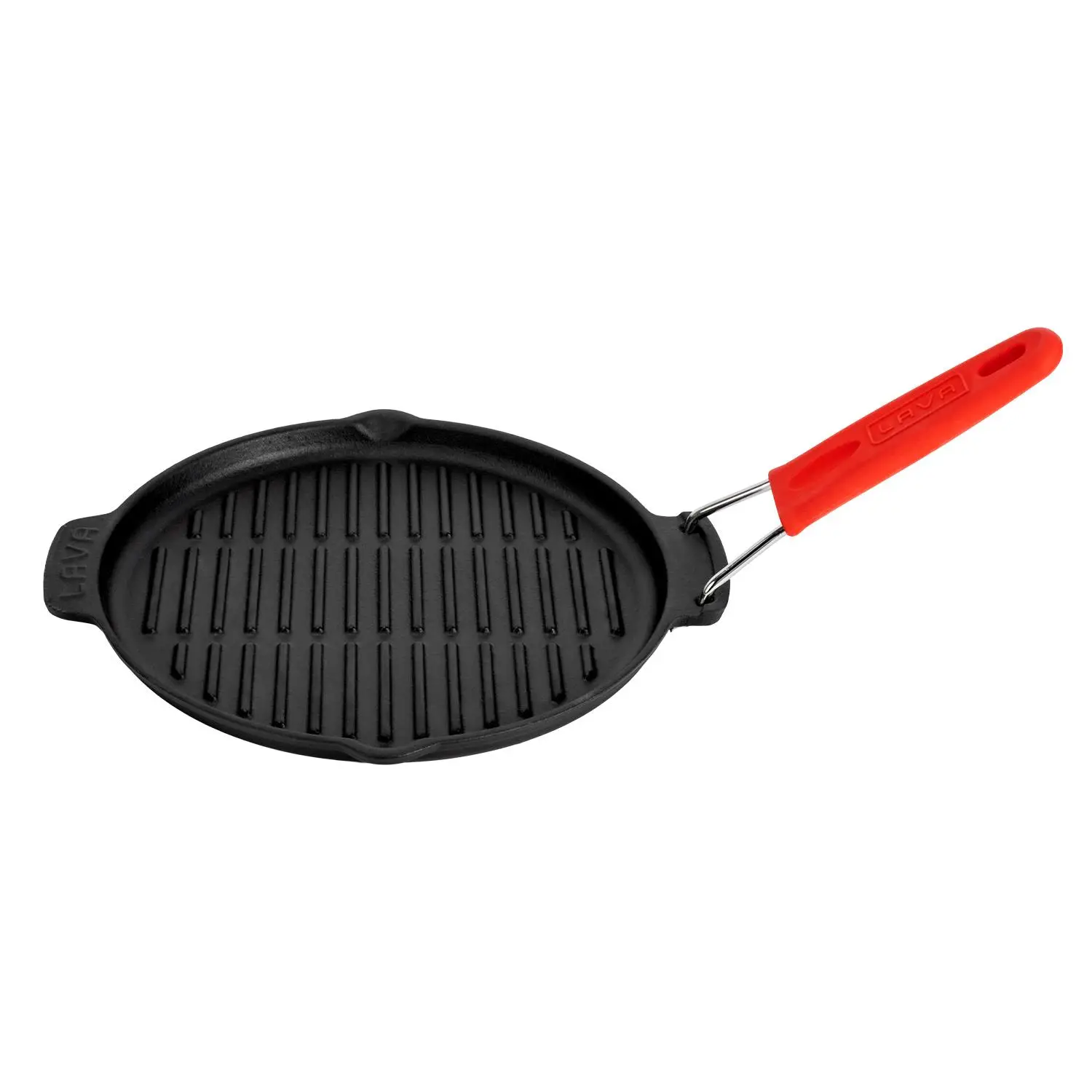
11.08.2026Lava Cast Iron Round Grill Pan With Stainless Steel Handles. Dia. Ø 23cm.
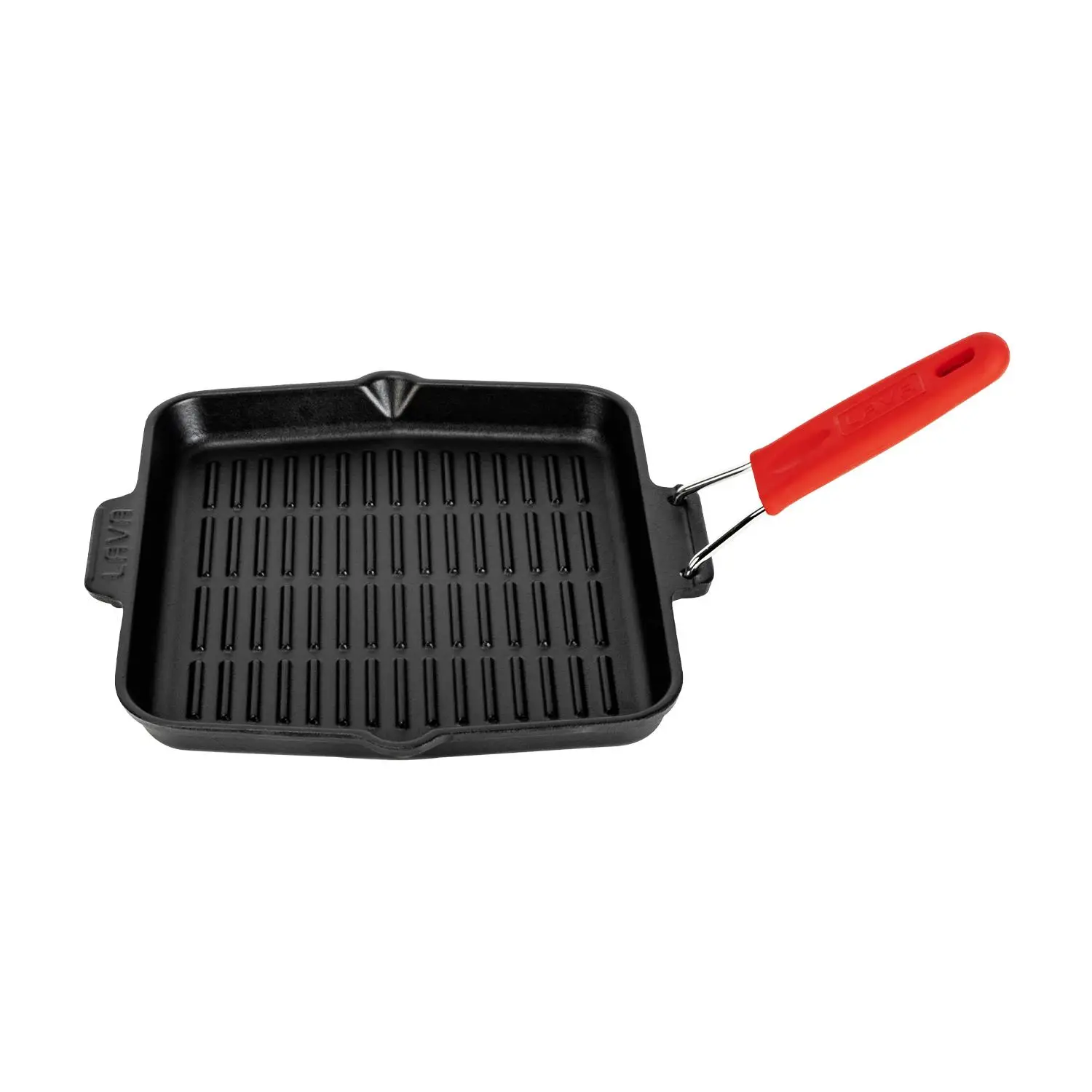
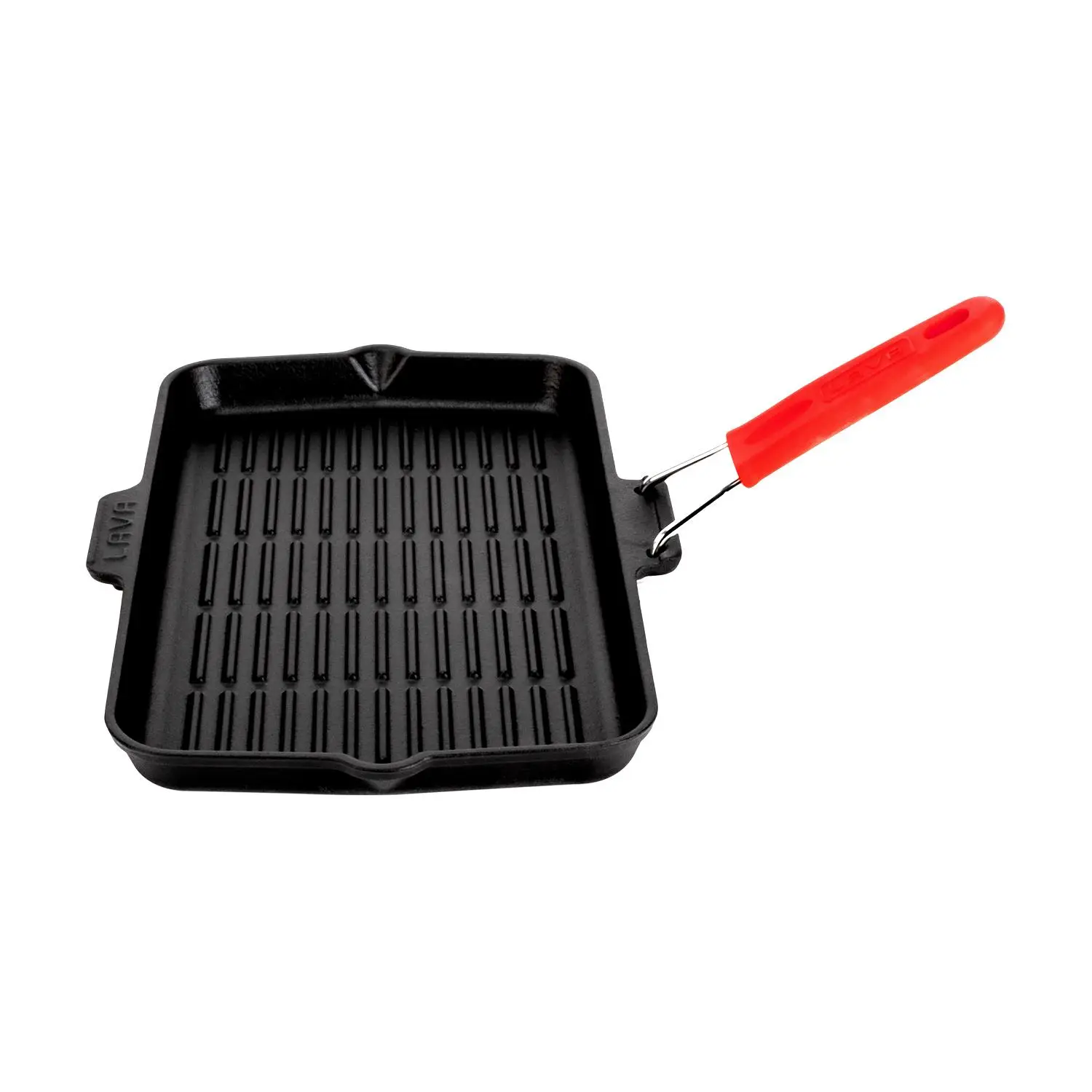
Lava Cast Iron Rectangle Grill Pan With Stainless Steel Handles. 21X36cm.
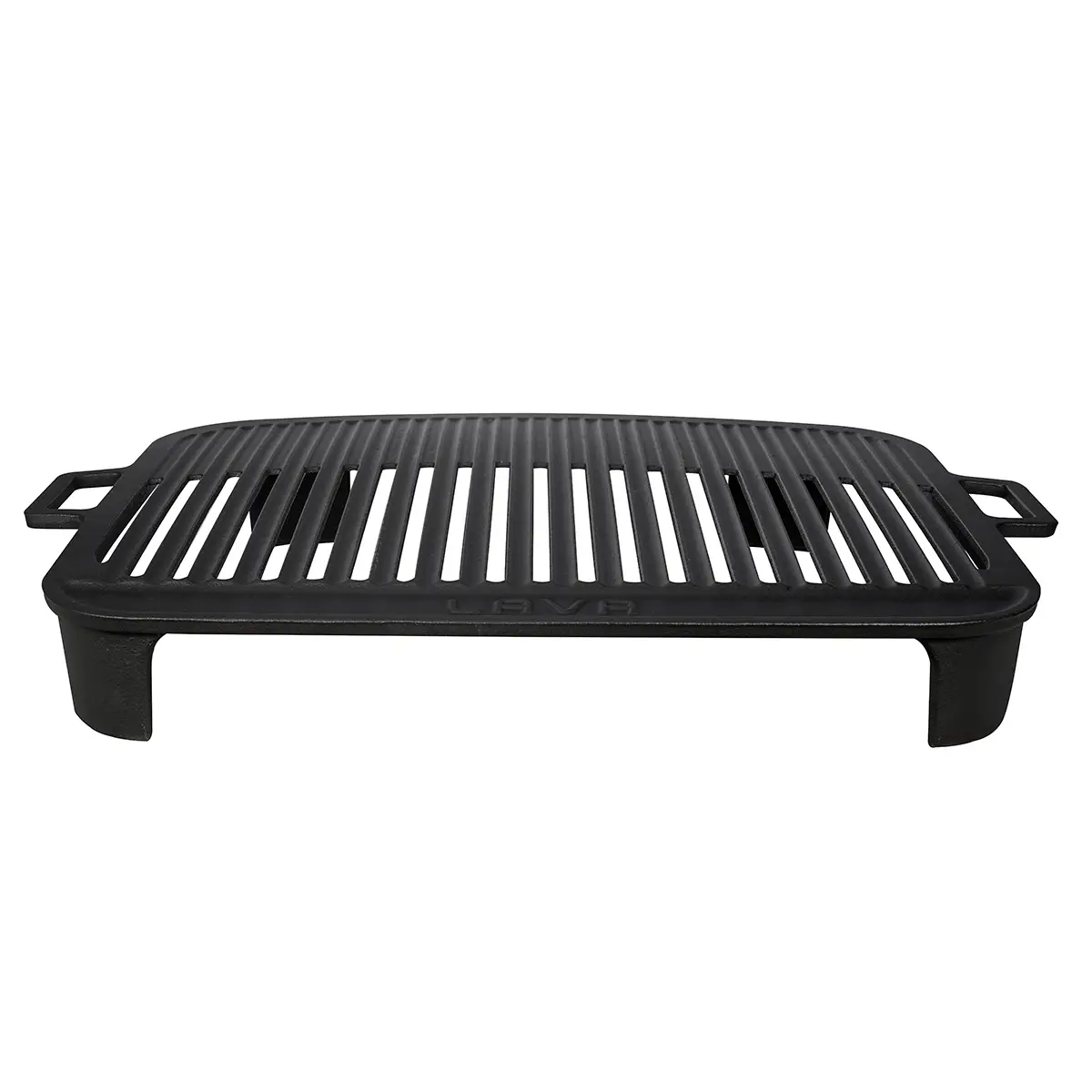
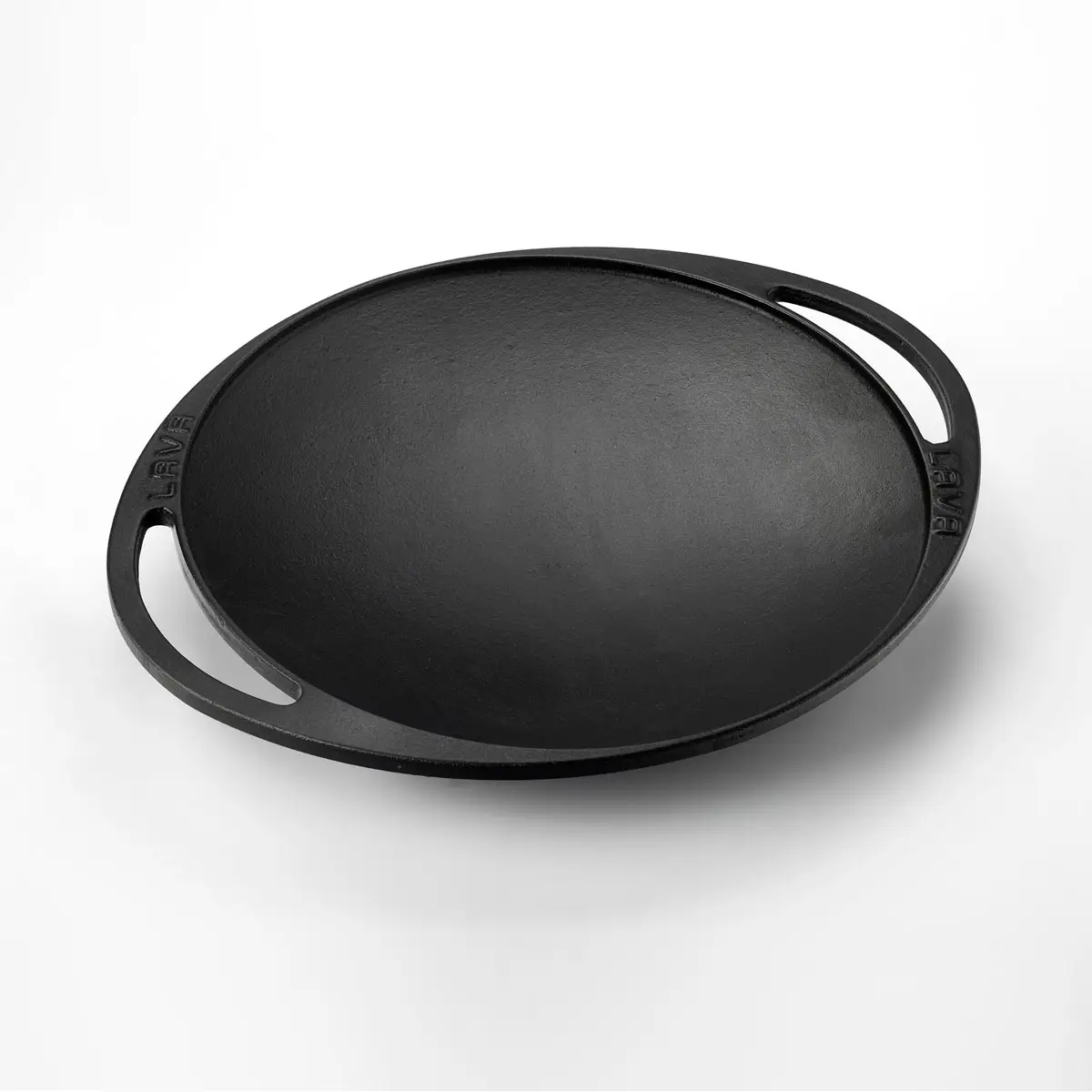
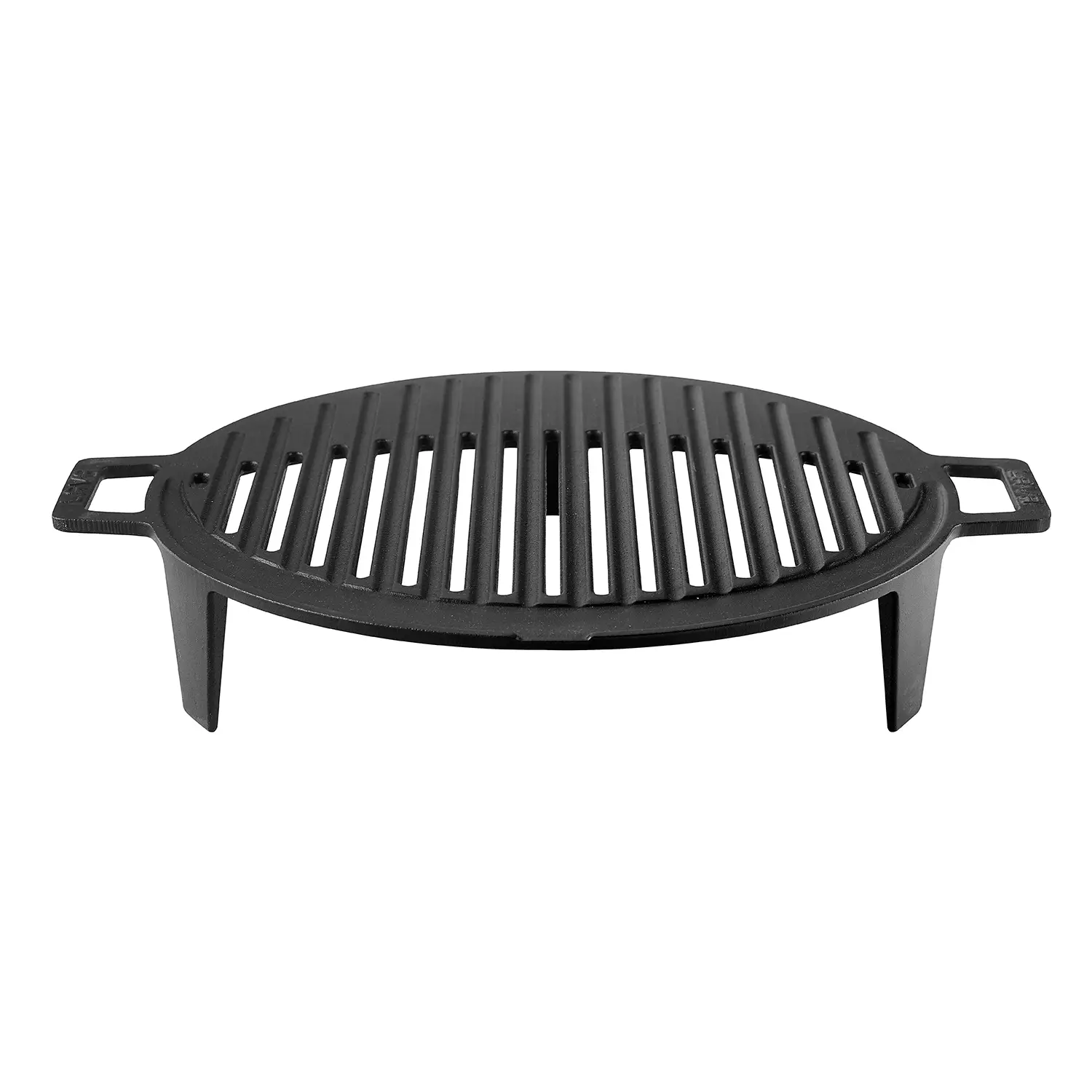
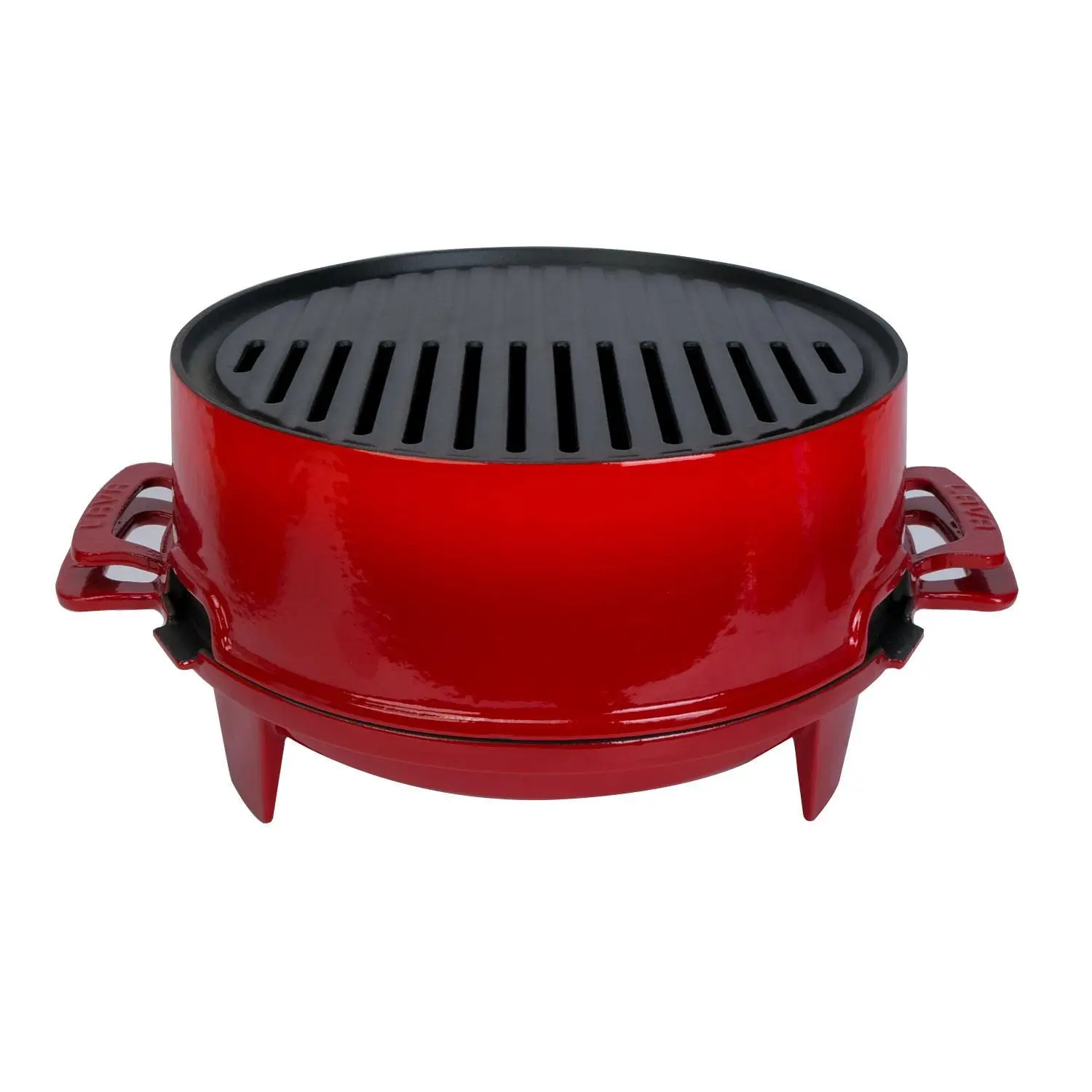
Lava Casting Round Barbecue Grill Set Cast Iron Solid Double Handle Diameter (Ø)36cm.







Lava Döküm Online Fabrika Satış Mağazası. © 2026 All Rights Reserved.


0
)

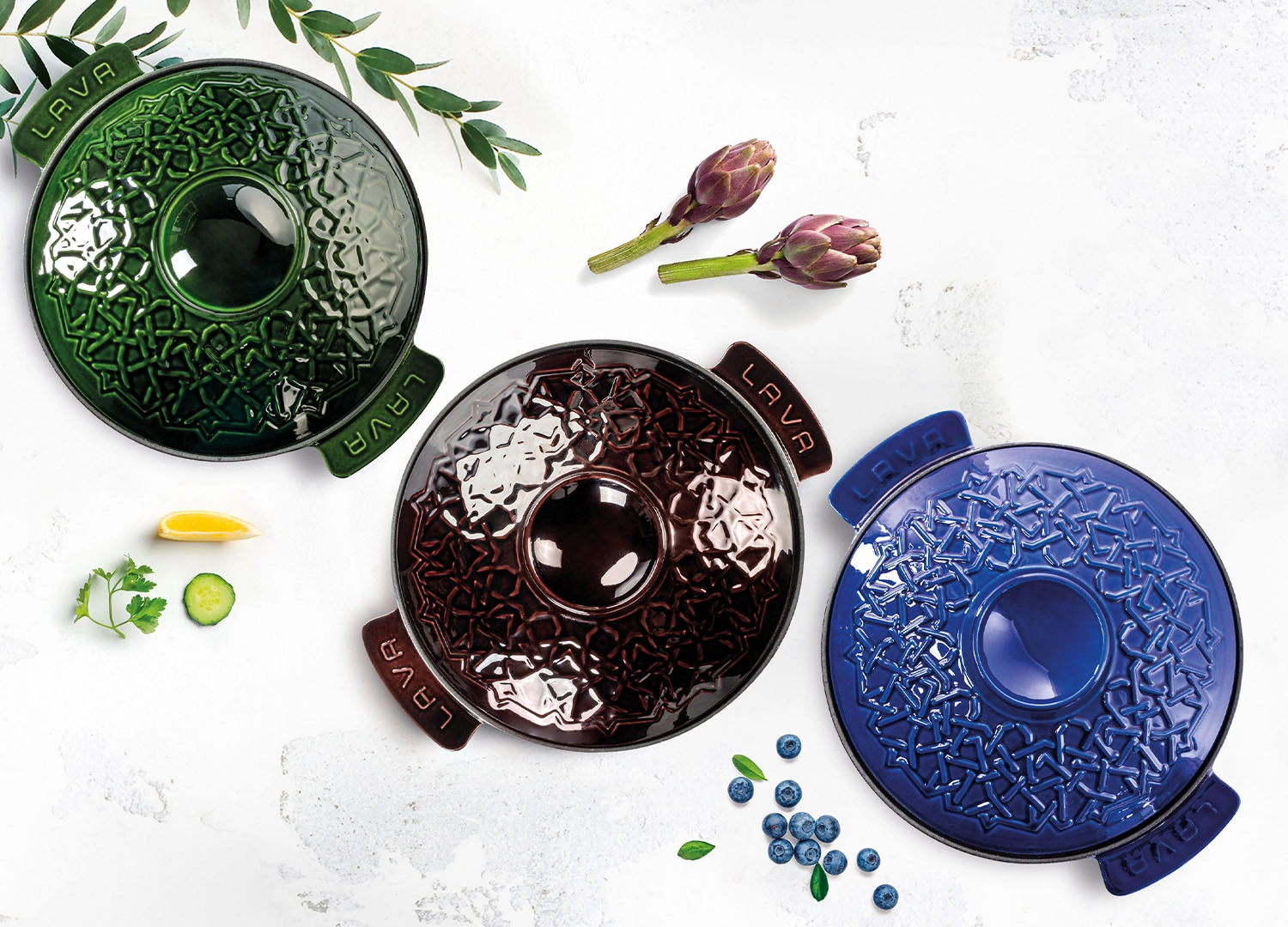
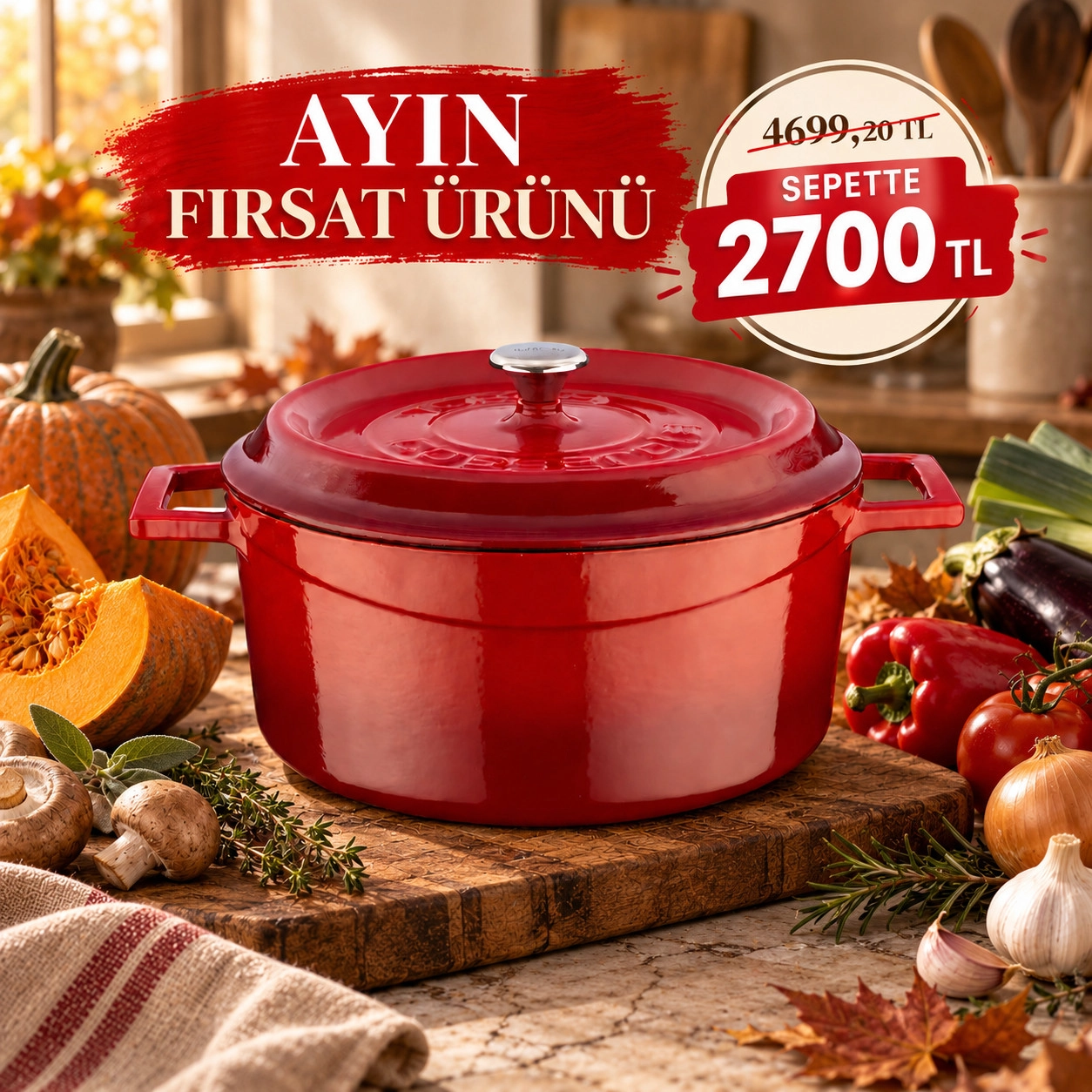 LAVA Round Cast Iron Casserole – Trendy Ø24 cm
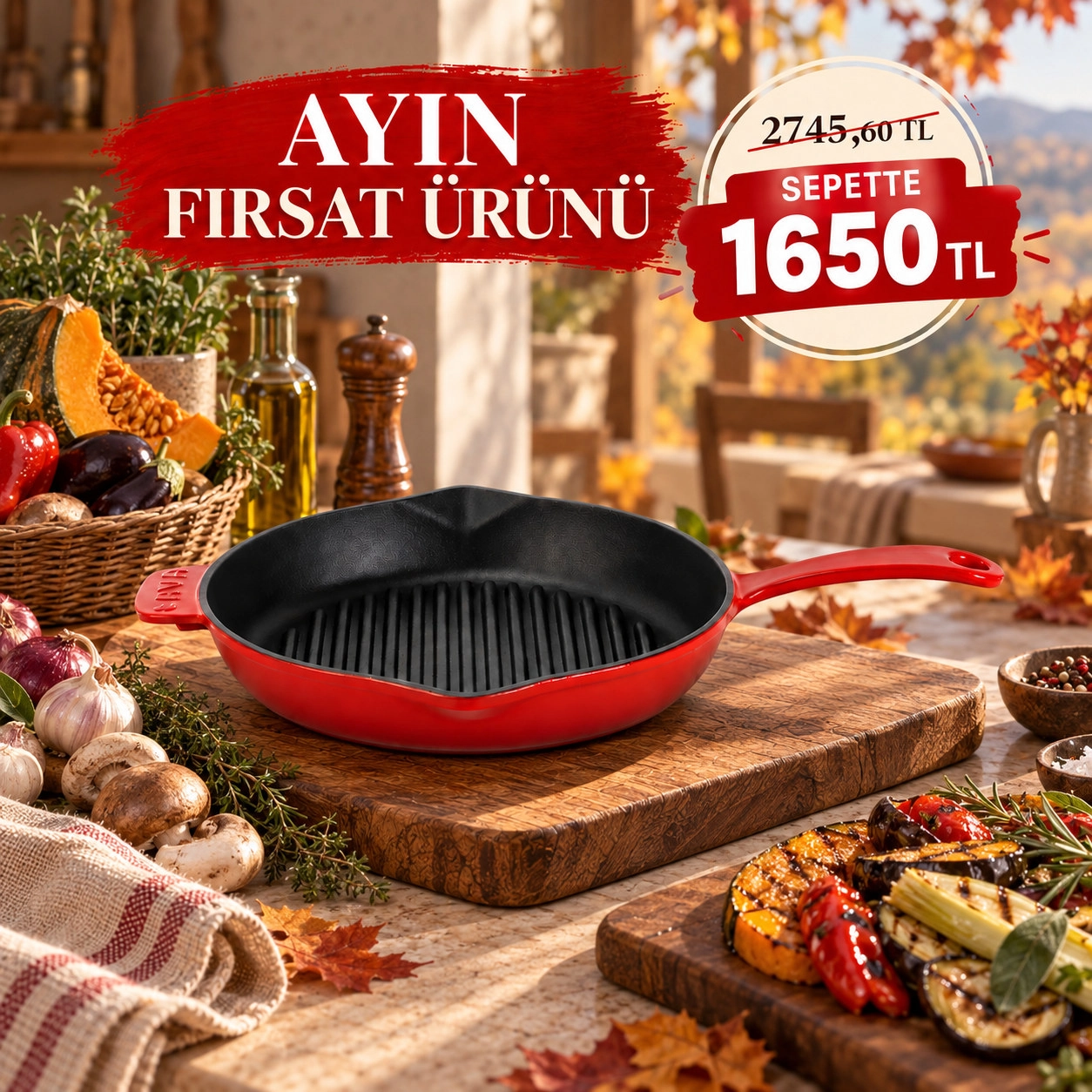 LAVA Round Cast Iron Grill Pan 28 cm Single Handle
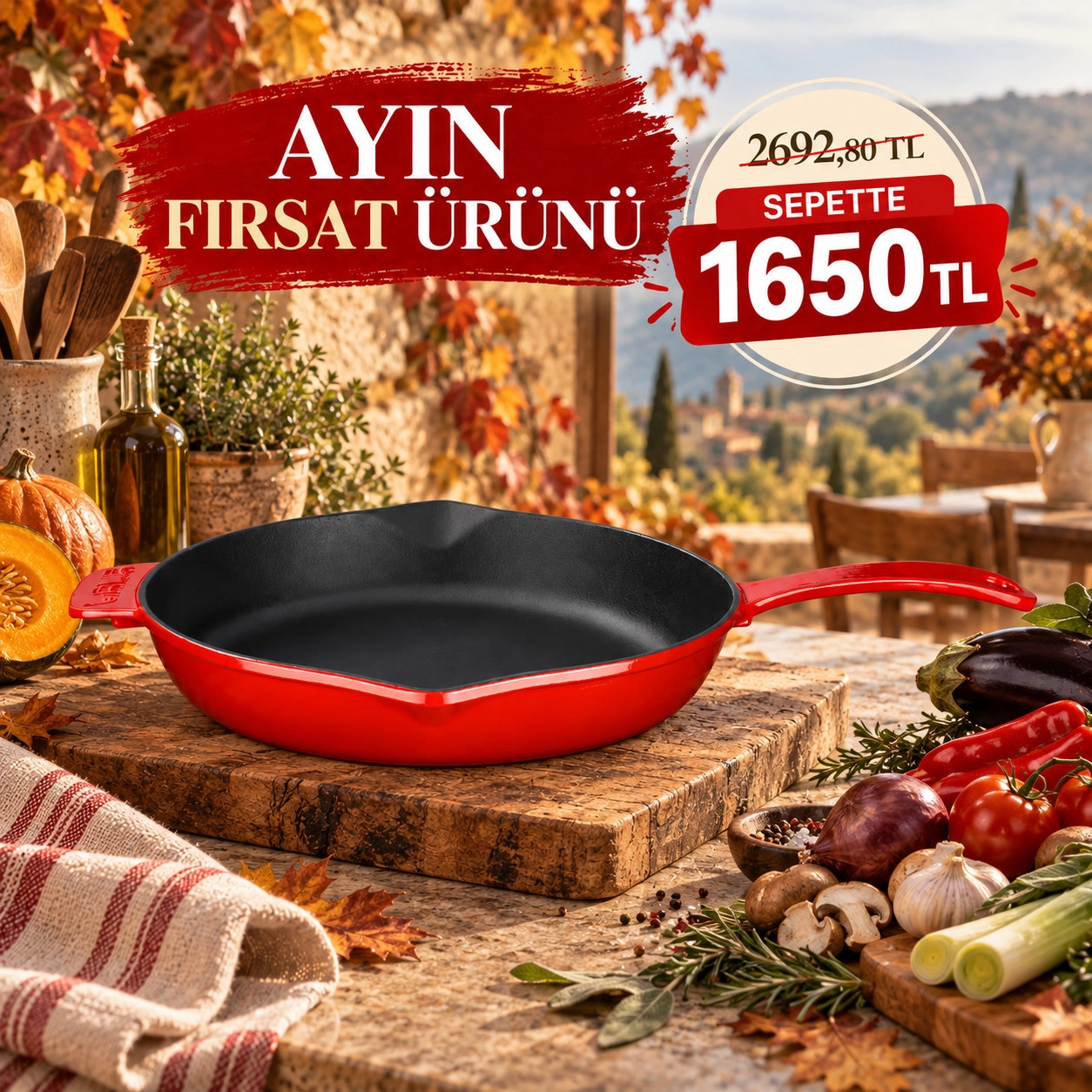 LAVA Round Cast Iron Frying Pan 28 cm Single Handle
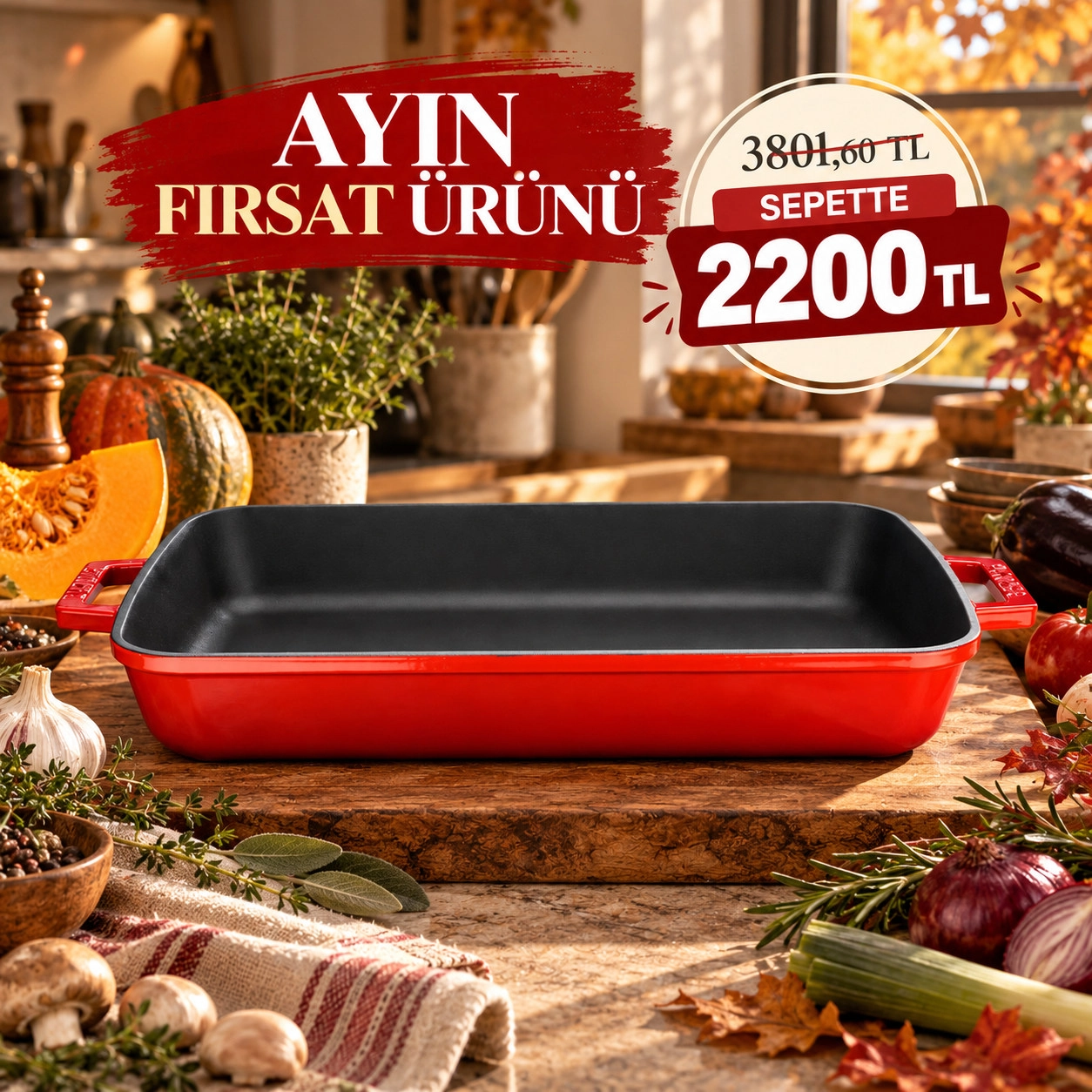 LAVA Rectangular Cast Iron Roasting & Oven Tray 26x40 cm Twin Handles
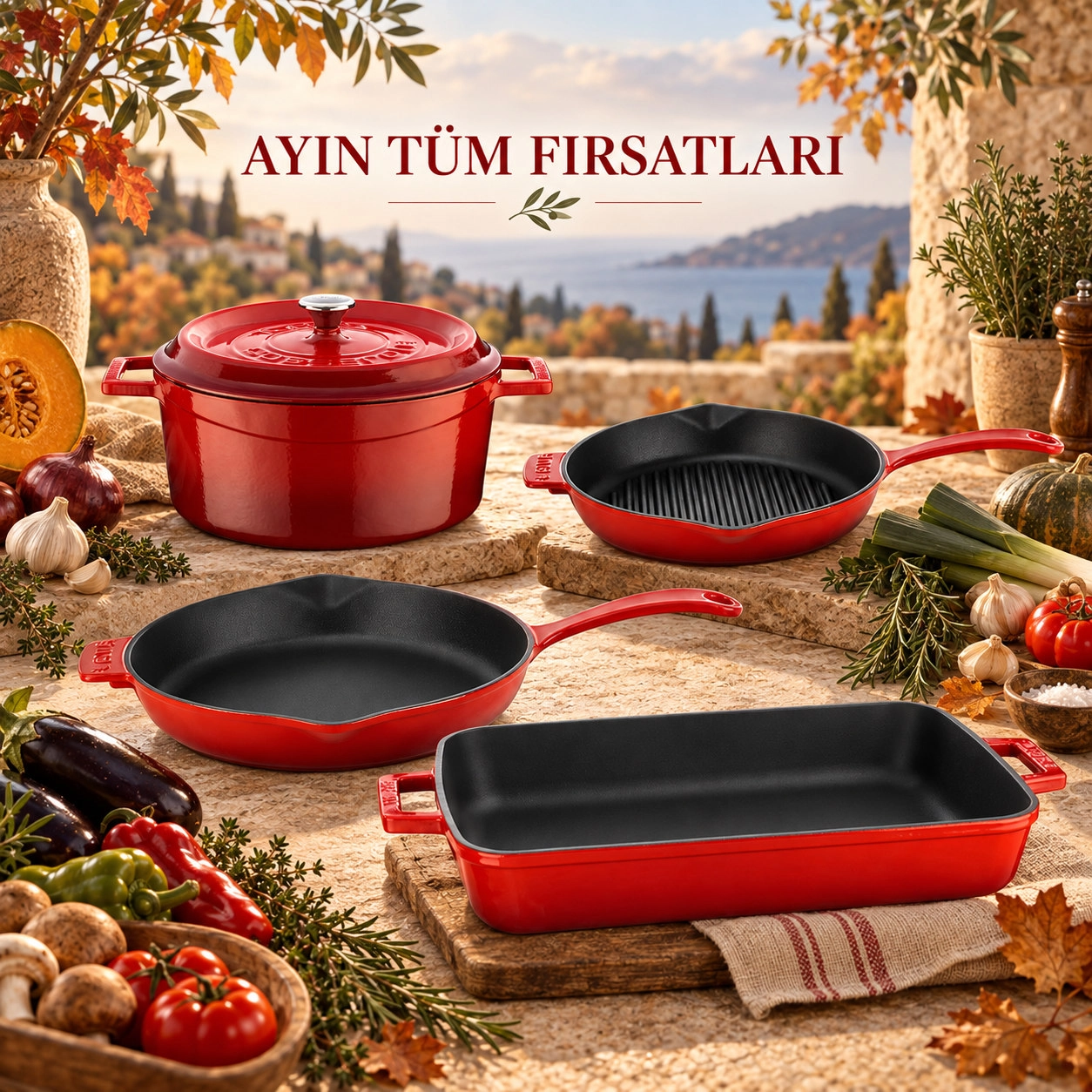 All This Month's Deals