×

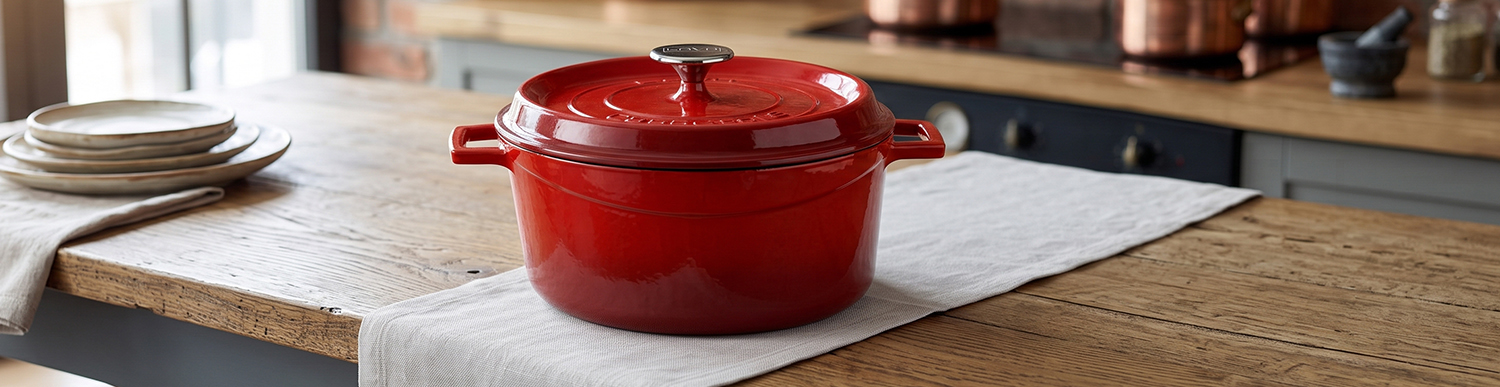
The key difference between enamelled cast iron and uncoated cast iron lies in the surface of the cast iron. In uncoated cast iron cookware, the cast iron surface is used without an enamel coating, while enamelled cast iron cookware features a glass-like enamel layer over the surface. This difference affects many aspects of everyday use, from the need for seasoning and resistance to rust to cleaning and cooking with acidic foods.
Reading Time: 10 minutes
Both enamelled cast iron and uncoated cast iron cookware are made from cast iron. The main feature that distinguishes the two is the surface of the cast iron.
In uncoated cast iron cookware, the iron surface is used directly. In enamelled cast iron cookware, the inner and/or outer surface of the cast iron is covered with an enamel layer applied at high temperature.
This difference in surface structure does more than change the appearance of the cookware. It also determines:
how the cookware should be cleaned,
how it should be stored after use,
whether seasoning is required,
how it should be protected from moisture and rust,
how it can be used with different types of food.
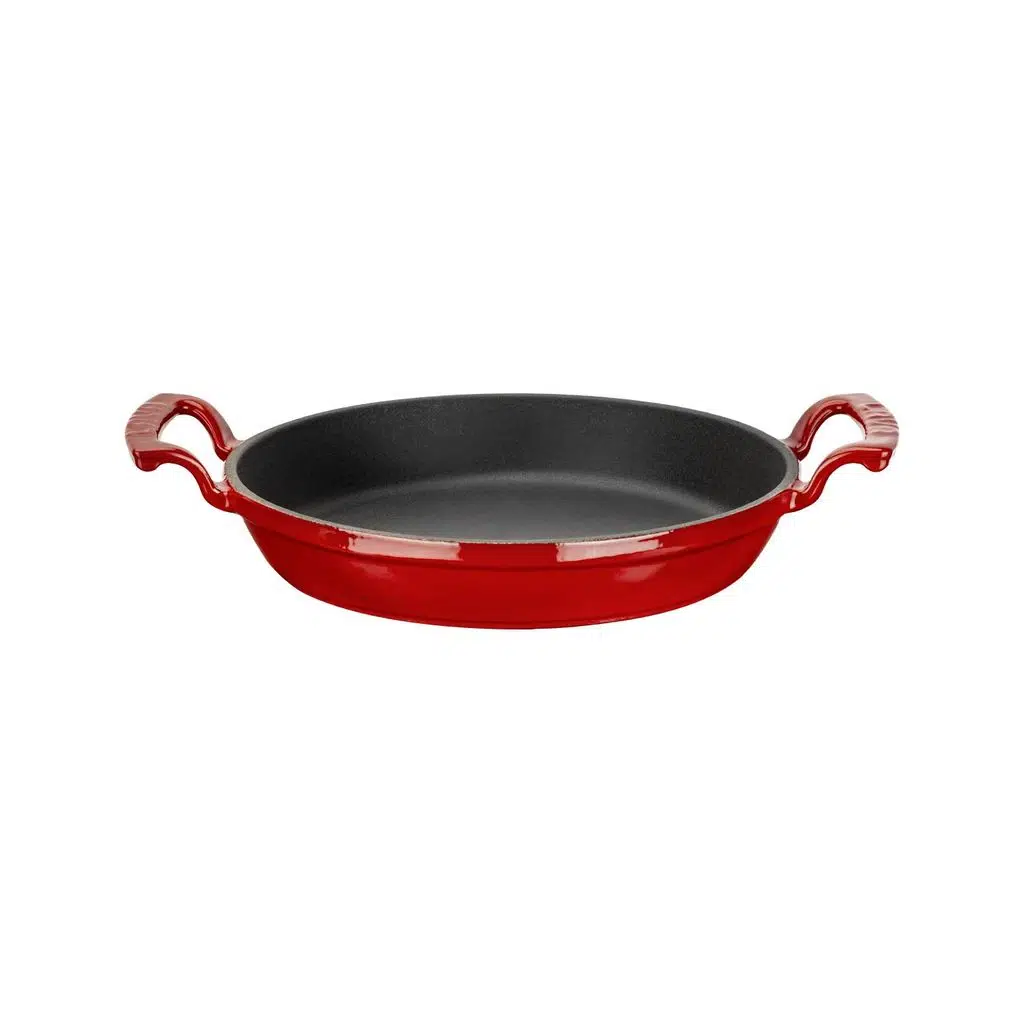
Enamelled cast iron refers to cookware made from a cast iron body covered with a glass-like surface known as enamel.
The enamel layer creates a surface between the cast iron and food and the external environment. This allows users to benefit from the heat retention and cooking properties of cast iron without some of the maintenance requirements associated with an uncoated cast iron surface.
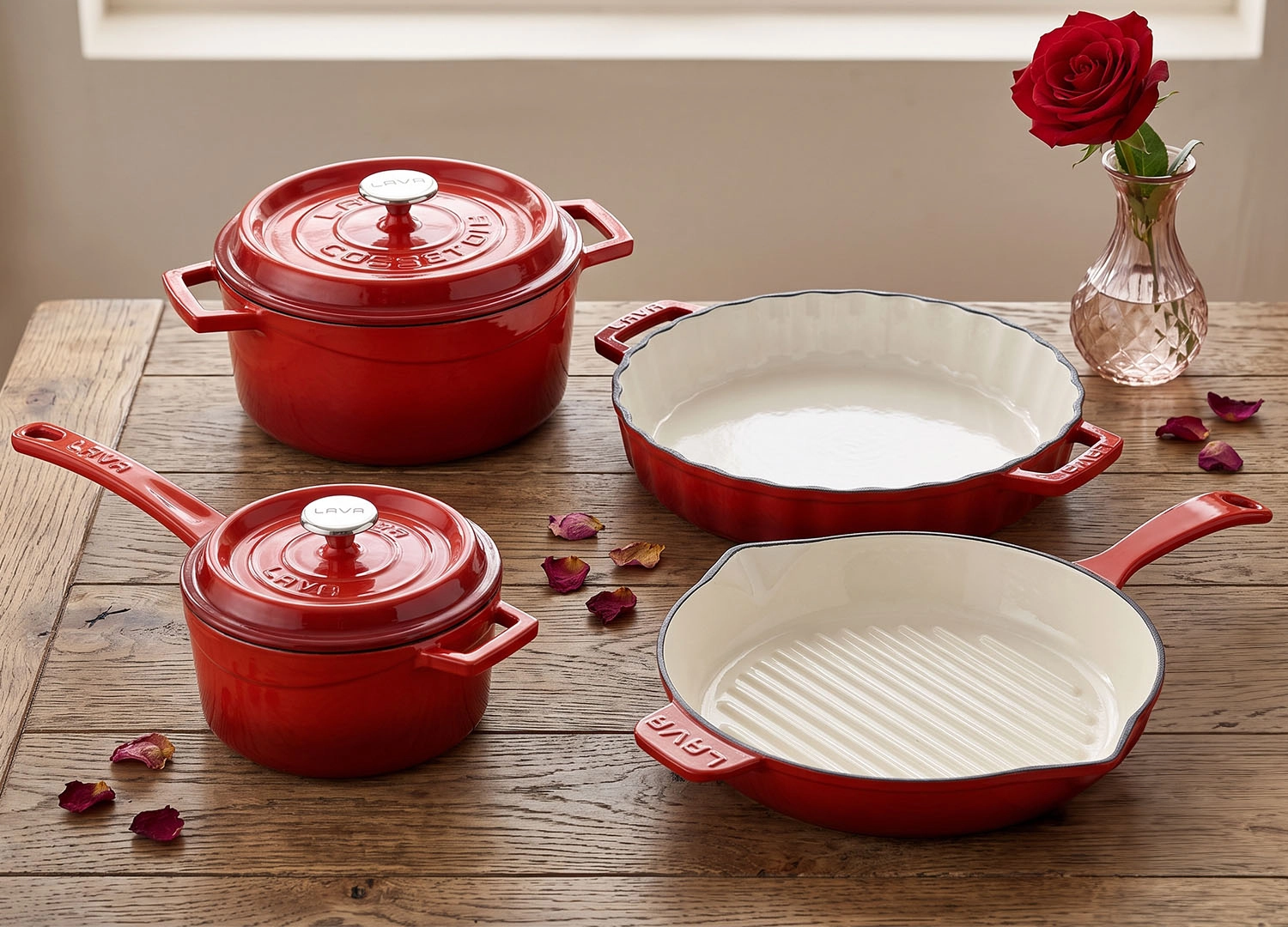
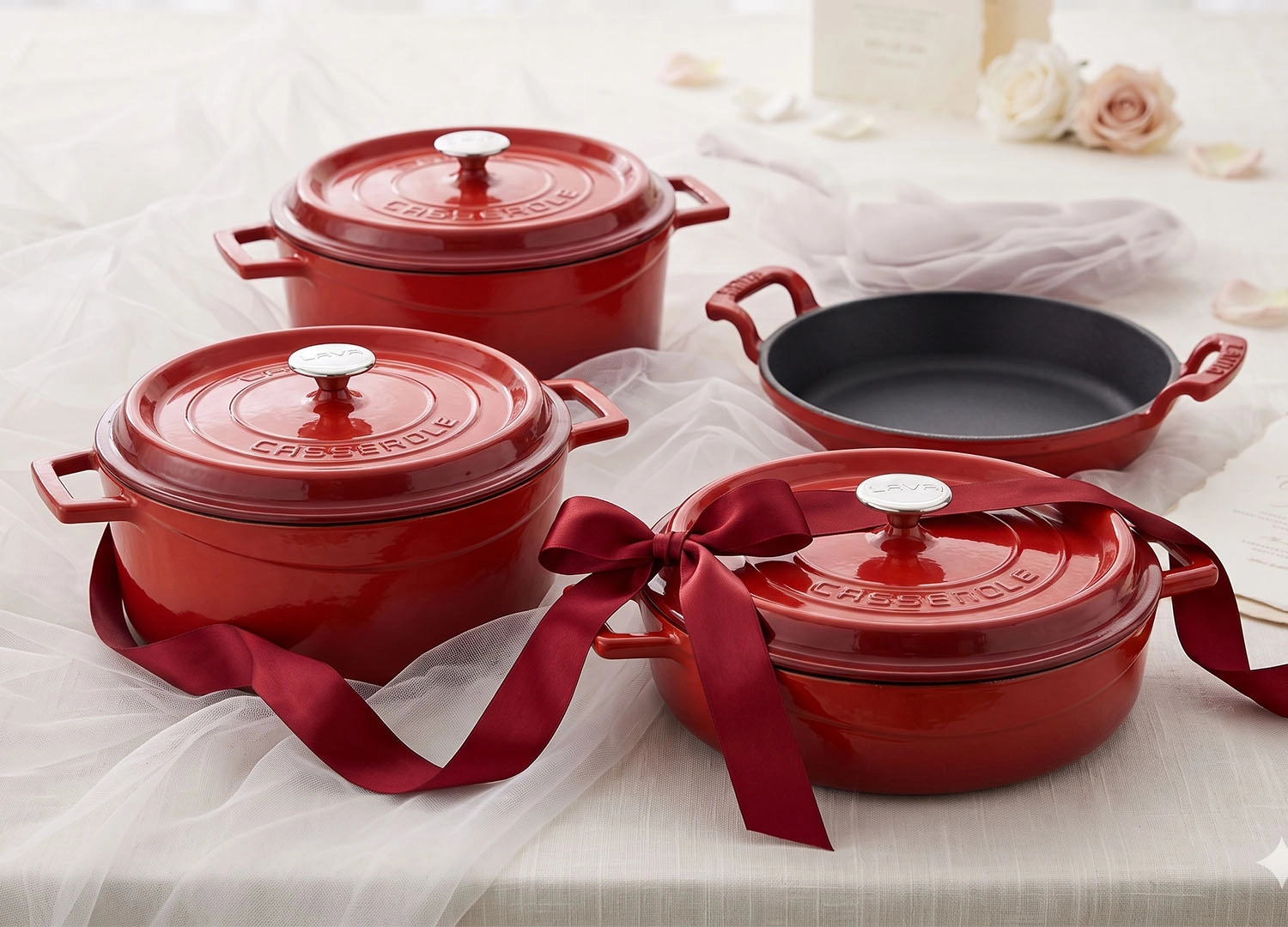
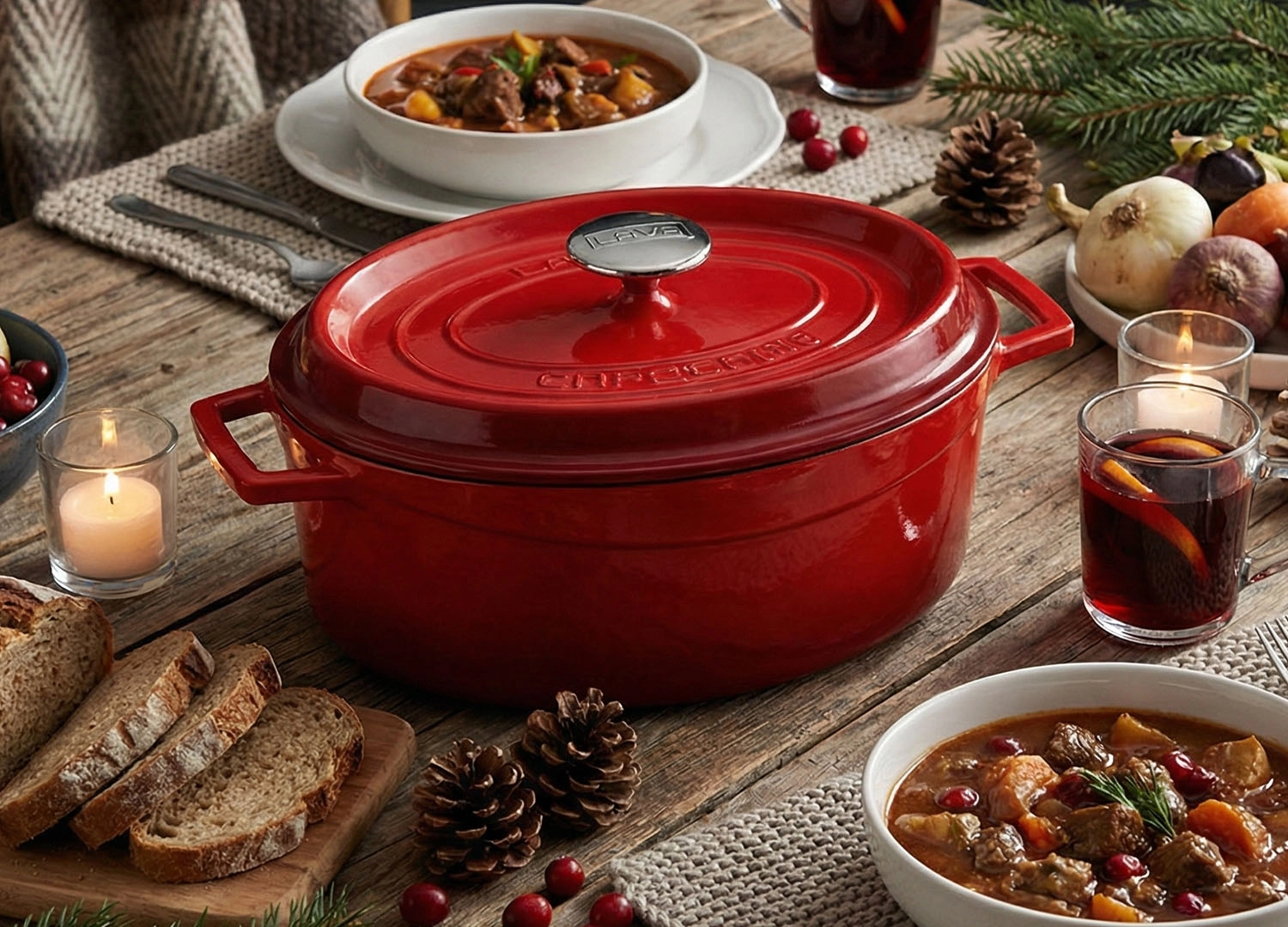
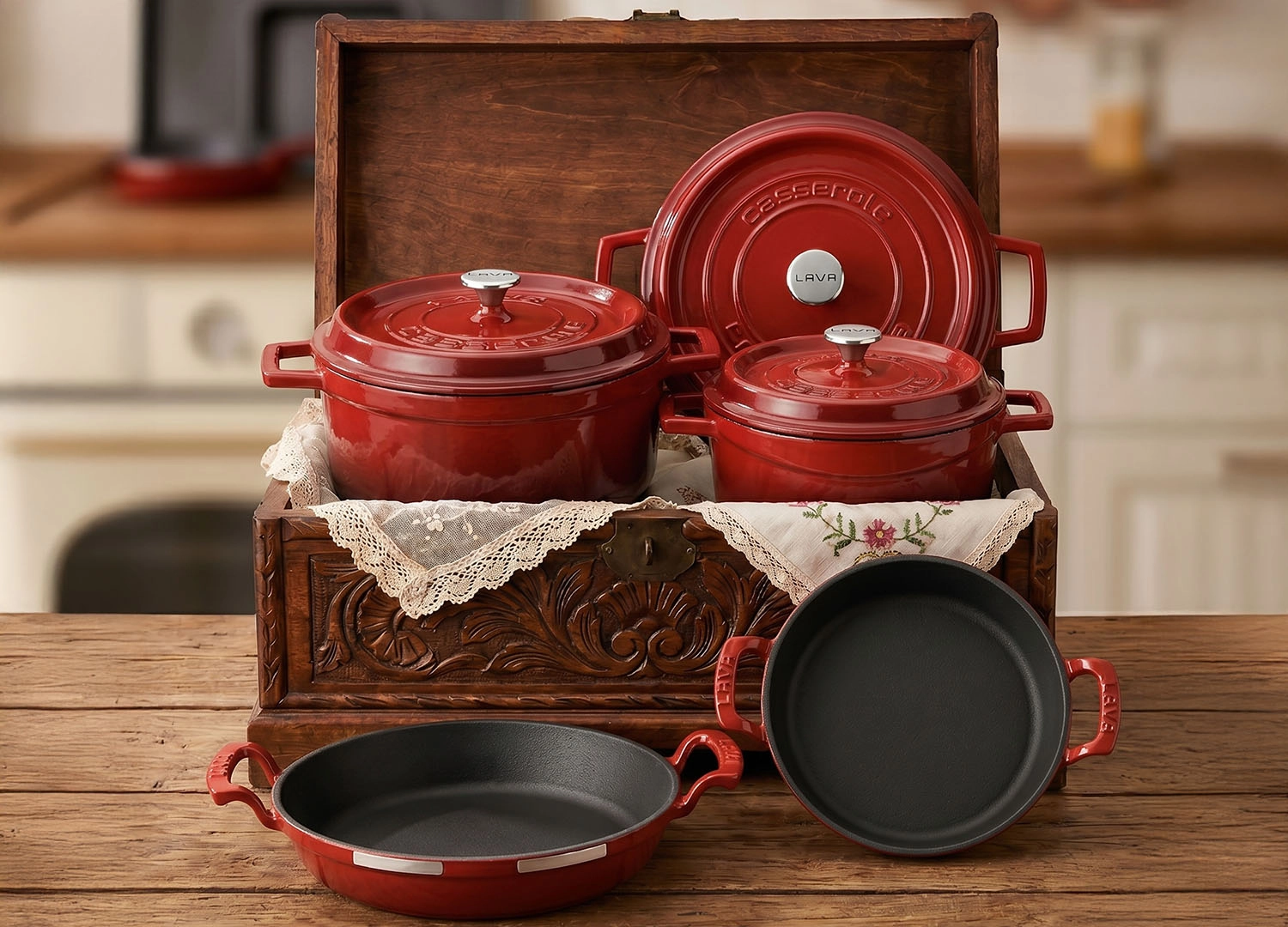
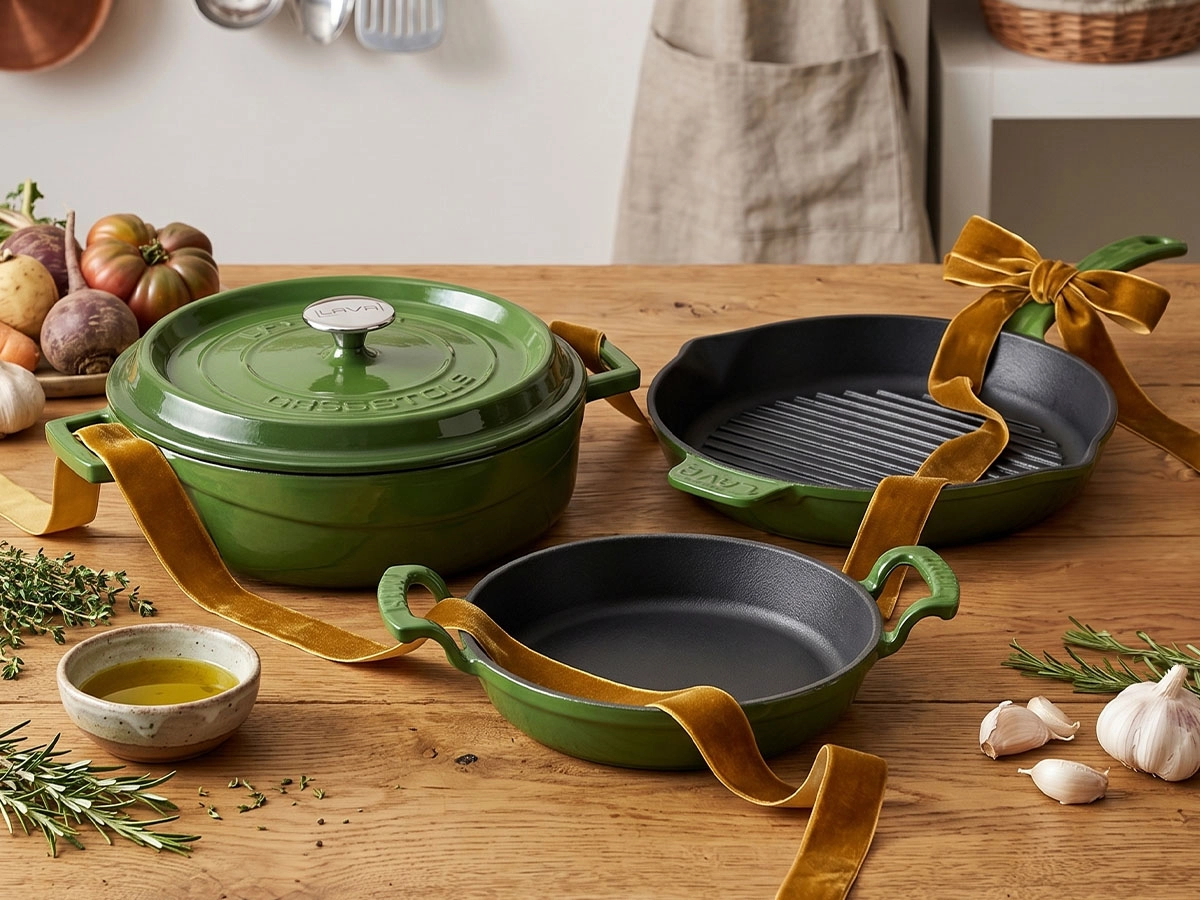
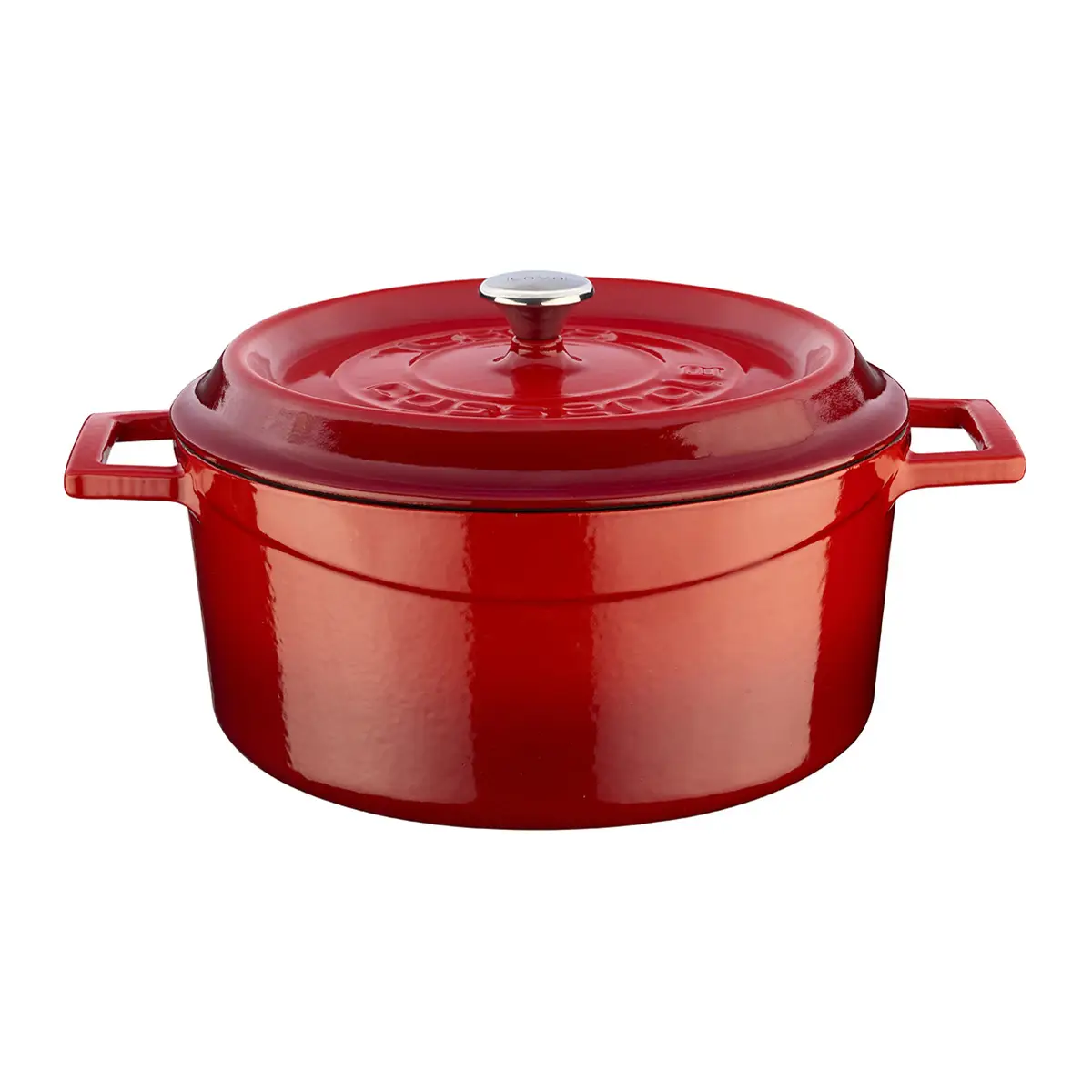
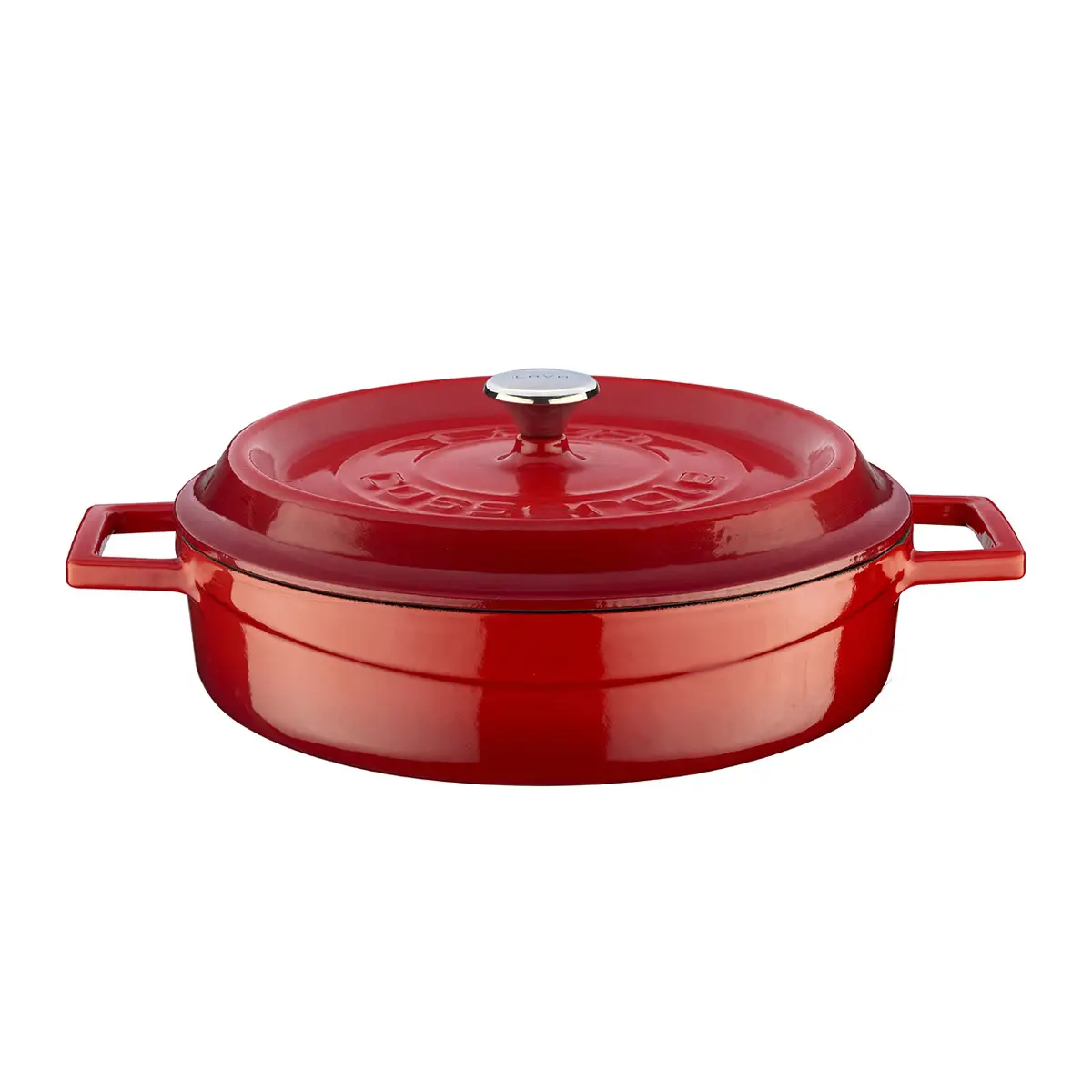
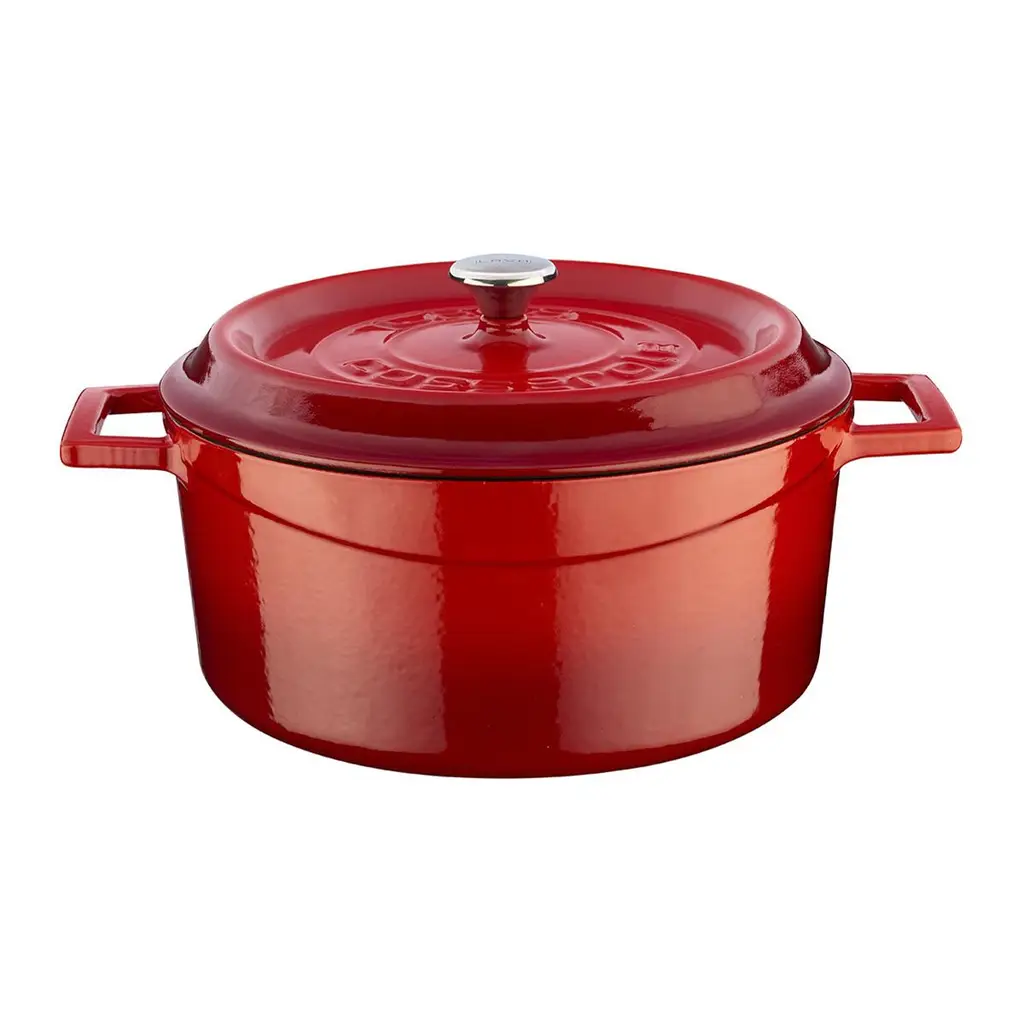
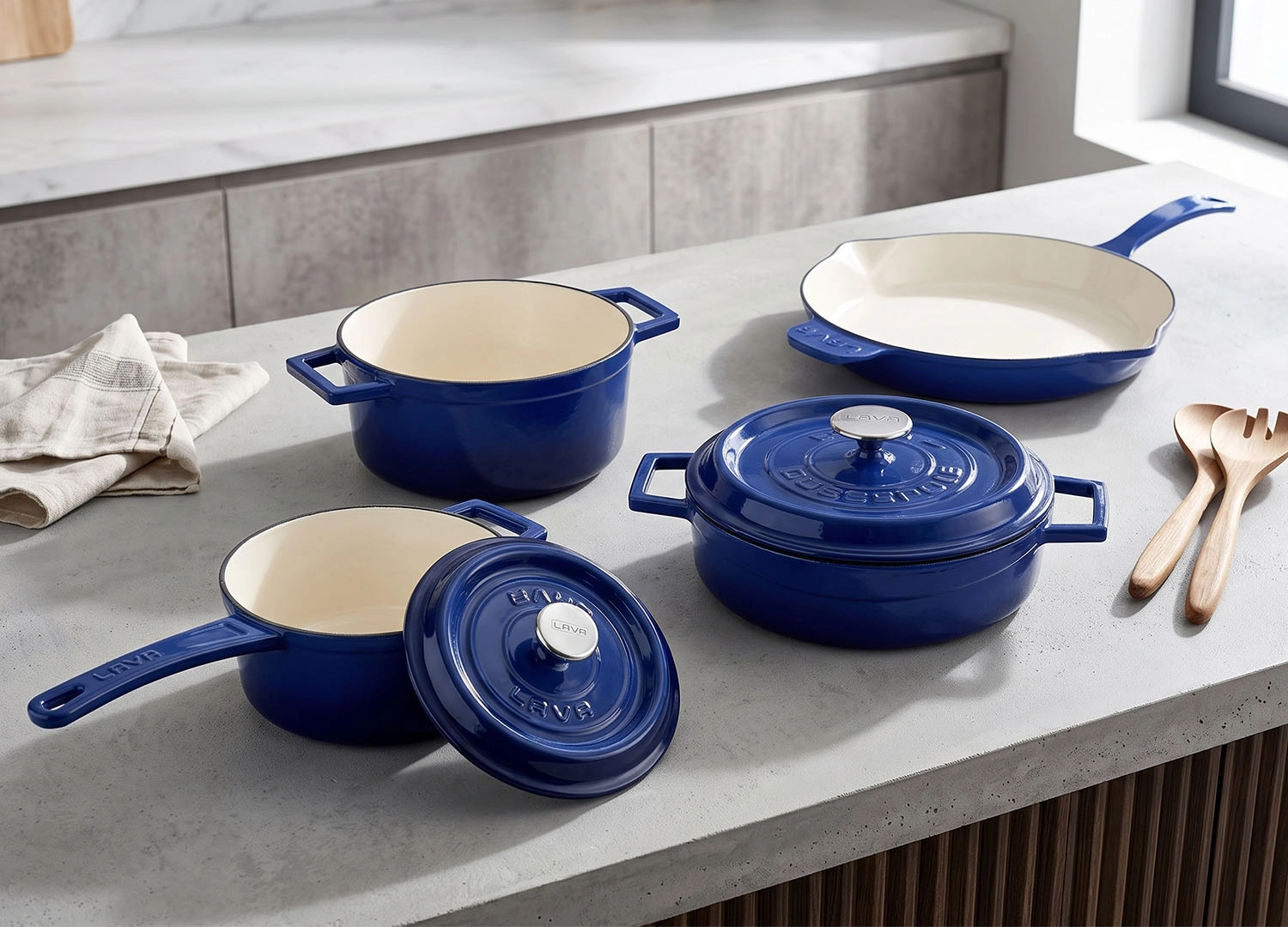
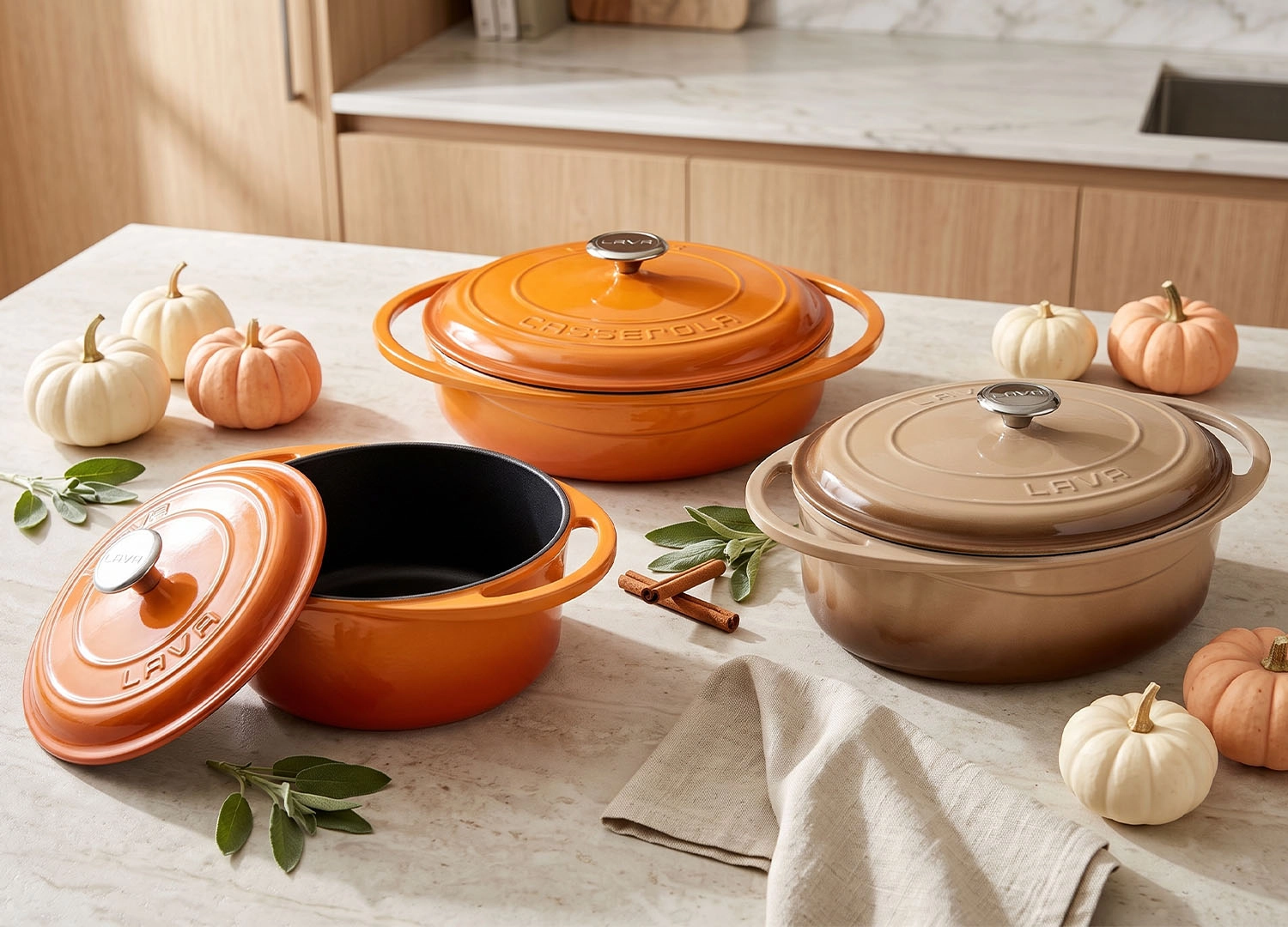
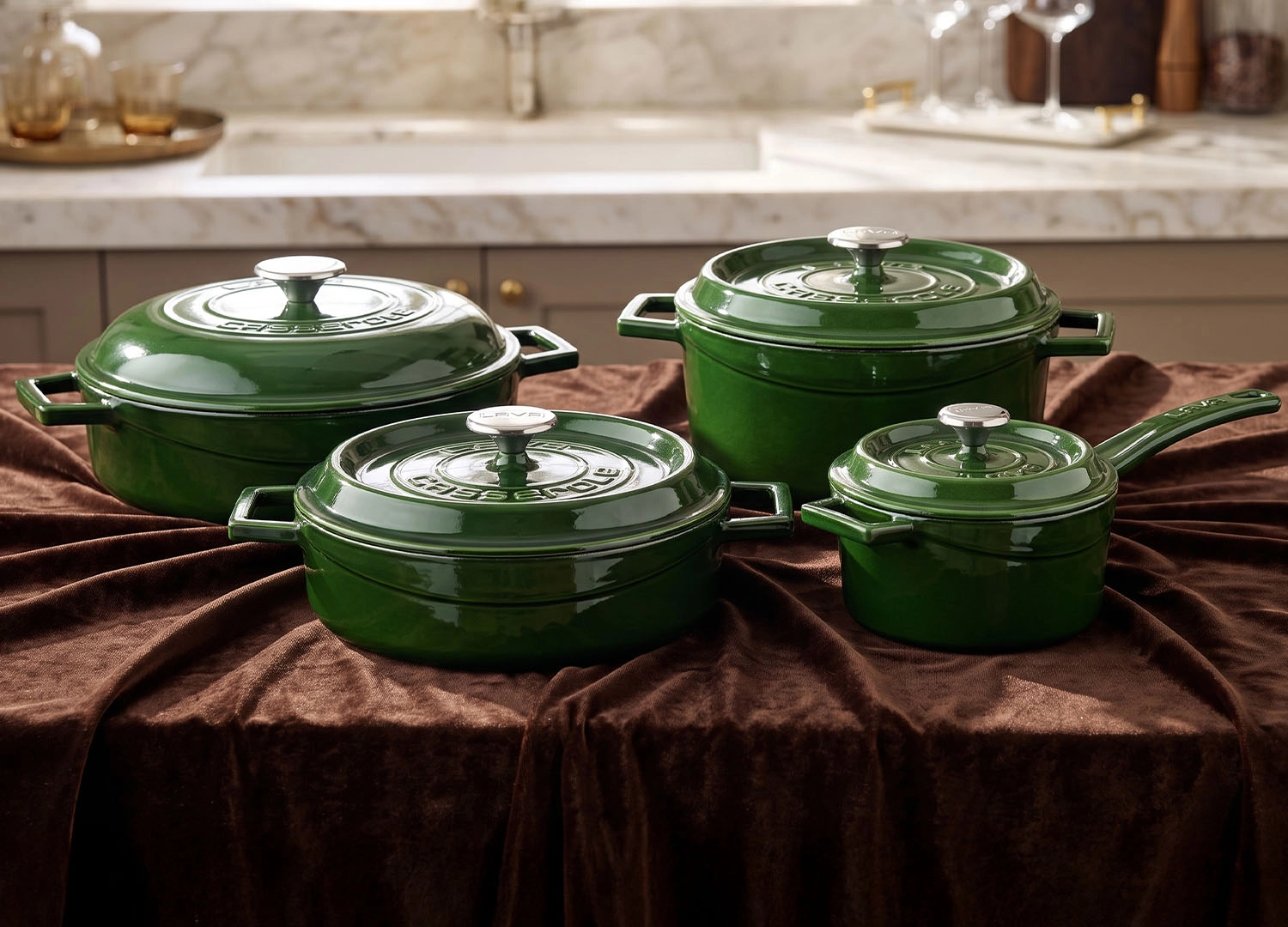
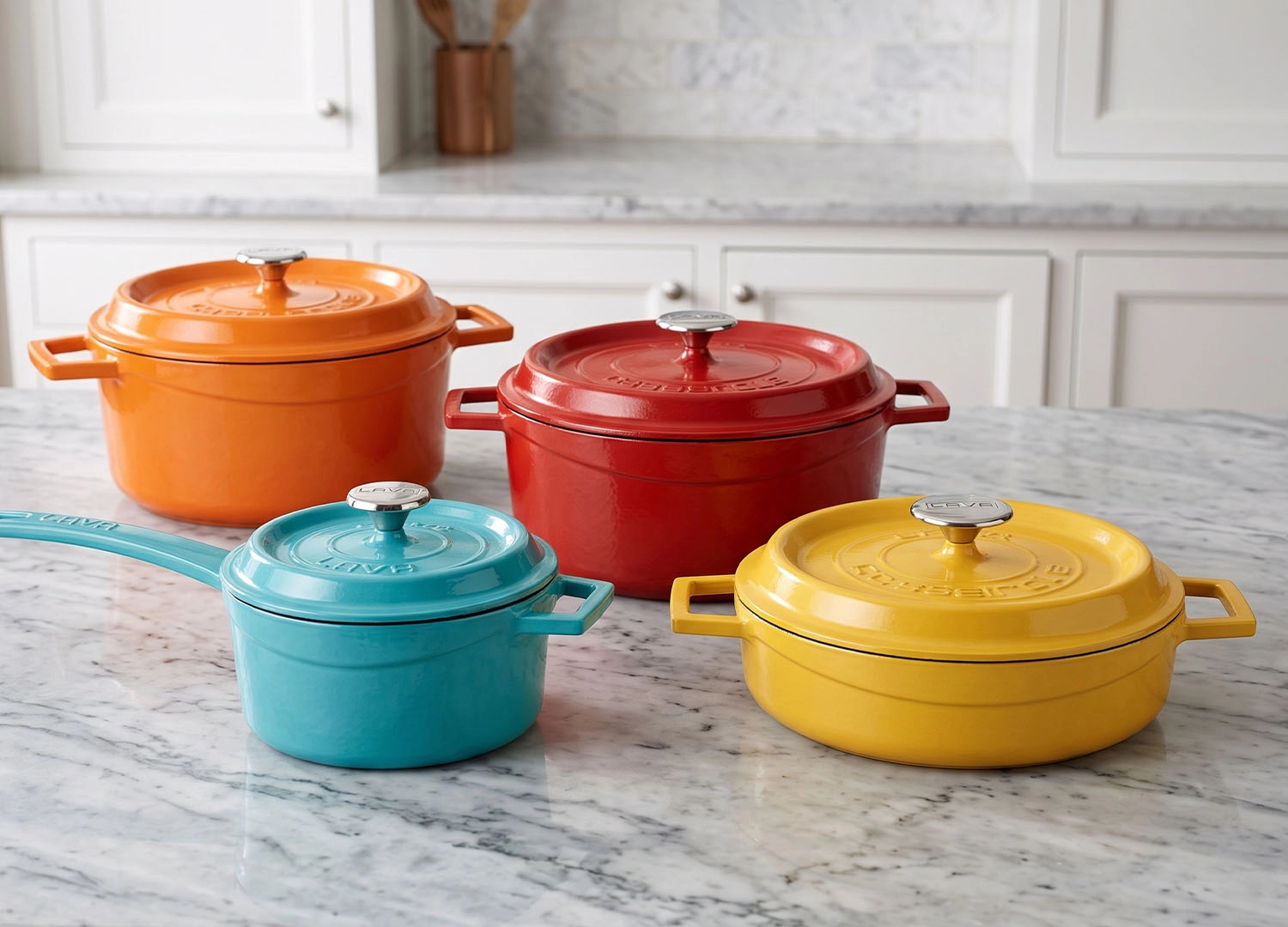
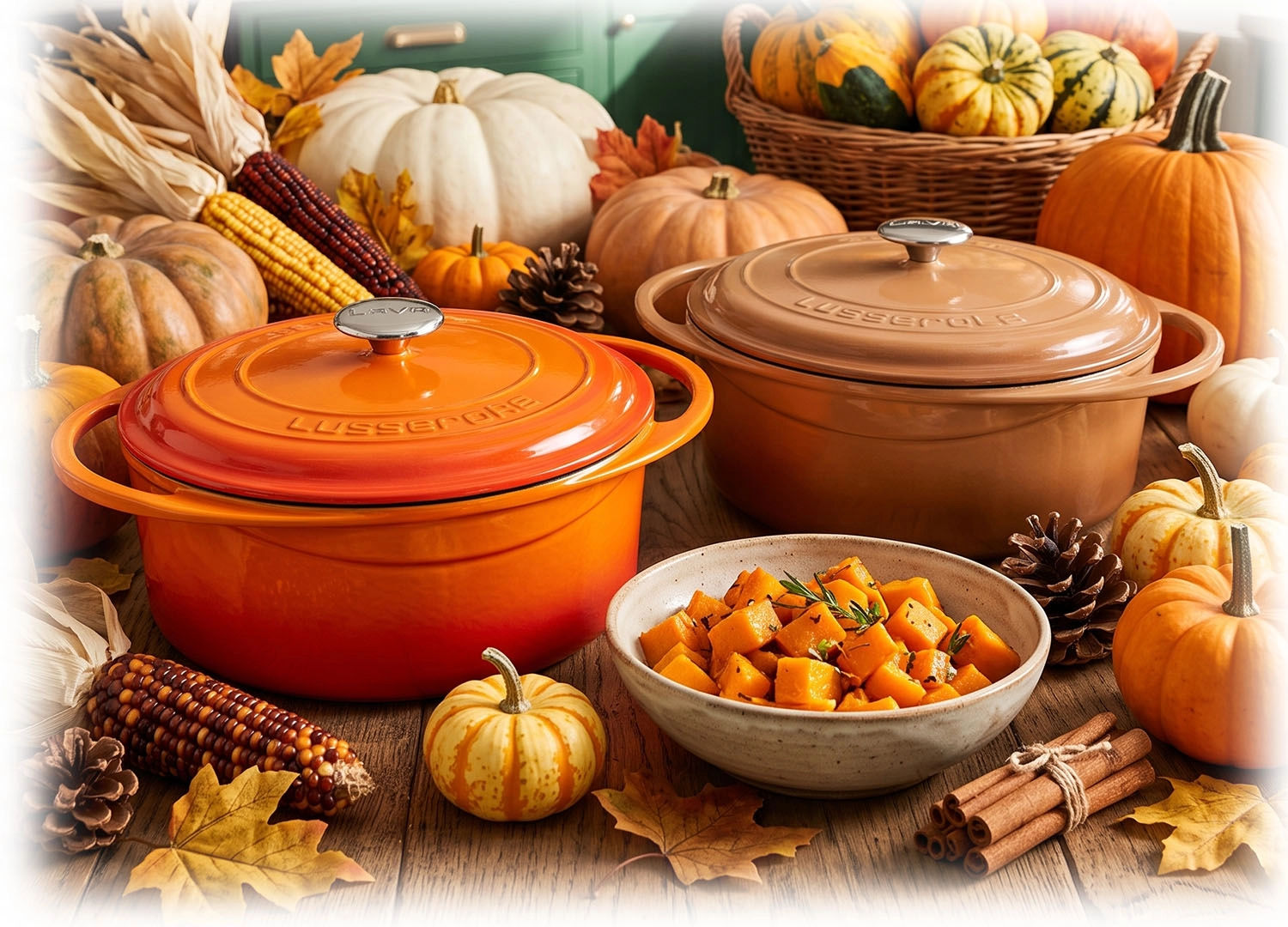
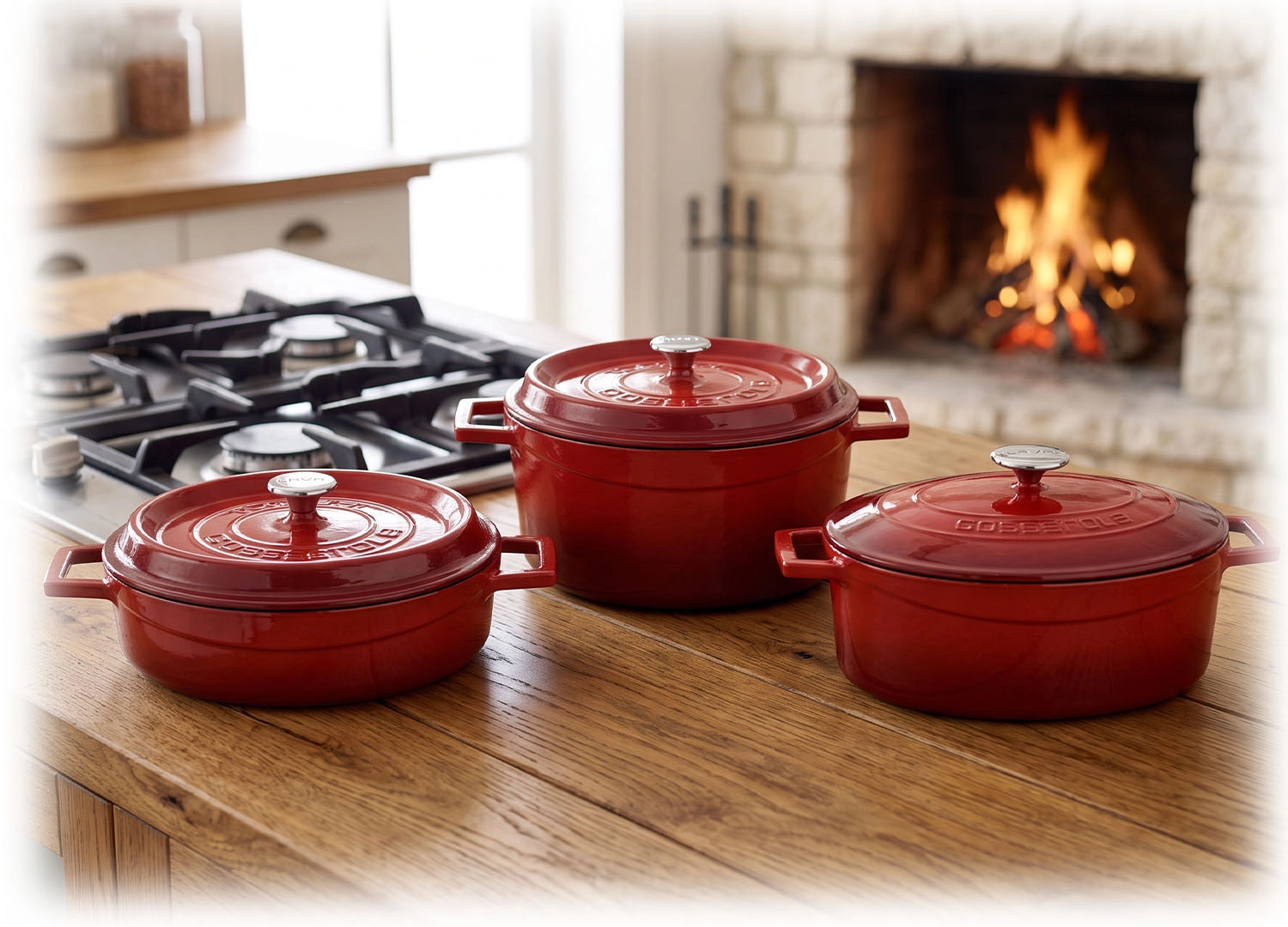
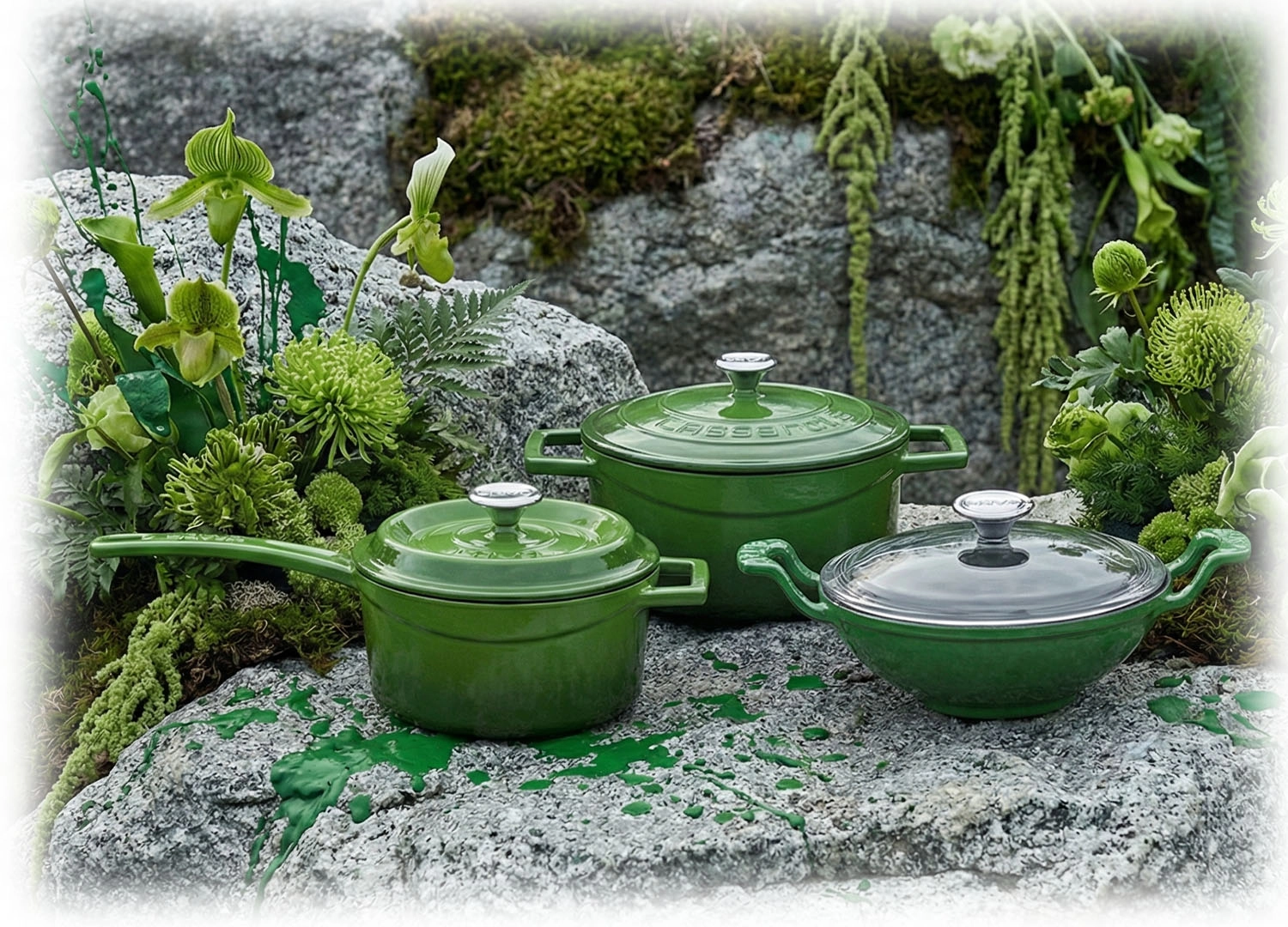
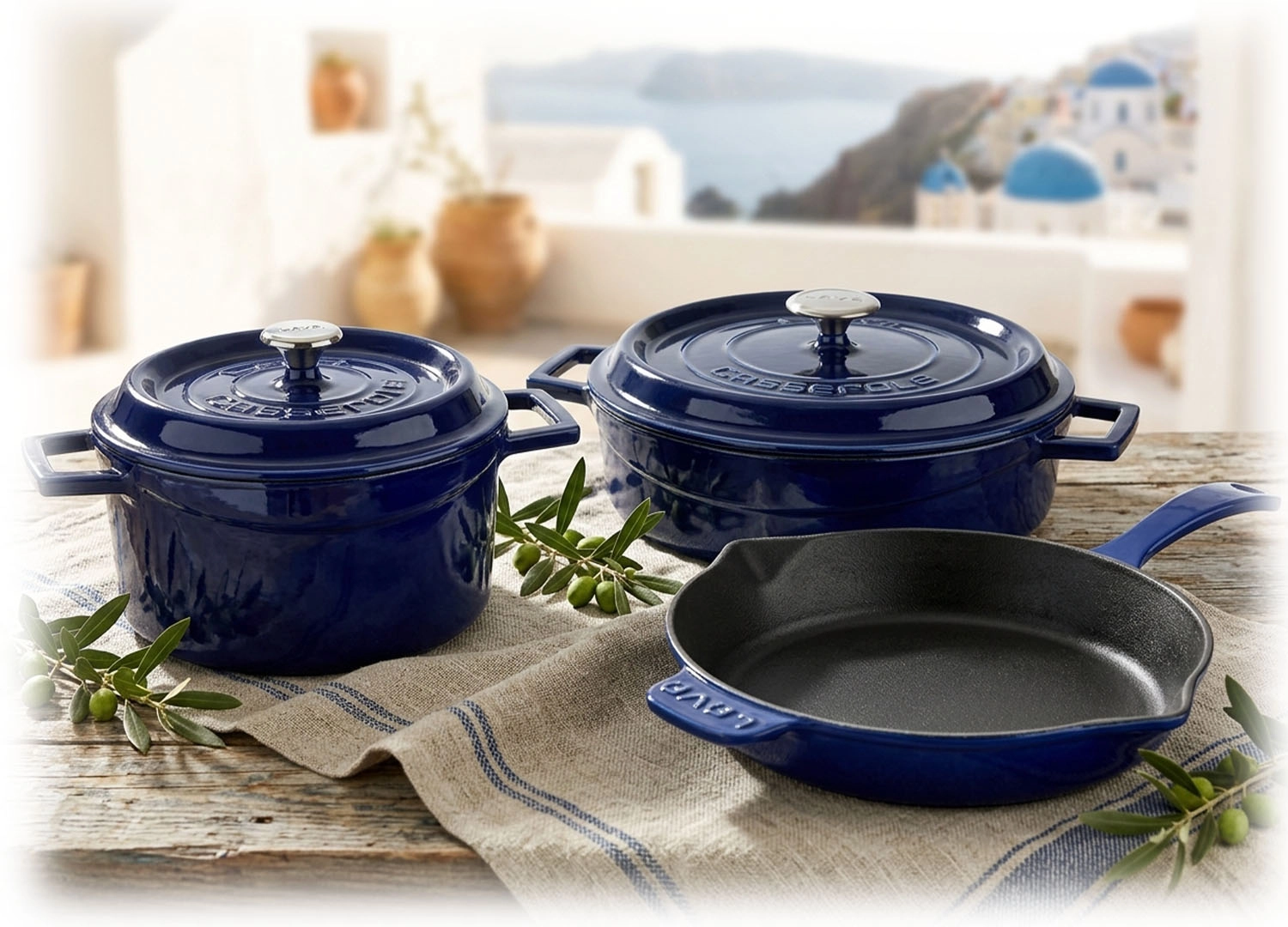
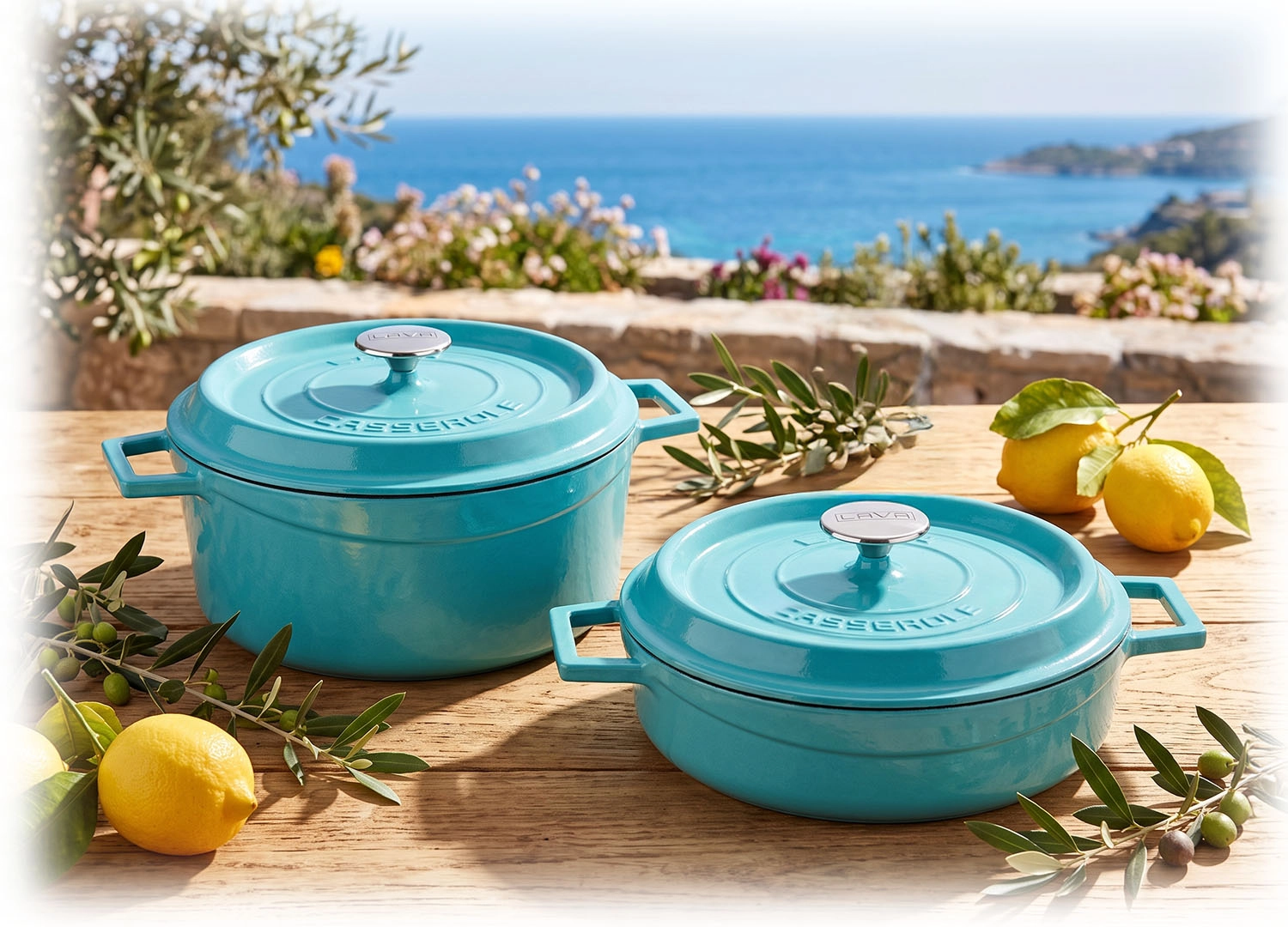
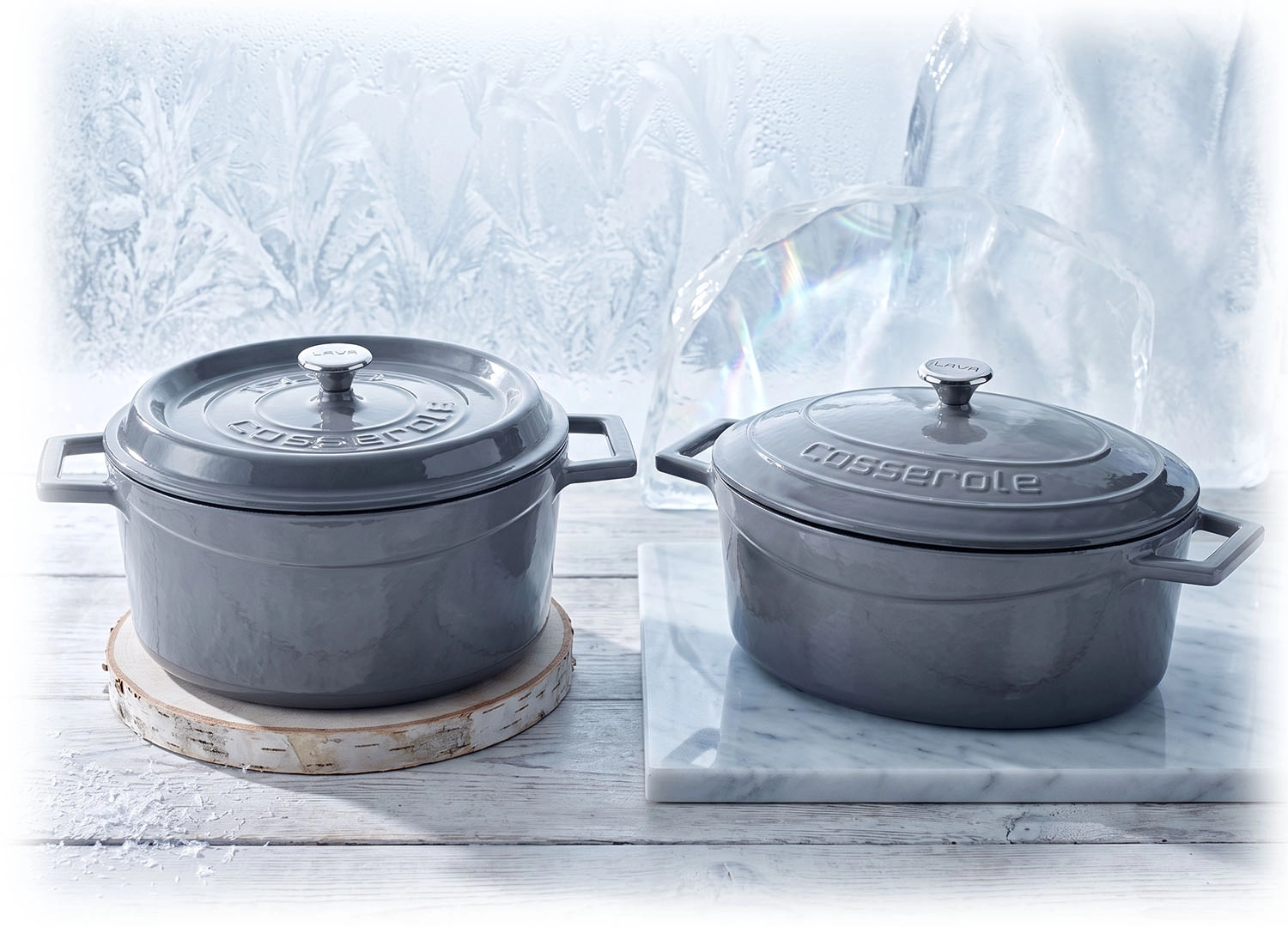
LAVA products feature a cast iron body protected by an enamel coating on the inner and outer surfaces.
For more detailed information about the benefits of enamel coating on cast iron cookware, see our guide The Benefits of Enamel Coating on Cast Iron Cookware.
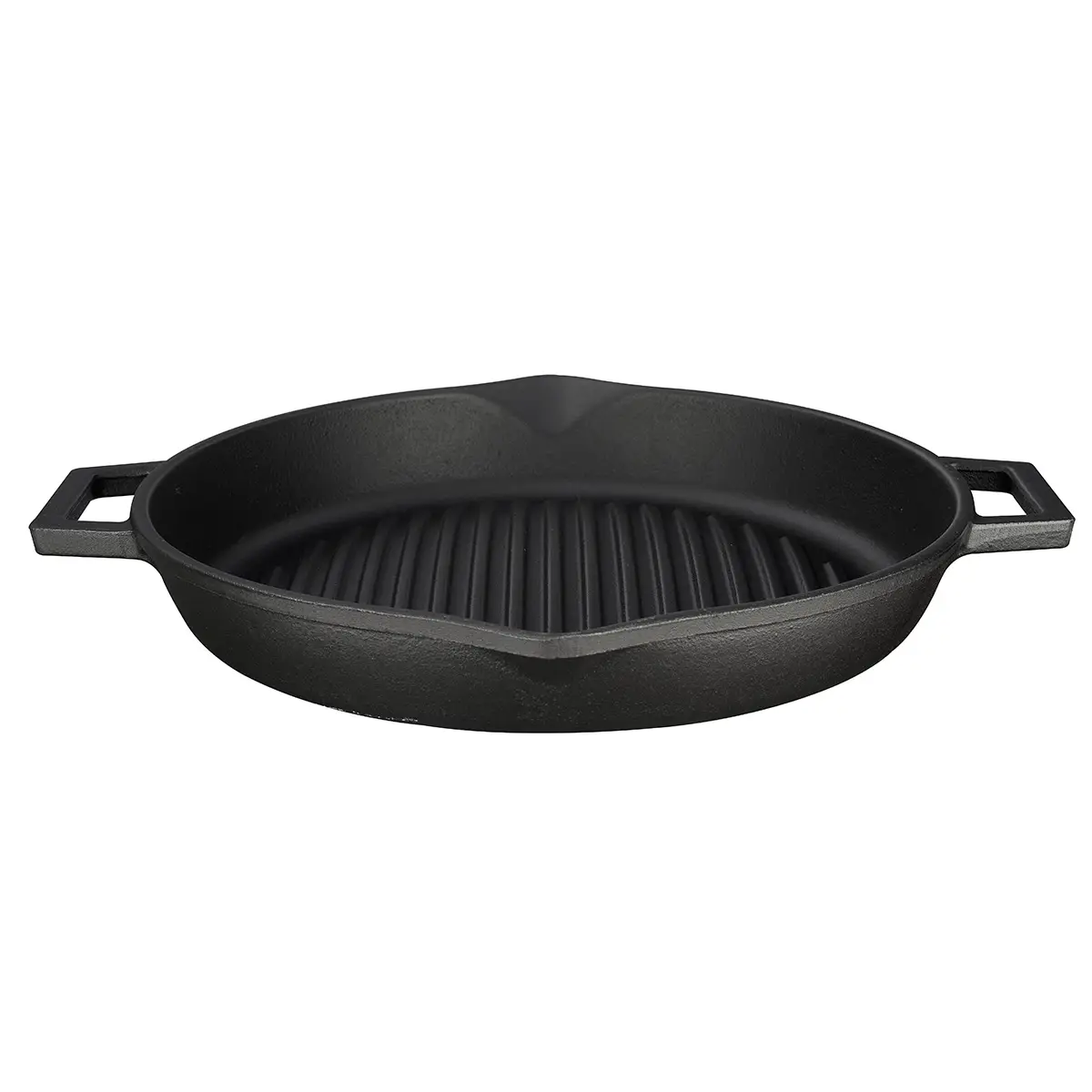
Uncoated cast iron refers to cast iron cookware without an enamel or similar coating on its surface.
The uncoated cast iron surface comes into direct contact with food, moisture and air. For this reason, proper cleaning, thorough drying and regular surface care are important.
Seasoning is also an important part of traditional uncoated cast iron care.
During seasoning, a thin layer of oil is applied to the surface and heated in a controlled manner. The aim is to build up a protective layer on the surface through continued use.
Both types of cookware can benefit from the excellent heat retention of cast iron. However, choosing between them depends not only on cooking performance but also on care routines, the types of food being prepared and expectations regarding ease of use.
The differences between enamelled cast iron and uncoated cast iron can be considered not only in terms of surface structure but also according to different cooking scenarios. The key differences for casseroles, pans and grills can be seen separately in the table below.
| Feature | Enamelled Cast Iron | Uncoated Cast Iron |
|---|---|---|
| Surface | Enamelled cast iron | Uncoated cast iron |
| Seasoning | Not required | May be required regularly |
| Sensitivity to moisture | The enamel surface separates the cast iron from the external environment | Directly exposed to moisture and oxygen |
| Cleaning | More convenient for everyday use | Thorough drying and surface care are important |
| Acidic foods | Provides greater flexibility for different foods | Prolonged contact can affect the surface |
| Care | Does not require seasoning | Requires regular maintenance |
| Heat performance | Benefits from the heat retention of cast iron | Benefits from the heat retention of cast iron |
| Casserole use | Practical for slow-cooked dishes, casseroles, stews and acidic recipes | Suitable for slow cooking; surface care should be considered |
| Pan use | Suitable for searing meat, sautéing vegetables and everyday pan recipes without seasoning | Suitable for searing and high-heat cooking; care is required after use |
| Grill use | Combines cast iron heat retention with easier maintenance for grilling meat, chicken and vegetables | Suitable for high-heat grilling; cleaning, drying and seasoning are important |
| Approach to use | More convenient for everyday use | More traditional cast iron experience |
The difference between enamelled cast iron and uncoated cast iron is not simply that one is “coated” and the other is “uncoated”.
This difference in surface structure directly affects how the cookware is used in the kitchen and how it should be maintained.
Seasoning is an important maintenance practice when using uncoated cast iron.
Depending on how frequently the cookware is used and the condition of the surface, oiling and heating may need to be repeated at regular intervals. This process helps protect the surface and maintain its cooking characteristics.
Enamelled cast iron cookware does not require seasoning because the cast iron surface is covered with enamel.
This is an important difference, particularly for users who want to keep their everyday cookware maintenance as simple as possible.
As the main component of uncoated cast iron is iron, corrosion can occur when the uncoated surface comes into contact with moisture and oxygen.
For this reason, uncoated cast iron cookware should be dried thoroughly after washing and should not be left damp.
With enamelled cast iron, the enamel surface creates a protective barrier between the cast iron and the external environment.
However, it is important to protect the integrity of the enamel surface. The cookware should not be exposed to hard impacts or used in a way that could cause significant damage to the surface.
For more detailed information about enamel and rust, see our guide Does Enamel Coating Rust?.
For uncoated cast iron cookware, cleaning is not simply about removing food residue.
After cleaning, the cookware needs to be dried thoroughly and, where necessary, the surface care may need to be renewed.
Because enamelled cast iron does not require seasoning, its everyday care routine is considerably simpler.
However, to protect the enamel surface, avoid hard impacts, abrasive cleaning methods and cleaning practices that are contrary to the product's care instructions.
Ingredients such as tomatoes, lemon, vinegar and wine are particularly relevant when cooking in casseroles and pans for extended periods.
On uncoated cast iron surfaces, prolonged contact with acidic ingredients can affect the seasoning layer and increase contact between the food and the metal surface.
Enamel coating creates a surface between the food and the cast iron, providing greater flexibility when preparing tomato-based sauces, slow-cooked stews and similar dishes.
As both uncoated cast iron and enamelled cast iron are made from cast iron, both types of cookware benefit from one of the key properties of cast iron: excellent heat retention.
Once heated, cast iron can retain its temperature for an extended period, making it suitable for a variety of cooking techniques, including:
slow cooking,
oven cooking,
searing meat,
casseroles,
stews,
grilling.
Therefore, when choosing between enamelled and uncoated cast iron, the key consideration is often not “which one retains heat better?” but rather the surface characteristics and the user's cooking and care habits.
Uncoated cast iron cookware has a direct cast iron surface.
Enamelled cast iron cookware, on the other hand, has a glass-like enamel layer over the cast iron.
For this reason, enamelled cookware should not be exposed to hard impacts, dropped or stored in a way that allows the surfaces to strike against each other with force.
Proper use can help preserve the enamel surface for many years.
One of the most noticeable differences in user experience between the two types of cookware is the care routine.
Uncoated cast iron cookware suits users who consider surface care and seasoning a natural part of the cast iron cooking experience.
Enamelled cast iron, on the other hand, offers:
no need for seasoning,
a surface that separates the cast iron from the external environment,
an easier everyday care routine.
These features make it a practical option for frequent use.
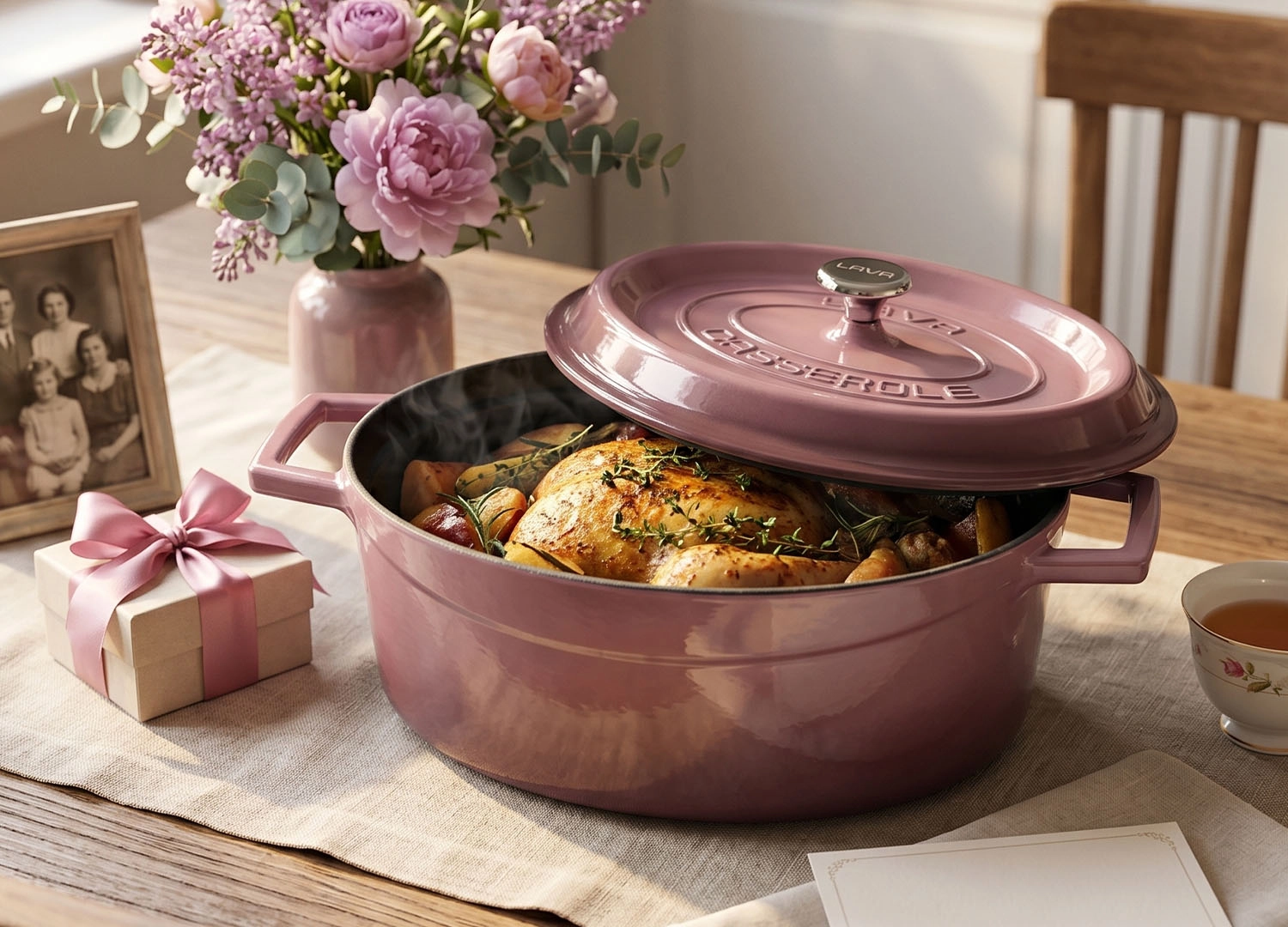
When choosing between an enamelled cast iron casserole and an uncoated cast iron casserole, it is important to first consider which dishes you are most likely to prepare.
Both types benefit from the heat retention of cast iron, but their different surface characteristics affect the cooking experience.
For casseroles, stews, meat dishes and vegetable recipes that require longer cooking times, maintaining a consistent temperature is important.
A cast iron body can retain heat for an extended period once heated. The enamelled surface combines this cooking performance with a simpler care routine because seasoning is not required.
Tomato-based dishes, sauces containing tomato purée, lemon, vinegar or wine can be cooked for longer periods in a casserole.
Because the enamel coating creates a surface between the food and the cast iron, it provides greater flexibility for these types of recipes. Enamelled cast iron casseroles are particularly practical for tomato-based sauces and long-cooked dishes with more liquid.
In kitchens where soups, vegetable dishes, rice, pasta sauces, casseroles and similar recipes are prepared regularly, ease of care becomes important.
The fact that enamelled cast iron casseroles do not require seasoning simplifies maintenance after everyday use.
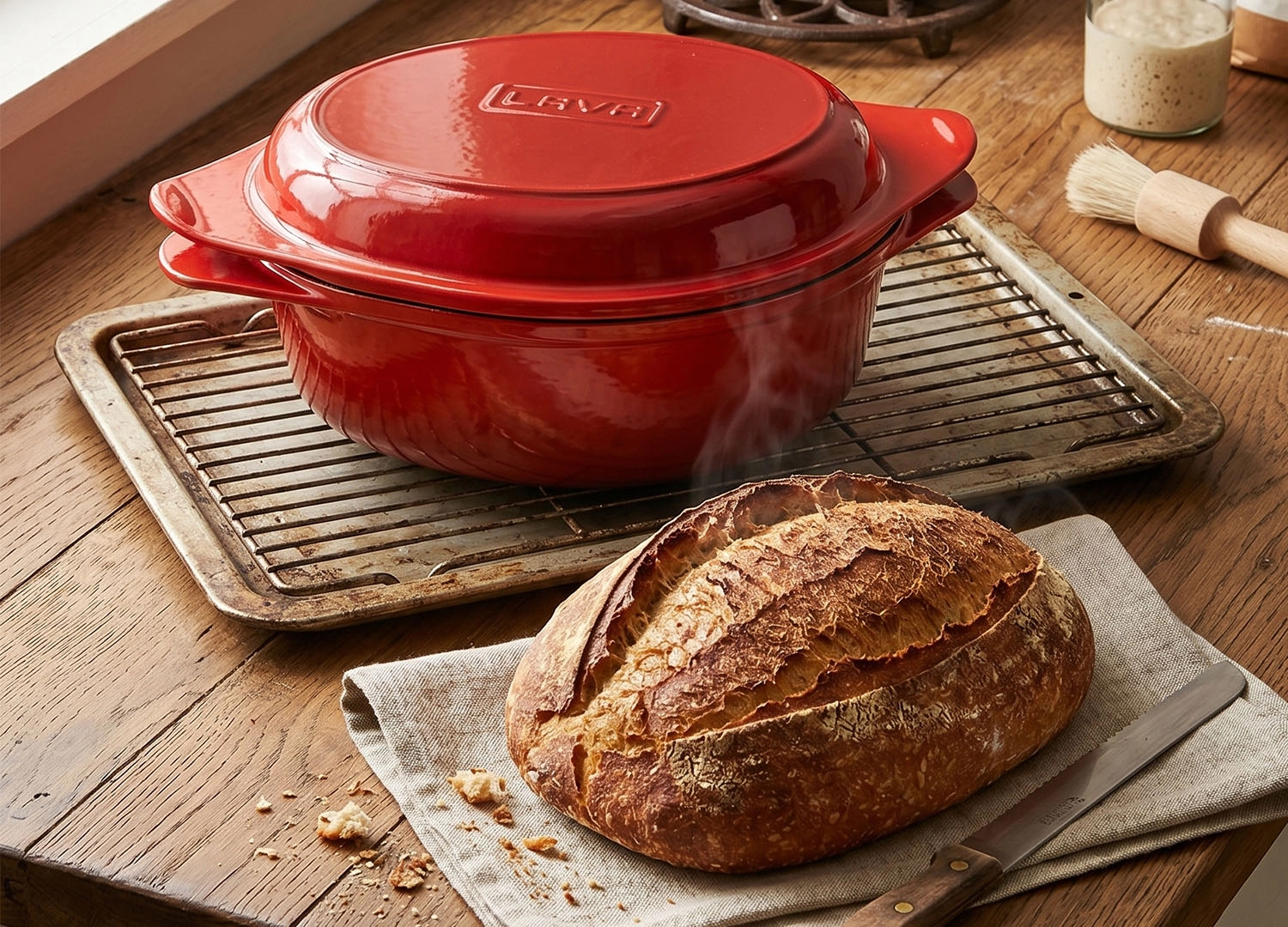
Cast iron casseroles are well suited to long, slow cooking because of their excellent heat retention.
For casseroles, meat dishes, stews and similar recipes, the ability of the cookware to maintain a stable temperature for an extended period is a useful feature.
Both uncoated and enamelled cast iron can offer this characteristic.
However, for users who do not want to deal with seasoning and surface care after long cooking sessions, an enamelled cast iron casserole can provide a more convenient experience.
Tomato-based dishes, recipes containing wine, and sauces with lemon or vinegar can remain in contact with the cooking surface for extended periods.
Because enamel coating creates a surface between the food and cast iron, it offers an important advantage for these types of recipes.
In home kitchens where different types of dishes are frequently prepared in the same casserole, the surface of enamelled cast iron provides greater flexibility.
After using an uncoated cast iron casserole, the surface should be dried thoroughly and the seasoning layer should be maintained.
Enamelled cast iron casseroles do not require seasoning.
For users looking for a lower-maintenance casserole for everyday use, enamelled cast iron can therefore offer a more convenient alternative.
To explore different sizes and usage options, visit the LAVA Cast Iron Casseroles category.
The considerations can be slightly different when choosing a pan.
For applications such as searing meat, grilling, sautéing vegetables or everyday pan cooking, where high temperatures and shorter cooking times are common, both uncoated and enamelled cast iron can be suitable options.
The main difference remains the surface and care routine.
When meat is added to a pan, maintaining the surface temperature is important for controlled searing.
The excellent heat retention of cast iron makes both uncoated and enamelled cast iron pans suitable for this cooking method.
Because an enamelled cast iron pan does not require seasoning, the maintenance process after searing is simpler.
When sautéing vegetables or preparing everyday dishes such as eggs, potatoes, mushrooms and chicken, the pan's ability to retain heat can help support controlled cooking.
An enamelled cast iron pan combines the heat performance of cast iron with an enamelled surface suitable for a wide range of everyday recipes.
Omelettes, eggs, sausages, potatoes and similar breakfast dishes are commonly prepared in pans.
The fact that an enamelled cast iron pan does not require seasoning makes it practical for cookware that is used repeatedly as part of an everyday cooking routine.
One of the key advantages of cast iron is its ability to store a substantial amount of heat and maintain its temperature when food is added to the pan.
This is particularly important when searing meat.
Both uncoated cast iron and properly used enamelled cast iron pans can be used for this purpose.
The choice is often determined less by cooking performance than by the user's expectations regarding maintenance.
Uncoated cast iron pans offer a traditional cast iron cooking experience but require surface care after use.
Enamelled cast iron pans combine the cooking characteristics of cast iron with a surface that does not require seasoning.
For users who want to use the same cast iron pan regularly for different recipes, from meat and vegetables to breakfast and evening meals, the enamelled surface can make everyday use more convenient.
Uncoated cast iron pans should be dried thoroughly after cleaning and their surface care should be maintained.
Enamelled cast iron pans do not require seasoning.
However, the manufacturer's cleaning and care instructions should still be followed to help maintain the enamel surface over time.
To explore options for different cooking needs, visit the LAVA Cast Iron Pans category.
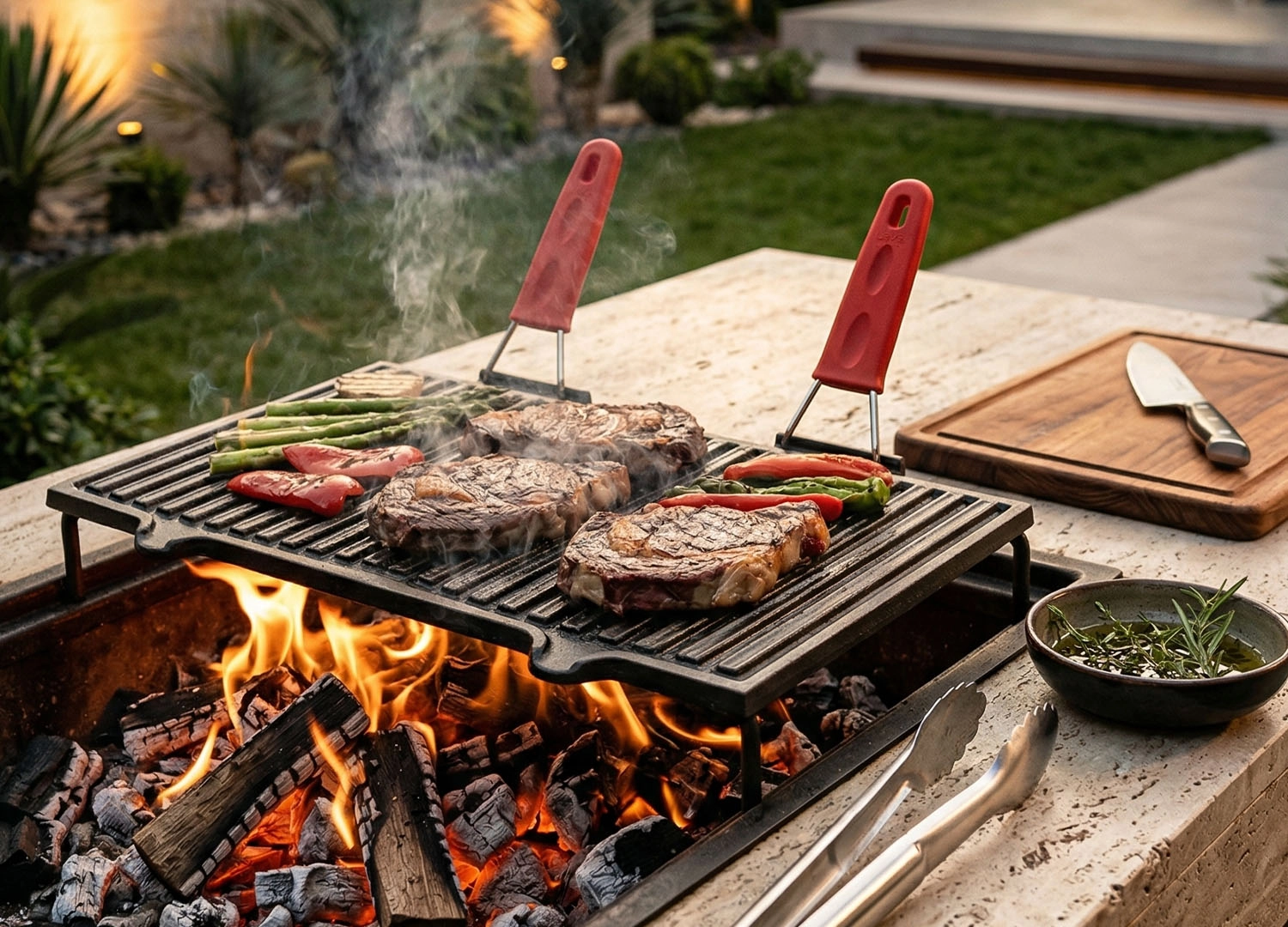
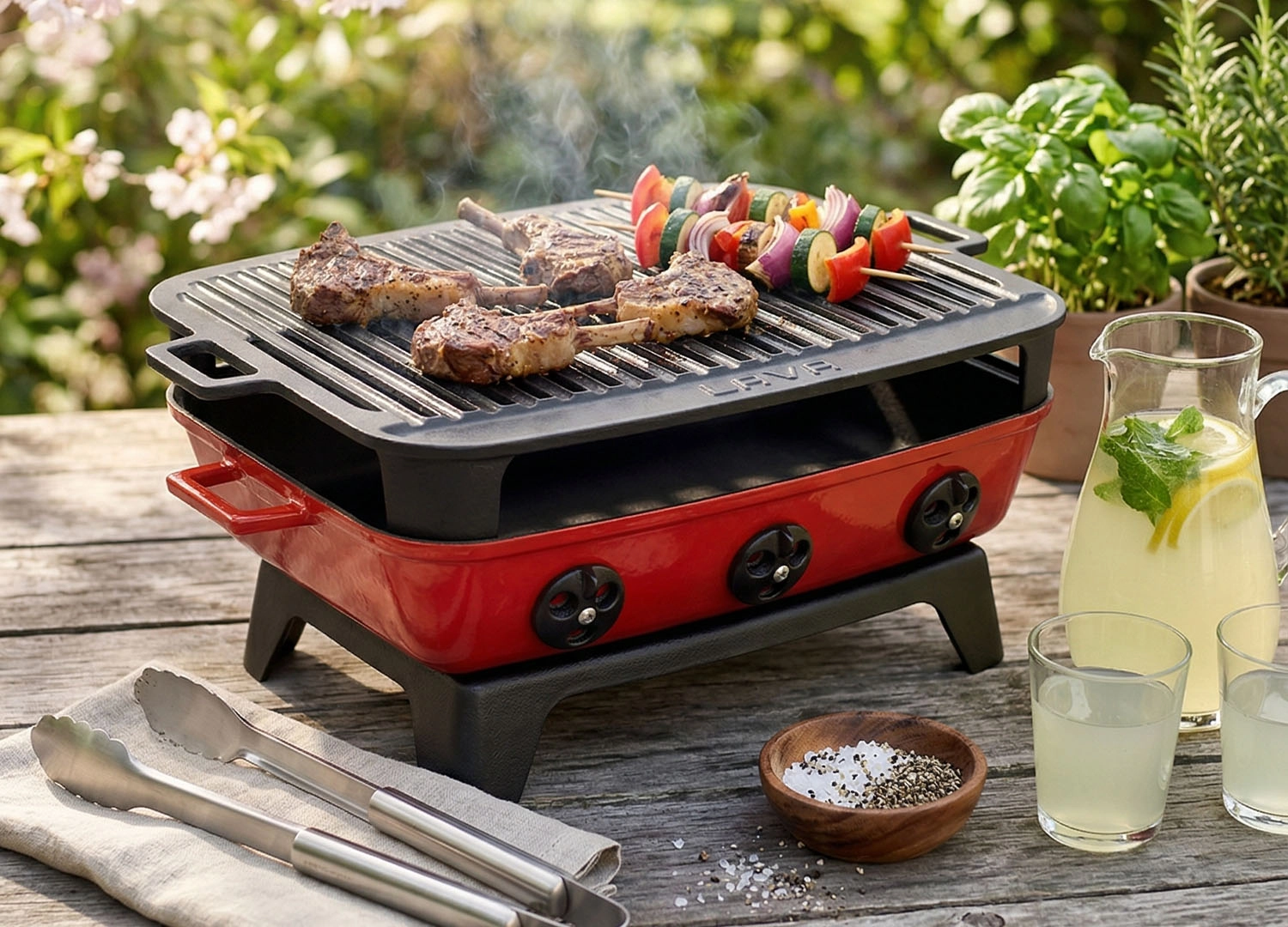
The excellent heat retention of cast iron is particularly useful when grilling.
When meat, chicken, fish and vegetables are cooked at high temperatures, the ability of the grill surface to retain heat can contribute to a more controlled cooking process.
When cooking meat and chicken at high temperatures, maintaining the temperature of the grill surface is important for achieving a well-browned exterior.
Cast iron grills can retain heat for an extended period, making them suitable for this type of cooking.
The fact that enamelled cast iron grills do not require seasoning can also simplify the care routine after use.
Vegetables such as courgettes, aubergines, peppers and mushrooms can be cooked on a cast iron grill.
The heat retention of cast iron can help create distinct grill marks on the surface of vegetables and support controlled cooking.
The enamelled surface eliminates the need for seasoning, making it easier to use the grill regularly for different recipes.
For uncoated cast iron grills, cleaning and thorough drying after use are important. Regular seasoning may also be required to maintain the surface.
Enamelled cast iron grills do not require seasoning.
However, to protect the enamel surface, avoid hard impacts, abrasive cleaning methods and sudden temperature changes that could damage the surface.
The key benefit of enamelled cast iron is that it combines the strong cooking characteristics of cast iron with a surface that is easier to manage in everyday use.
Cast iron can:
retain a substantial amount of heat,
maintain heat for an extended period,
be used for different cooking techniques from hob to oven,
work well for long and slow cooking.
For casseroles, it provides flexibility for long-cooked dishes, casseroles, sauces and acidic recipes.
For pans, it provides a seasoning-free option for searing meat, sautéing vegetables and everyday cooking.
For grills, it retains the heat performance of cast iron while simplifying the care routine after use.
The enamelled surface changes the way cast iron is used on a daily basis.
The fact that seasoning is not required and that the enamel creates a layer between the cast iron surface and food makes enamelled cast iron particularly practical for users who prepare different types of dishes using the same cookware.
For this reason, enamelled cast iron should not simply be considered “cast iron that is easier to maintain”.
Its key benefit is the combination of the cooking performance of cast iron with a more convenient everyday cooking experience.
LAVA manufactures its products around this combination of cast iron bodies and enamelled surfaces.
Neither type can be described as universally better. Uncoated cast iron offers a traditional cooking experience that involves seasoning and more regular surface care, while enamelled cast iron combines the cooking properties of cast iron with a surface that does not require seasoning and can make everyday use more convenient.
Enamelled cast iron cookware does not require the seasoning process used for uncoated cast iron because the cast iron surface is covered with enamel.
LAVA enamelled cast iron cookware does not require seasoning.
Because the uncoated surface contains iron and is directly exposed to moisture and oxygen, corrosion can occur.
For this reason, uncoated cast iron cookware should be dried thoroughly after use and its surface care should be maintained.
The enamel coating creates a protective surface between the cast iron and the external environment. As a result, the enamelled surface itself does not rust.
However, maintaining the integrity of the enamel is important. Areas where the enamel has been seriously damaged and the underlying cast iron is exposed should be treated differently.
For more information, see Does Enamel Coating Rust?.
Enamel coating creates a glass-like layer over the cast iron surface that comes into contact with food.
When assessing whether cookware is suitable for food contact, however, the production standards, testing and relevant compliance criteria are also important alongside the material used.
For more information about LAVA's enamel structure, testing and product safety, see Is Enamel Coating Safe? and LAVA Laboratory, Tests and Certificates.
The enamel surface can be scratched by hard or abrasive treatment.
For this reason, excessive mechanical force should be avoided and the cookware should be cleaned according to the product's care instructions.
The main difference is the surface structure.
With uncoated cast iron, the bare cast iron surface is used directly, whereas enamelled cast iron features a glass-like enamel layer over the cast iron.
This difference directly affects seasoning, care, rust resistance, cleaning and how the cookware can be used with different foods.
The common feature of uncoated and enamelled cast iron is that both benefit from the excellent cooking properties of cast iron.
However, their everyday cooking experiences are different.
Uncoated cast iron can suit users who consider seasoning and surface care an integral part of the traditional cast iron experience.
Enamelled cast iron, meanwhile, can be a practical solution for users who want to benefit from the heat retention and cooking performance of cast iron without the need for seasoning, while preparing different types of dishes with a simpler everyday care routine.
Instead of asking only, “Is enamelled cast iron better than uncoated cast iron?”, it can be more useful to consider:
“How do I cook in my kitchen, and what kind of cooking experience do I expect from my cookware?”
Explore LAVA Enamelled Cast Iron Casseroles and Enamelled Cast Iron Pans.
13.08.2026






Lava Döküm Online Fabrika Satış Mağazası. © 2026 All Rights Reserved.


0
)

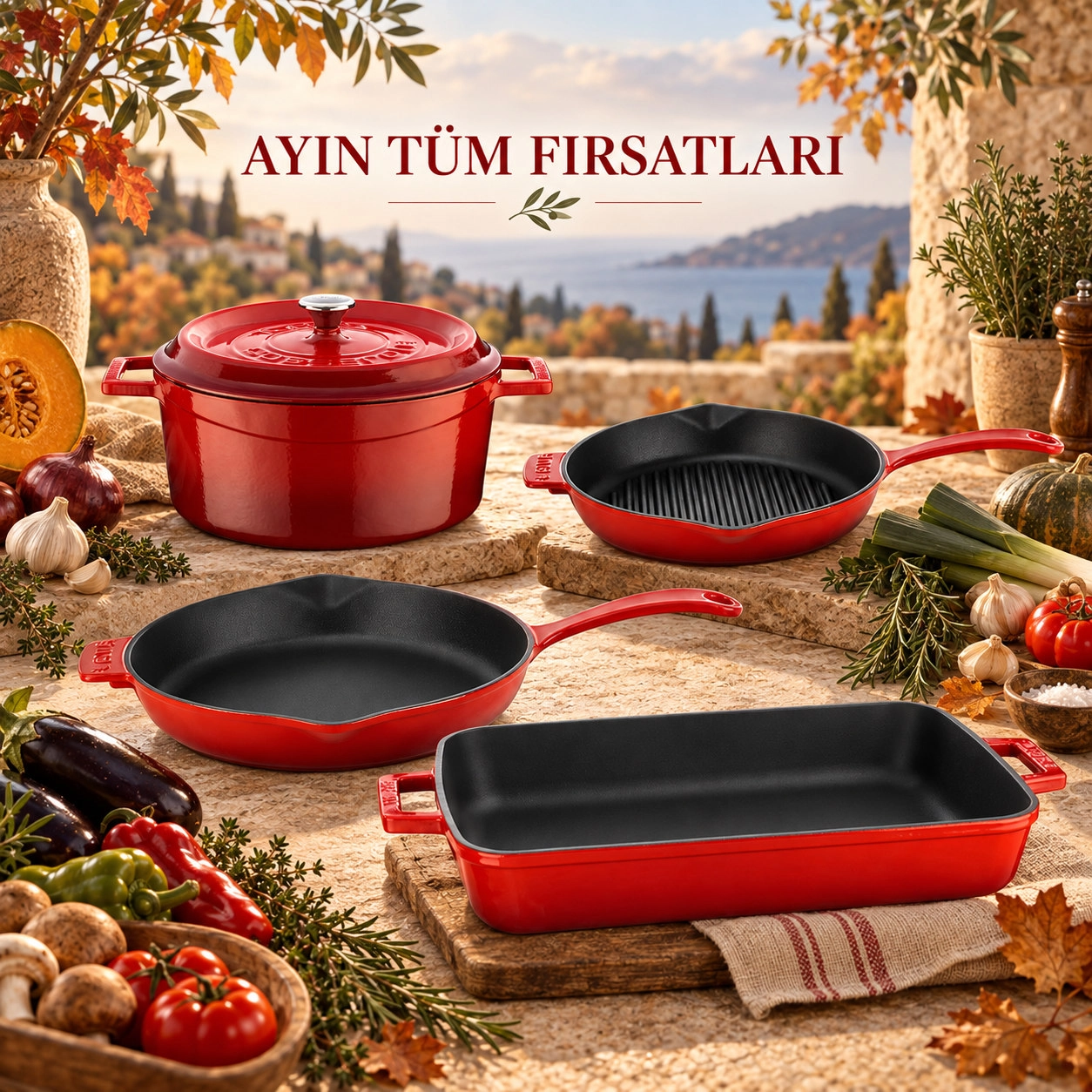
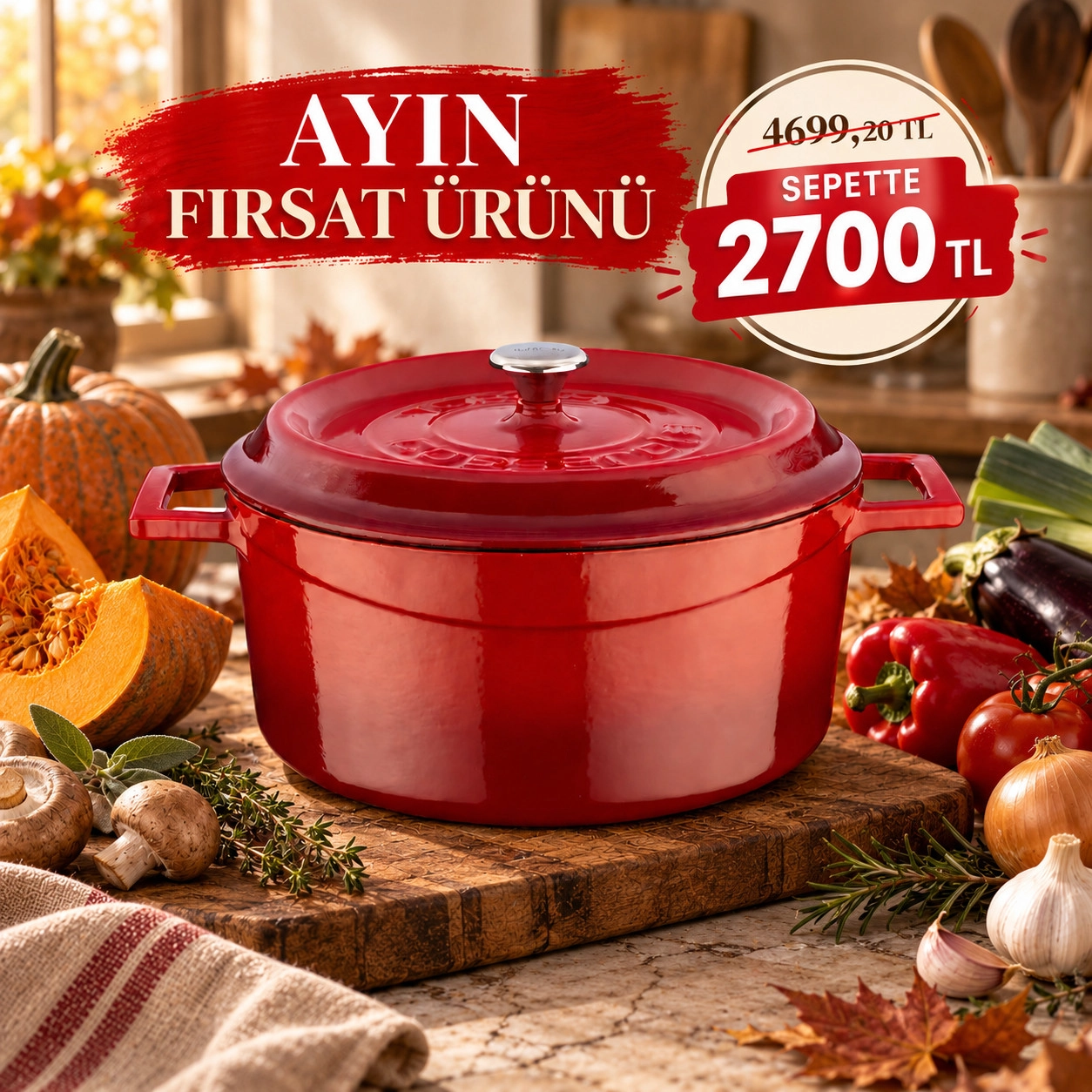 LAVA Round Cast Iron Casserole – Trendy Ø24 cm
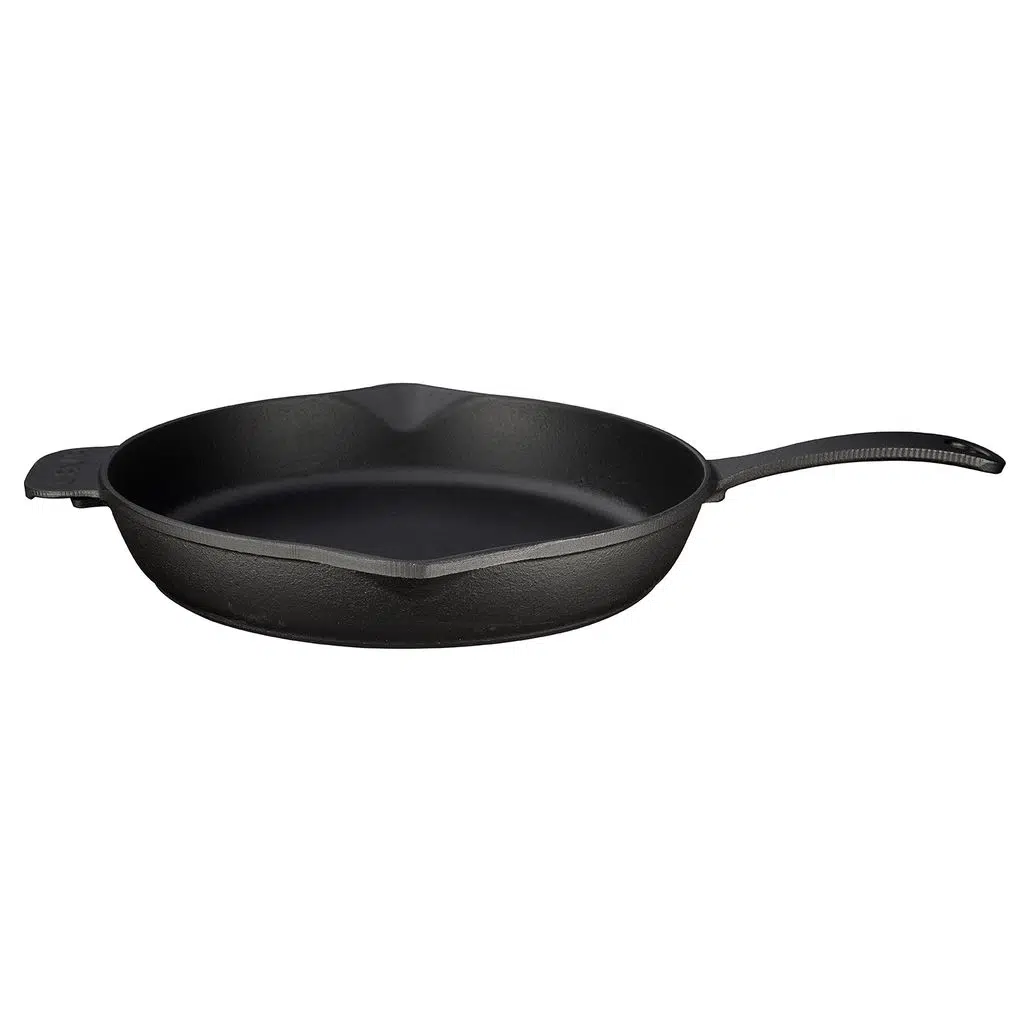
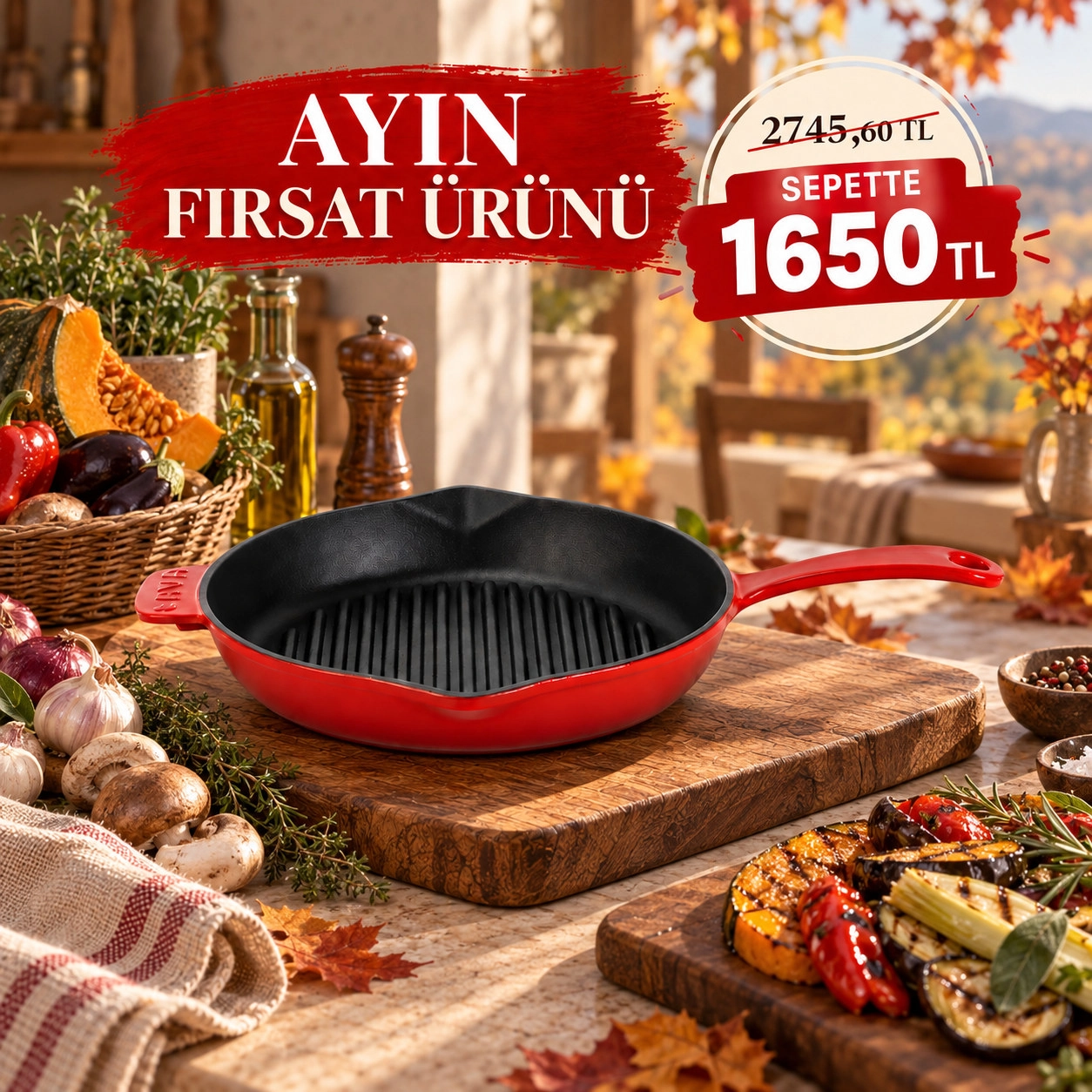 LAVA Round Cast Iron Grill Pan 28 cm Single Handle
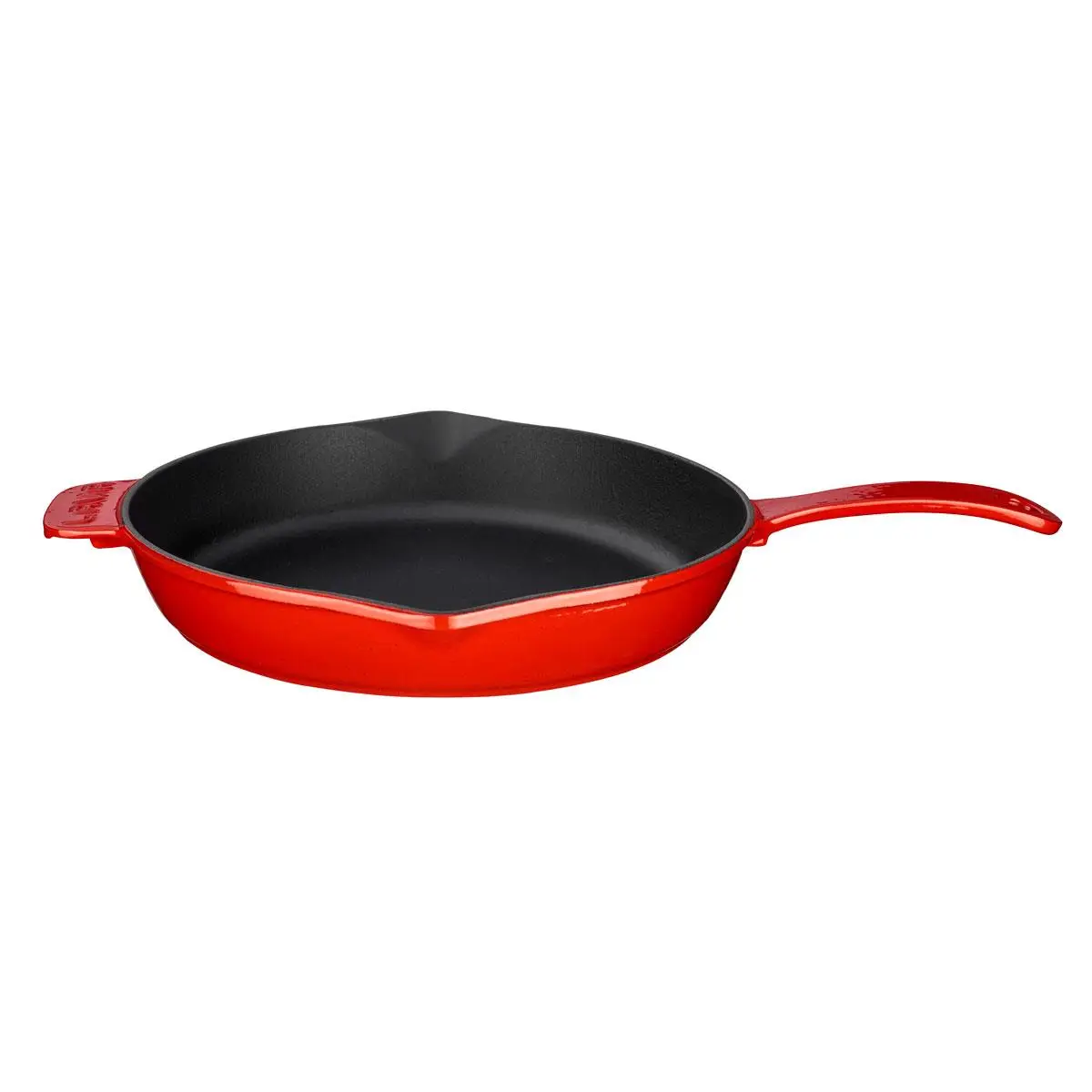
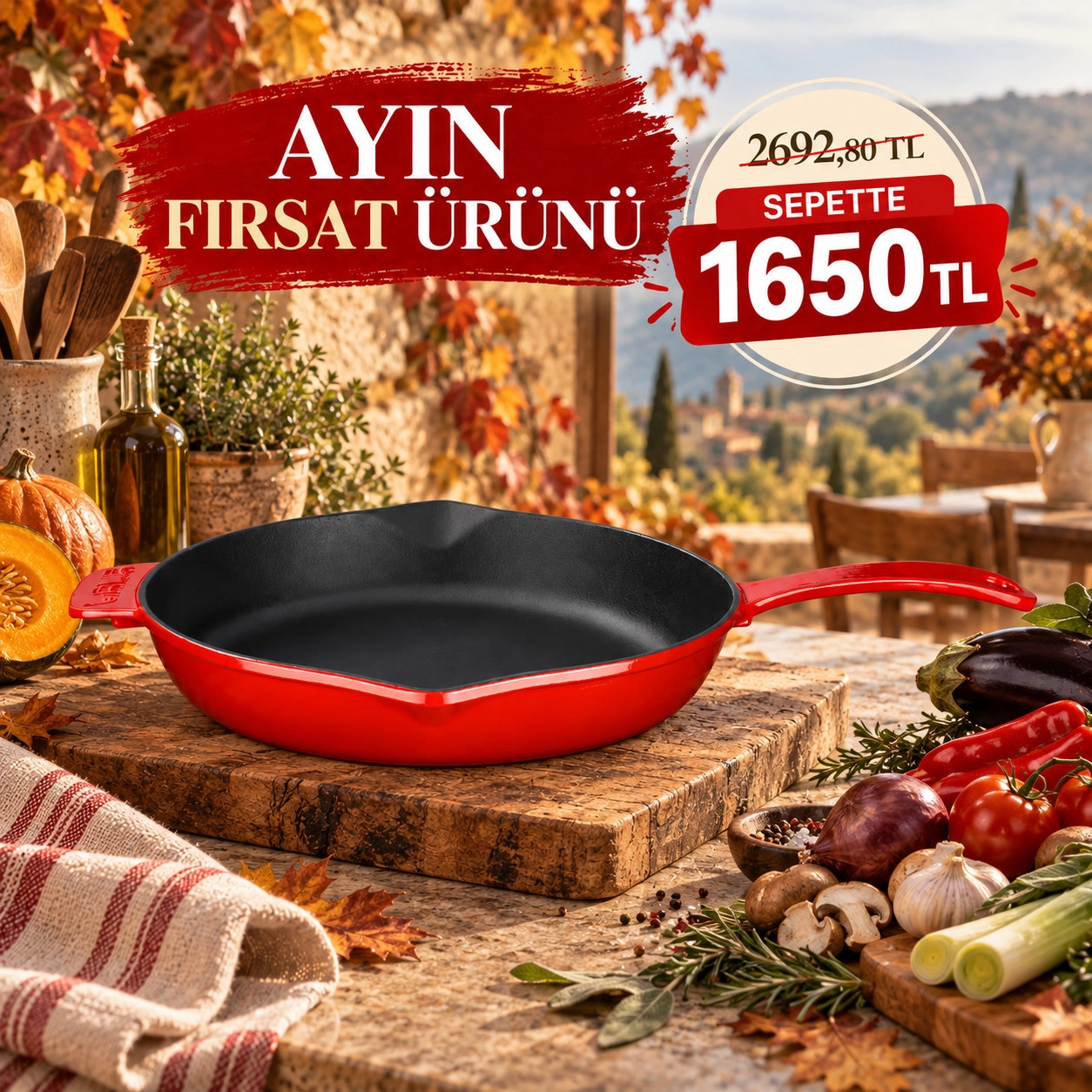 LAVA Round Cast Iron Frying Pan 28 cm Single Handle
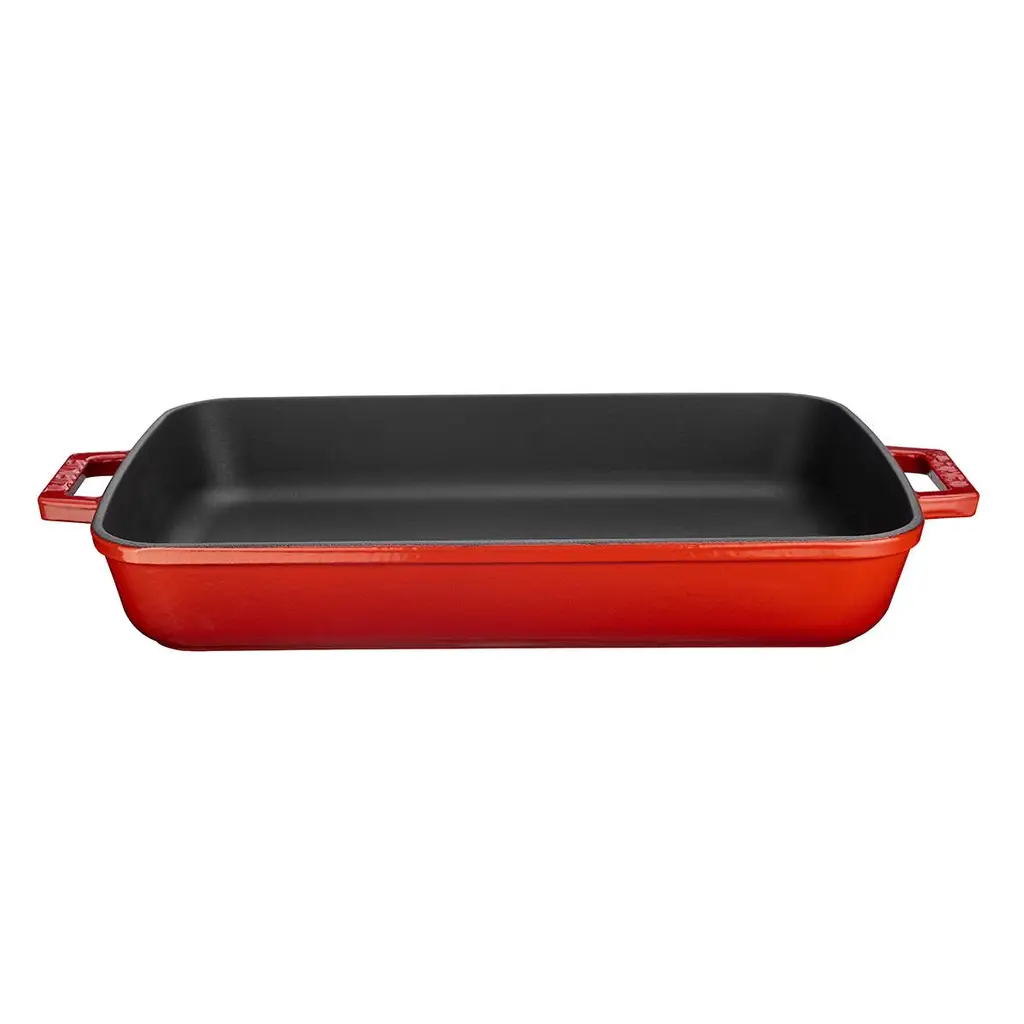
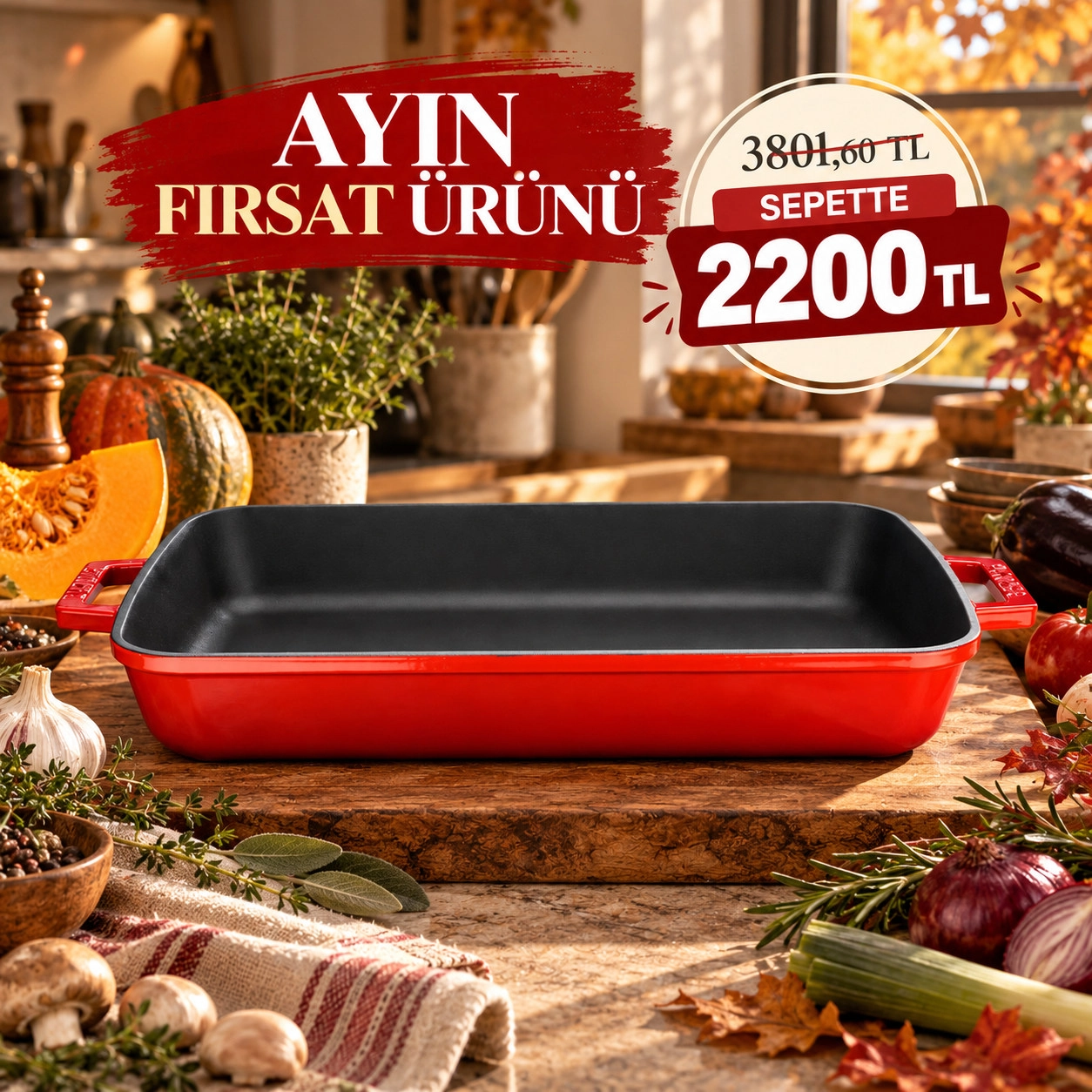 LAVA Rectangular Cast Iron Roasting & Oven Tray 26x40 cm Twin Handles
 All This Month's Deals